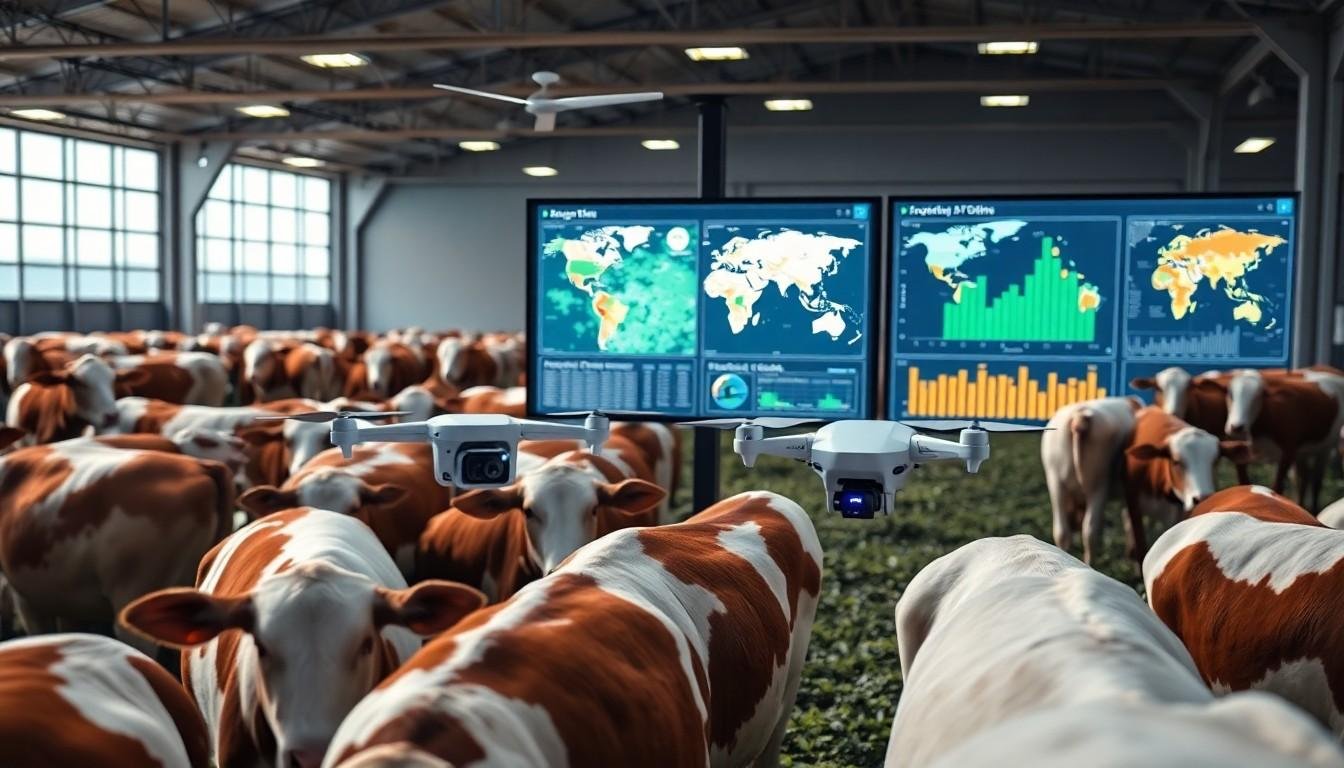
Dairy processing is moving beyond piecemeal automation and into a more ambitious phase: end-to-end digitisation that links information from the farm to the factory floor, distribution networks and, ultimately, the consumer.
The change is being driven by artificial intelligence, cloud platforms and connected devices, which are allowing processors to replace disconnected systems with live, shared data. In practice, that means a supply chain that can do more than record what has h...
Continue Reading This Article
Enjoy this article as well as all of our content, including reports, news, tips and more.
By registering or signing into your SRM Today account, you agree to SRM Today's Terms of Use and consent to the processing of your personal information as described in our Privacy Policy.
appened. It can begin to anticipate demand, adjust output and respond faster to pressure on margins, labour and logistics.
The first stage is building a stronger data foundation at farm level. Sensors, herd management tools and digital platforms are generating constant streams of information on milk production, animal health and environmental conditions. The challenge is not simply collecting that information, but turning it into something usable.
Land O’Lakes’ work with Microsoft illustrates the direction of travel. The companies have been developing a connected data infrastructure for agriculture, including a digital dairy solution that captures production data and applies AI to help farmers monitor output and improve efficiency, even where connectivity is limited. Their broader aim is to connect farm-level information with downstream supply chain requirements so processors can move from reacting to shortages or surpluses to planning ahead.
Microsoft’s Judson Althoff has said the agriculture sector is under intense pressure from costs and narrowing margins, while Land O’Lakes’ Teddy Bekele has described the goal of the alliance as providing data-driven recommendations that improve outcomes for farmers. Land O’Lakes has also pointed to its “Oz” assistant as a way of making large volumes of information easier to navigate.
That farm-to-plant connection is only part of the picture. Inside processing facilities, AI and automation are increasingly being used to cope with labour shortages, rising costs and the limitations of older systems. Ever.Ag has argued that the most effective use of AI is not as a standalone layer, but as intelligence built into the software people already use every day. Alan Brady, vice president for business management solutions at Ever.Ag, said the real value comes from embedding intelligence into agricultural retail workflows so teams can work faster with less manual effort.
The company’s newer agentic AI decision engine, Everett, was introduced as a tool intended to connect data across operational workflows and turn insights into actions inside existing platforms. That fits a broader industry pattern in which processors are using AI for inventory management, pricing, production planning and maintenance rather than treating it as an experimental add-on.
The commercial case is also becoming clearer. Ever.Ag has cited research suggesting applied AI can improve profit margins by 1.2 to 1.9 percentage points, while helping processors make better use of existing technology investments. In dairy plants, that can mean predictive maintenance that reduces downtime, production scheduling that tracks incoming milk volumes more accurately and systems that help less experienced workers perform tasks more consistently.
Specialised applications are emerging too. Ever.Ag’s Cheese Yield Optimisation system, for example, was designed to help manufacturers cut waste, improve consistency and lift returns by drawing on both existing and new data sets. The International Dairy Foods Association and Ever.Ag have also previously set out recommendations for dairy businesses seeking to adopt AI in ways that strengthen efficiency, sustainability and innovation.
The final piece is visibility across the wider supply chain. Dairy has long faced a basic mismatch: milk production is relatively steady, but consumer demand moves with seasons, weather, pricing and changing preferences. AI-based forecasting tools are helping processors bridge that gap by analysing sales history, market trends and external signals so they can adjust production, manage stock more tightly and reduce waste.
That same data flow is also supporting traceability, food safety and sustainability reporting. With greater visibility from farm to shelf, processors can respond more quickly to disruptions and improve confidence among regulators and consumers alike.
The result is a shift in how the sector thinks about digitisation. It is no longer just a technology project. It is becoming a strategic model for resilience, efficiency and competitiveness, with the biggest gains likely to go to companies that can integrate their data, their workflows and their decision-making.
Source: Noah Wire Services