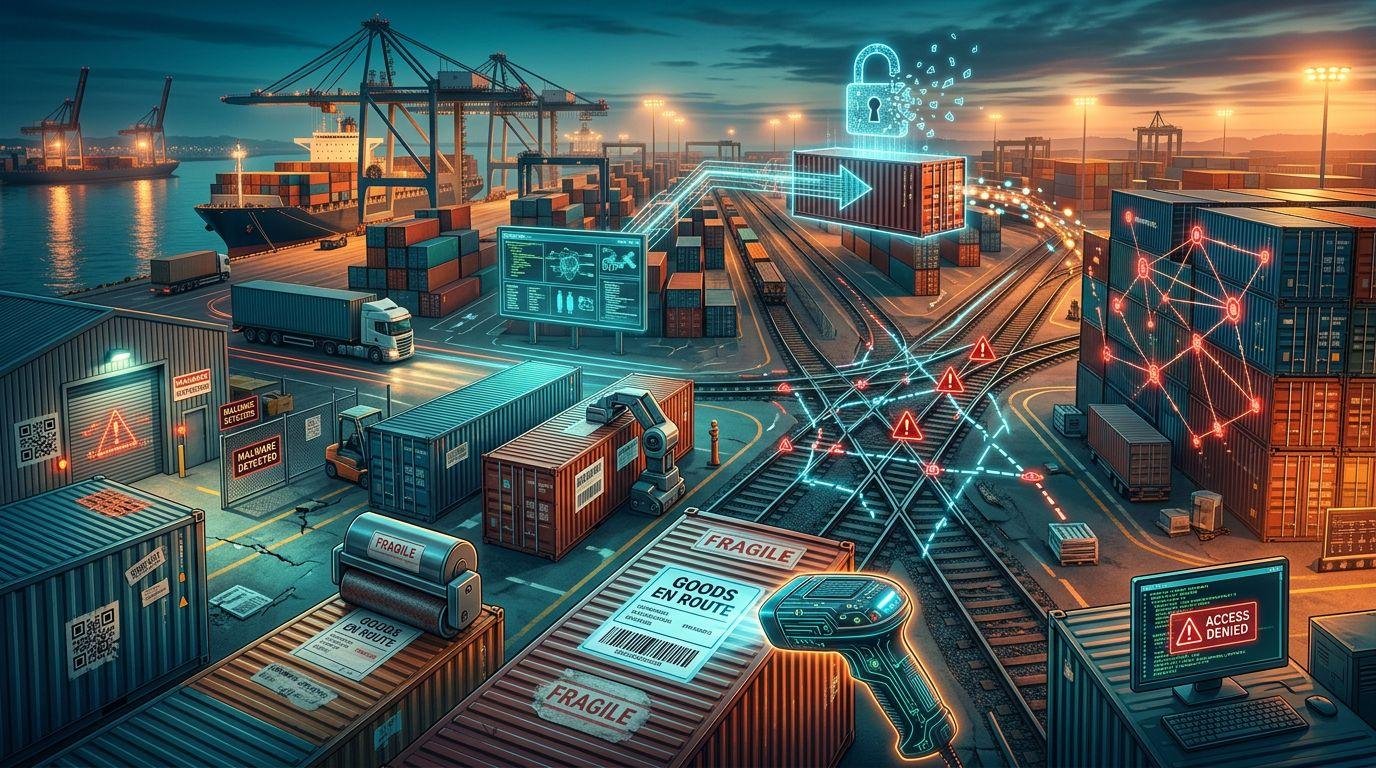
Cargo thieves are increasingly finding ways to turn stolen freight back into apparently legitimate commerce, exploiting the trust placed in paperwork, seals and handovers that sit at the heart of modern logistics, according to Scott Cornell, an executive vice-president at SPG Cargo & Logistics and chair of TAPA Americas.
Cornell describes the practice as “laundering freight”: a load is taken, moved through one or more intermediary locations and relabelled with f...
Continue Reading This Article
Enjoy this article as well as all of our content, including reports, news, tips and more.
By registering or signing into your SRM Today account, you agree to SRM Today's Terms of Use and consent to the processing of your personal information as described in our Privacy Policy.
resh shipping documents until it no longer appears to be the same shipment that was stolen. Cross-docks, warehouses, side streets and even parking lots can all become temporary waypoints as criminals break the connection between the original theft and the cargo’s eventual resale.
Speaking to FreightWaves, Cornell said the process can happen with extraordinary speed. In one case involving a popular headphone brand, devices began transmitting from Europe roughly a week after the theft, suggesting that the merchandise had been moved swiftly from the point of theft to a port. “They stole it, took it right to the port,” he said.
The danger, Cornell argued, is not simply that freight disappears, but that it can re-enter normal trade channels with a cleaner-looking identity after each transfer. A warehouse may receive the goods, issue replacement documents and apply a new seal. The cargo may then move again, this time described in broader terms , for example, as electronics or even freight of all kinds, or FAK, a category that can help obscure what is really inside a container.
“All the players on the transaction have been changed,” Cornell said, explaining how a fresh bill of lading can detach a shipment from its original trail. He added that a new bolt seal can make inspection even more difficult, because paper records still carry enormous weight in a system that increasingly relies on digital tracking but continues to treat physical documents as authoritative. “Bill of lading and bolt seal trump it all,” he said.
That gap, he warned, has created space for what he called a shadow economy inside the supply chain. In many cases, he said, the activity does not take place in the kind of remote, grim warehouse that outsiders might imagine, but in plain sight, among other transport businesses and legitimate operations. Some facilities can simultaneously prepare product for export and fulfil online orders, making illicit movement harder to detect.
The problem is growing more urgent as cargo theft becomes more sophisticated. In April 2026, TT Club and BSI Consulting said in their latest cargo theft report that organised criminal networks were using increasingly advanced tactics across road, rail, sea and digital channels. The report identified Brazil, Mexico, India, the United States, Indonesia, Chile, China, Germany and South Africa among the countries seeing the highest numbers of recorded thefts, while Ecuador saw a sharp rise linked to gang violence in coastal provinces. The Strait of Malacca and Singapore also recorded a surge in piracy incidents.
In North America, the losses are becoming more expensive even where the number of incidents is not always rising at the same pace. Conmitto’s 2026 cargo theft statistics show that in the second quarter of 2026 there were 677 supply-chain theft incidents in the United States and Canada, down 26% year on year, but estimated losses more than doubled to $304.6 million. The same data set points to a 31% increase in deceptive pickup schemes in the first quarter, underscoring how fraud is increasingly being used alongside physical theft.
A broader picture from the Freight Fraud Index suggests the scale of the problem has already changed materially. CargoNet recorded 3,594 supply-chain crime events across the United States and Canada in the first quarter of 2026. Its figures show confirmed cargo thefts rising from 2,243 in 2024 to 2,646 in 2025, while estimated losses climbed 60% to nearly $725 million and the average theft value rose sharply.
High-value shipments have become especially attractive. A recent investigation by WIRED, reported by Tom’s Hardware, described thefts in California targeting AI data centre hardware, with escorts reportedly rammed off the road before the trucks disappeared. Those incidents reflect how organised groups are adapting to the highest-value lanes of commerce, where a stolen load can be worth millions and may be tracked overseas within days. The same report said black market demand abroad, particularly in China, has made restricted hardware a lucrative target.
Criminals are also exploiting digital weaknesses. Proofpoint, the cybersecurity firm, has warned that hackers are working with organised crime groups to hijack freight by impersonating brokers and carriers, using phishing emails and fake setup packets to steal credentials and redirect loads. According to the company, nearly two dozen campaigns were identified in a short period, signalling a tighter link between cyber intrusion and physical cargo theft.
Cornell said a more resilient answer would be to modernise the basic records that still underpin freight movement. He suggested that digital bills of lading could allow law enforcement and carriers to verify a load quickly, including during roadside stops, while changes to commodity descriptions could leave a clearer audit trail. The challenge, he said, is less about technology than coordination across the industry. A phased transition, similar to the adoption of electronic logging devices in trucking, could help move the sector on to shared digital standards.
For now, the concern is that stolen goods can be disguised, transferred and sold on before anyone in the chain realises what has happened. By the time they reach an overseas buyer or a retail shelf, the original theft may be all but invisible.
Source: Noah Wire Services