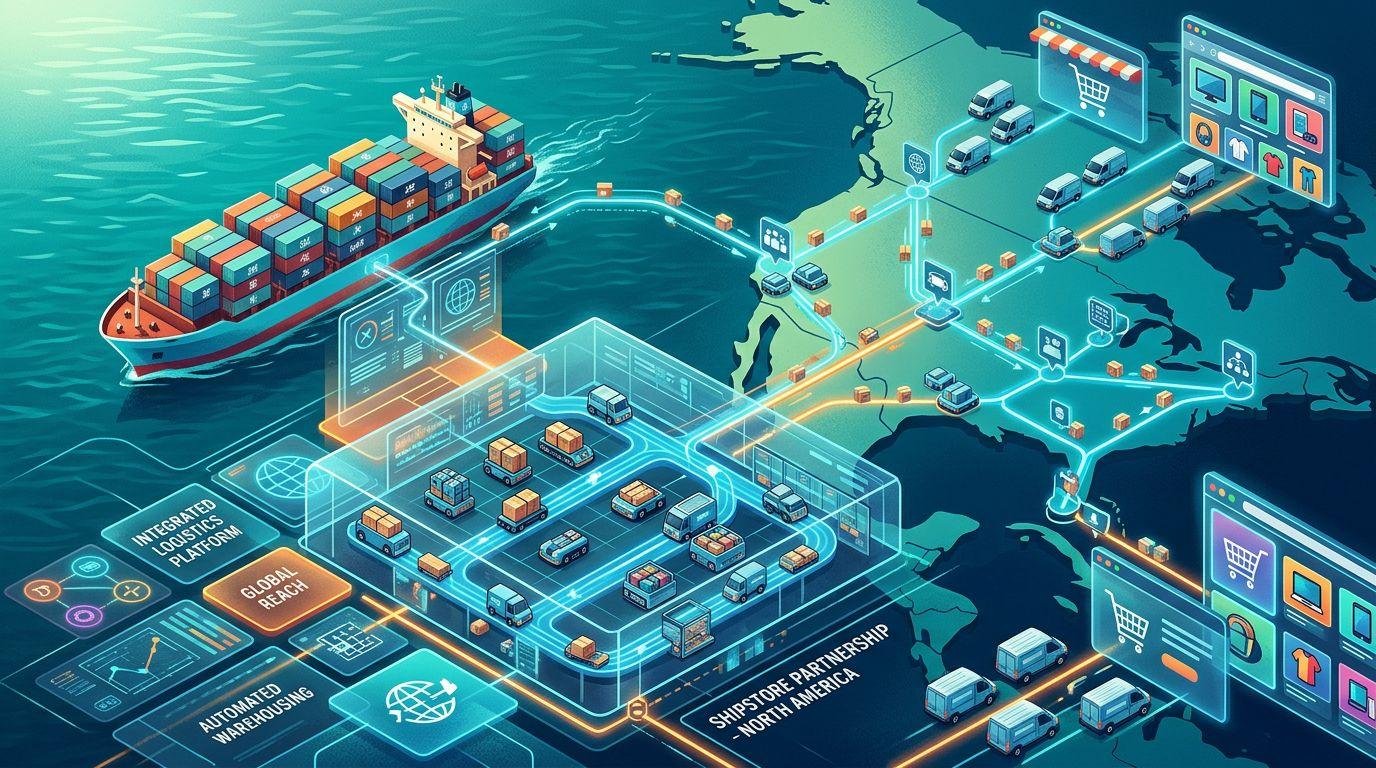
A.P. Moller-Maersk is widening the reach of its North American e-commerce delivery business through a new partnership with Shipstore, a shipping automation platform aimed at higher-volume parcel shippers.
The arrangement will allow Shipstore customers to access Maersk’s delivery network from within the software they already use to manage orders, shipments and tracking. According to Maersk, the integration also brings together labels, documentation and parcel visibility in a s...
Continue Reading This Article
Enjoy this article as well as all of our content, including reports, news, tips and more.
By registering or signing into your SRM Today account, you agree to SRM Today's Terms of Use and consent to the processing of your personal information as described in our Privacy Policy.
ingle workflow, with the aim of reducing the friction that often comes with running several carriers across separate systems.
Prashant Shah, Maersk’s head of e-commerce for North America, said the collaboration is intended to make it easier for online businesses to connect with Maersk through a platform they already know and trust. Nick Osbern, president of Shipstore, said the tie-up should give customers access to a well-established logistics provider while preserving a familiar shipping environment.
The move fits into a broader pattern of digital expansion at the Danish shipping group, which has been investing in e-commerce logistics and technology partnerships as it seeks to deepen its parcel offer in the region. Maersk says it now handles more than 10 million e-commerce parcels a year in North America, underscoring the scale of the business it is building beyond its traditional ocean freight base.
The Shipstore agreement follows a similar deal Maersk struck with ShippyPro in July, when it integrated its e-commerce services into that multi-carrier platform. That sequence of partnerships suggests a deliberate strategy: rather than forcing customers into a proprietary system, Maersk is embedding its parcel services into third-party tools already used by merchants and fulfilment operators.
Maersk has also been expanding its physical logistics footprint. The company has previously pointed to a new Boston-area fulfilment hub as part of its wider e-commerce push, highlighting how digital integration and warehouse capacity are being developed in tandem. Together, the partnerships and infrastructure investments indicate that Maersk is trying to position itself as a more flexible player in a market where merchants increasingly want speed, transparency and multi-carrier control in one place.
For Shipstore users, the practical effect is straightforward: Maersk’s delivery services can now be selected and managed without leaving the platform. For Maersk, the deal offers another route into the growing pool of merchants looking for simpler ways to orchestrate parcel shipping at scale.
Source: Noah Wire Services