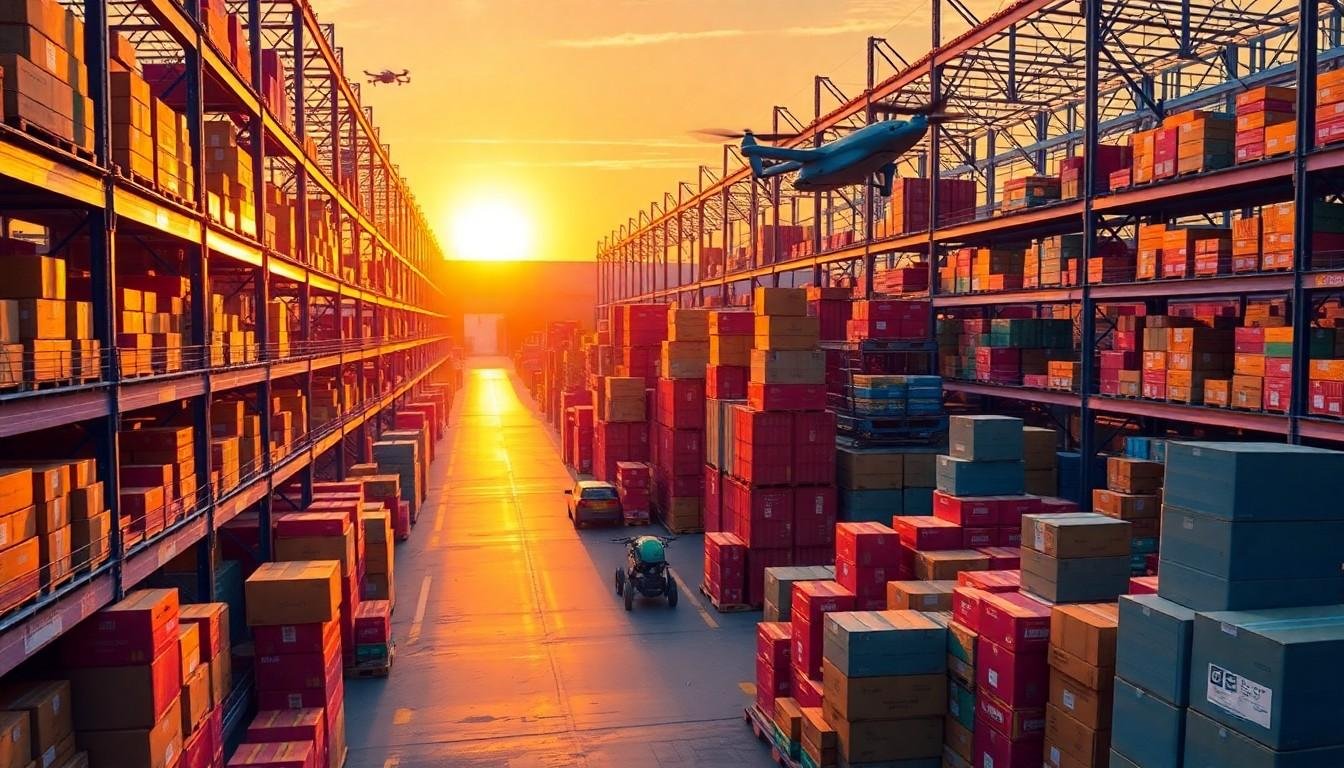
Artificial intelligence is moving supply chain management away from reactive planning and towards systems that can anticipate disruption, adjust in real time and support better commercial decisions. That shift is being driven by rising customer expectations, continued market volatility and the growing availability of data across logistics networks, procurement systems and warehouse operations.
At its core, AI gives businesses a way to make sense of information that is too broad...
Continue Reading This Article
Enjoy this article as well as all of our content, including reports, news, tips and more.
By registering or signing into your SRM Today account, you agree to SRM Today's Terms of Use and consent to the processing of your personal information as described in our Privacy Policy.
or too fast-moving for manual planning alone. IBM says machine learning tools can process vast data sets, identify patterns and help forecast demand more accurately, while also improving resilience after major disruptions such as the COVID-19 pandemic. In practice, that means companies can monitor sales trends, weather signals, social media activity and broader market conditions, then use those inputs to refine stock levels before shortages or surpluses become costly.
That predictive capability is changing procurement as well. Rather than relying on fixed reorder points, businesses are increasingly using analytics to determine when to buy, how much to order and which suppliers are most reliable. This is especially valuable in packaging, manufacturing and other sectors where inventory mistakes can quickly raise overheads or interrupt production. AI systems can also compare supplier performance in real time, weighing delivery speed, pricing consistency and product quality to support faster sourcing decisions.
Warehousing is another area where the technology is having a visible impact. Computer vision can help track stock levels, while autonomous mobile robots can optimise picking routes and speed up fulfilment. AI can also monitor equipment health and flag likely failures before they cause downtime, allowing operators to move from break-fix maintenance to more preventative planning.
Logistics is being reshaped in the same way. Routing software can recalculate deliveries in seconds, respond to traffic or incidents and reduce wasted mileage. By consolidating loads more efficiently, AI can also cut fuel use and lower the carbon footprint of transport operations. In last-mile delivery, where timing and congestion create constant pressure, that ability to replan quickly can make a material difference to service levels.
The technology is also becoming more important in risk management. IBM notes that AI agents can monitor supply chain conditions, make decisions within set limits and act across functions in real time. That matters in a world where shipping routes can be disrupted by bad weather, labour unrest or geopolitical tension. By watching news feeds, satellite imagery and environmental data, AI systems can alert managers earlier and suggest alternatives, from rerouting cargo to shifting transport modes.
The business case is strong, but adoption is not straightforward. Data silos remain a major obstacle, particularly where departments use incompatible systems that prevent AI from seeing the full picture. Cultural resistance can also slow progress, especially if employees view automation as a threat rather than a support tool. Companies that succeed tend to pair the technology with cleaner data architecture and a clear message that AI is intended to reduce repetitive work, not replace strategic judgement.
Industry guides suggest the market is expanding quickly. One 2026 guide puts the value of AI in supply chain at $14.49 billion in 2025, with projections reaching $50 billion by 2031, while another estimates a similar rise to $51.12 billion by 2030. However, the exact figure matters less than the direction of travel: AI is no longer an experimental add-on, but a core operational tool for companies trying to stay efficient, resilient and competitive.
For global businesses, the conclusion is increasingly hard to avoid. AI is changing supply chains from systems that merely record problems into ones that can help prevent them.
Source: Noah Wire Services