


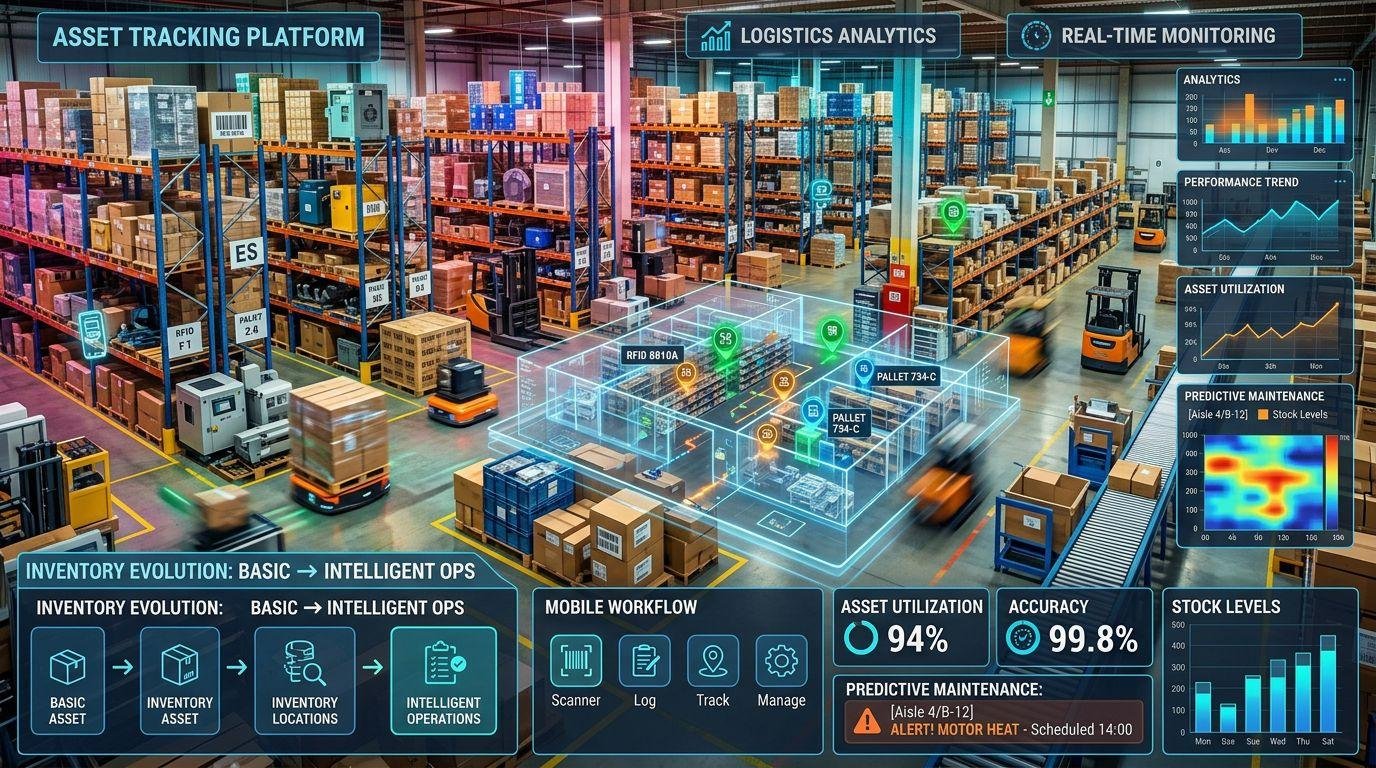
Asset tracking software has become a practical necessity for organisations that want tighter control over equipment, better use of resources and fewer costly surprises. By giving businesses a clearer picture of where assets are, how they are being used and when they need attention, these platforms can improve accountability while reducing waste, loss and downtime.
The appeal is straightforward: instead of relying on spreadsheets or manual checks, teams can monitor physical and ...
Continue Reading This Article
Enjoy this article as well as all of our content, including reports, news, tips and more.

By registering or signing into your SRM Today account, you agree to SRM Today's Terms of Use and consent to the processing of your personal information as described in our Privacy Policy.
The case for adoption is also tied to resilience. Asset tracking systems can help organisations automate inventory control, schedule maintenance before faults become serious and generate audit trails that support compliance. Some providers point to sizeable productivity gains from better visibility, while others highlight reductions in repair effort and downtime. The broader message is consistent: when assets are easier to locate and manage, operations tend to run more smoothly.
Choosing the right platform, however, requires more than looking for a familiar brand name. The most useful systems tend to share a core set of features. Real-time tracking is high on the list, particularly for businesses managing mobile equipment or assets spread across multiple sites. Barcode and QR code scanning can speed up check-ins, check-outs and stock counts, while automated alerts help teams stay on top of maintenance work, warranty deadlines and compliance tasks.
Reporting and analytics are equally important. A strong platform should do more than record asset data; it should help managers understand utilisation patterns, identify underused equipment and spot recurring maintenance issues. That sort of insight can improve planning and reduce unnecessary purchasing. Integration also matters. Asset tracking software that connects smoothly with existing ERP, finance or inventory systems is far more likely to deliver a unified view of operations than a standalone tool that creates another data silo.
Among the best-known solutions, IBM Maximo is often positioned as a heavyweight option for large and complex organisations. It combines enterprise asset management with AI and IoT capabilities, allowing businesses to move towards predictive maintenance rather than simply reacting to breakdowns. That can be especially valuable where equipment failure is expensive or disruptive. IBM says the platform is designed to support the full asset lifecycle, and its broader integration with other IBM technologies can appeal to businesses seeking a more connected management environment.
MaintainX, by contrast, is frequently highlighted for its mobile-first approach. Rather than focusing solely on deep enterprise complexity, it emphasises fast work order creation, real-time collaboration and practical maintenance management in the field. For teams that need technicians to update jobs from a phone or tablet, that simplicity can be a major advantage. The platform has also been promoted as scalable, with support for very large volumes of work orders, making it suitable for organisations that need speed without losing oversight.
UpKeep is another platform that attracts attention for maintenance-led teams. It is geared towards organising work orders, planning preventive maintenance and improving communication between field staff and office teams. Its appeal lies in its accessibility: users can manage tasks from desktop or mobile devices, which helps reduce delays when issues arise. For companies that want to move away from reactive maintenance and towards more structured planning, that mobile-first model may be particularly useful.
The broader market also includes solutions such as Asset Panda, Limble, HxGN EAM and Oracle EAM, each of which caters to slightly different operational priorities. Some are stronger on lifecycle management, while others focus more heavily on maintenance scheduling, inventory control or predictive analytics. The right choice often depends less on the size of the brand and more on the specific pain points an organisation is trying to solve.
Integration capability deserves special attention because many implementation problems arise not from weak software, but from poor fit with existing systems. A platform that links maintenance data with finance, procurement and inventory can save significant time and reduce duplicate data entry. API support can be particularly useful for organisations that want to connect asset tracking with specialist third-party tools or custom workflows. Mobile compatibility is also no longer optional in many environments, especially where technicians, warehouse staff or site managers need updates in the field.
The market’s growth reflects these changing expectations. Asset tracking is no longer seen simply as a way to label equipment or reduce loss. It is increasingly treated as part of a wider effort to improve productivity, support compliance and extend asset life. RFID-based systems, for example, are gaining attention because they can read many tags quickly without direct line of sight, making them useful in environments where speed and scale matter. That broader shift suggests the technology is moving beyond basic tracking into more intelligent operational management.
For organisations assessing software, the most sensible approach is to begin with practical requirements. Real-time visibility, mobile access, automated alerts and strong reporting are good starting points. From there, decision-makers should examine how well a platform integrates with existing systems, whether it supports the organisation’s deployment preference and how intuitive it is for end users. Cloud-based tools may offer flexibility, while on-premise systems may appeal to businesses that want more direct control.
Cost should be judged in context. Upfront licensing is only part of the picture; implementation, training and ongoing support can make a significant difference to total value. That is why free trials and pilot programmes can be so useful. They allow teams to test usability, assess adoption and identify whether a platform can genuinely improve day-to-day workflows.
In the end, the best asset tracking software is the one that aligns with the way an organisation actually works. For some, that will mean deep enterprise functionality and predictive maintenance. For others, it will mean a simpler mobile system that helps teams stay on top of work orders and equipment checks. What matters most is selecting a platform that improves visibility, strengthens accountability and makes asset management easier to sustain over time.
Source: Noah Wire Services
Subscribe to Industry Updates
Get the latest news and updates directly to your inbox.

