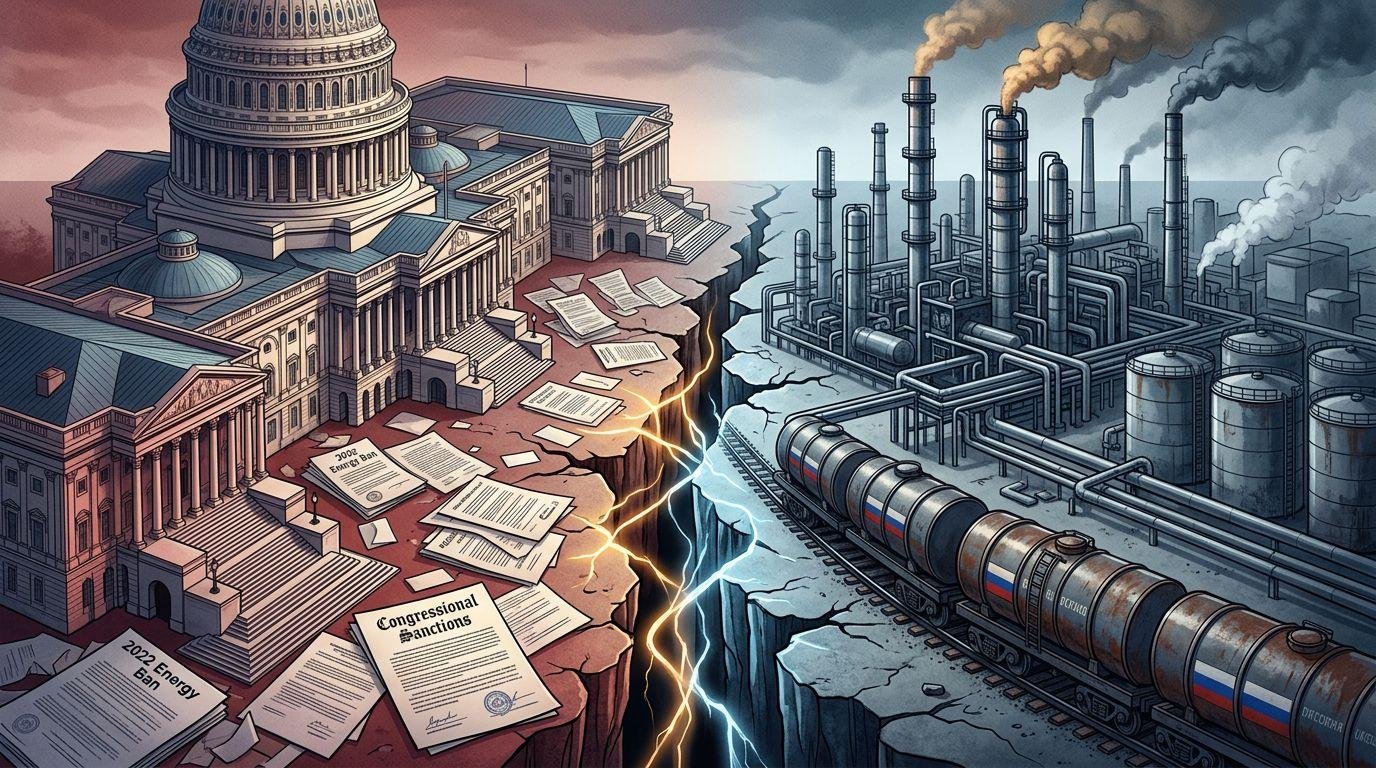
A bipartisan group of US senators has accused Donald Trump of exceeding his authority by allowing diesel imports from Russia, arguing that the move appears to clash with a 2022 law designed to block Russian energy trade while Moscow continues its war in Ukraine.
In a statement released on Sunday, senators Jeanne Shaheen, Susan Collins, Richard Blumenthal, Lisa Murkowski, Ron Wyden, Thom Tillis and John Curtis said Congress had made its position clear when it barred Russian ener...
Continue Reading This Article
Enjoy this article as well as all of our content, including reports, news, tips and more.
By registering or signing into your SRM Today account, you agree to SRM Today's Terms of Use and consent to the processing of your personal information as described in our Privacy Policy.
gy imports in 2022. The purpose, they said, was to stop American money from helping to bankroll Vladimir Putin’s invasion.
The controversy centres on Mr Trump’s announcement on Friday, made after a telephone conversation with Mr Putin, that he had reached an agreement for Russia to immediately supply 300,000 tonnes of diesel to the United States and to the wider global market. The senators said that decision directly conflicted with the law passed by Congress.
According to the lawmakers, the Trump administration has also failed to consult Congress or provide the kind of formal explanation required by statute before moving ahead with the imports. They said the White House should not be helping to create what they described as a financial lifeline for the Kremlin while Russian forces continue to kill Ukrainian civilians.
The issue comes only weeks after Congress overwhelmingly approved the Sanctioning Russia and Iran Act, giving the president powers to impose broad sanctions on Moscow and to levy 100 per cent tariffs on the top five countries buying Russian oil and gas, including India and China. That legislation was intended to sharpen pressure on the Russian energy sector, not weaken it.
The senators have now urged the administration to reverse course immediately. Their intervention is notable not only because it crosses party lines, but because it reflects growing concern in Washington that the president’s decision may have put the executive branch on a collision course with existing sanctions law.
Source: Noah Wire Services