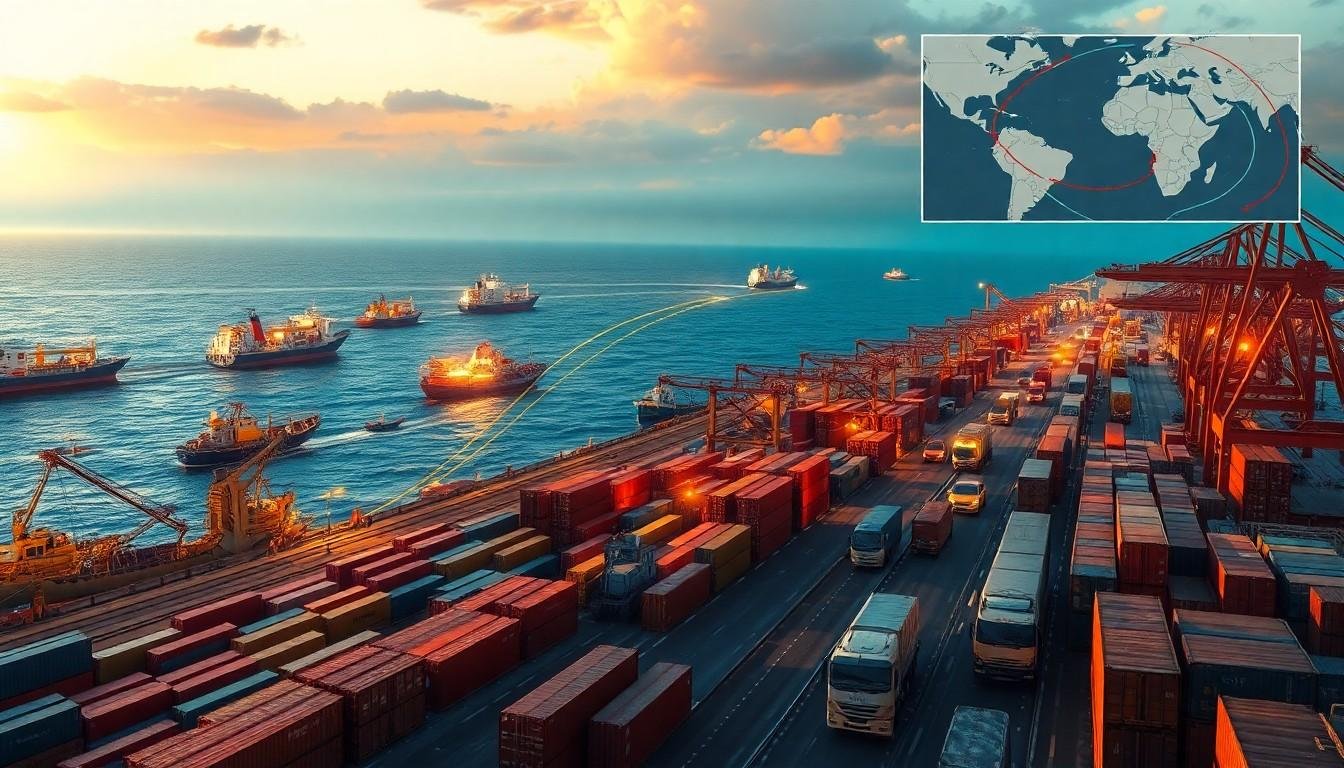
Disruptions in the Strait of Hormuz have sharply increased maritime traffic around the southern tip of Africa, but South Africa is capturing far less economic benefit than the detour might suggest.
According to reporting from Oilprice.com, vessels diverted away from the Middle East and Suez route have boosted shipping through waters off the Cape of Good Hope, with traffic around the continent’s southern edge roughly doubling since the conflict began in February. Yet most of t...
Continue Reading This Article
Enjoy this article as well as all of our content, including reports, news, tips and more.
By registering or signing into your SRM Today account, you agree to SRM Today's Terms of Use and consent to the processing of your personal information as described in our Privacy Policy.
hose ships are simply passing through. The hoped-for boost in port calls, bunker fuel sales, repairs and cargo handling has largely failed to materialise.
The main reason is cost. The Cape route adds about 8,000 kilometres to the journey and can extend sailing time by roughly two weeks, alongside fuel bills that can exceed one million dollars per voyage. For shipping companies already under pressure to control expenses, the incentive is to transit the route as quickly as possible rather than make stopovers in South African ports.
That choice is reinforced by long-standing problems in the country’s port system. South Africa still has some of the most developed maritime infrastructure in Africa, but operational performance has been undermined for years by ageing assets, maintenance backlogs and weak logistics links, according to a French government report on the sector. Cape Town, in the latest Container Port Performance Index compiled by the World Bank and S&P Global Market Intelligence, was ranked last among 400 ports assessed. The World Bank linked that poor result to repeated weather-related disruption, equipment failures and low utilisation of berths, leaving vessels idle outside productive docking space for long periods.
Transnet, the state-owned logistics operator, has struggled with limited equipment, outdated cranes, constrained container capacity and poor rail connections. As rail freight has faltered, more cargo has been pushed on to roads, worsening congestion around Durban and other key hubs. Industry reporting from PortProcure said 79 ships were waiting for berths at Durban and Ngqura over a three-week period, underscoring how persistent the bottlenecks remain.
A study in the journal Springer also described chronic service failures in South Africa’s marine services governance, warning that inefficiencies have fed shipping delays and broader economic losses. Separate analysis from Who Owns Whom pointed to poor maintenance, limited access to berths and insufficient cargo-handling equipment as recurring weaknesses, while DefenceWeb has argued that port efficiency is now central to South Africa’s international competitiveness.
The mismatch is especially stark because South Africa sits on a much busier shipping corridor than before, but retains only a small share of the associated revenue. More vessels passing along the coast means higher demands on maritime surveillance, search-and-rescue capability and emergency response, while the risk environment is also worsening. Greater volumes of crude, refined products and liquefied natural gas raise the potential cost of any major spill, and piracy and other security threats remain a concern.
There are also wider energy-market consequences. South African fuel importers are already paying more, while competition from Asian buyers for West African supply has tightened tanker availability and pushed up charter costs. That has made replacement cargoes more expensive across the region.
At the same time, the southern and eastern African energy map is shifting. New projects stretching from Angola and Namibia to Mozambique and Tanzania are drawing in billions of dollars. In Mozambique, TotalEnergies resumed construction on its $20 billion LNG project in January 2026 after a years-long force majeure period ended. The scheme is designed to produce 13.1 million tonnes of LNG a year. Tanzania’s $42 billion Lindi LNG project, involving Shell and Equinor, would commercialise part of the country’s offshore gas reserves, which are estimated at more than 47 trillion cubic feet. Meanwhile, the $3.5 billion Dangote Southern Africa Corridor pipeline would link Namibia, Botswana and South Africa, shifting some fuel distribution away from road transport.
The broader lesson is that geography alone is no guarantee of gain. South Africa is receiving more ships on its doorstep than before, but without the port efficiency, infrastructure renewal and logistics reform needed to turn transits into trade, the country risks watching the benefits sail past.
Source: Noah Wire Services