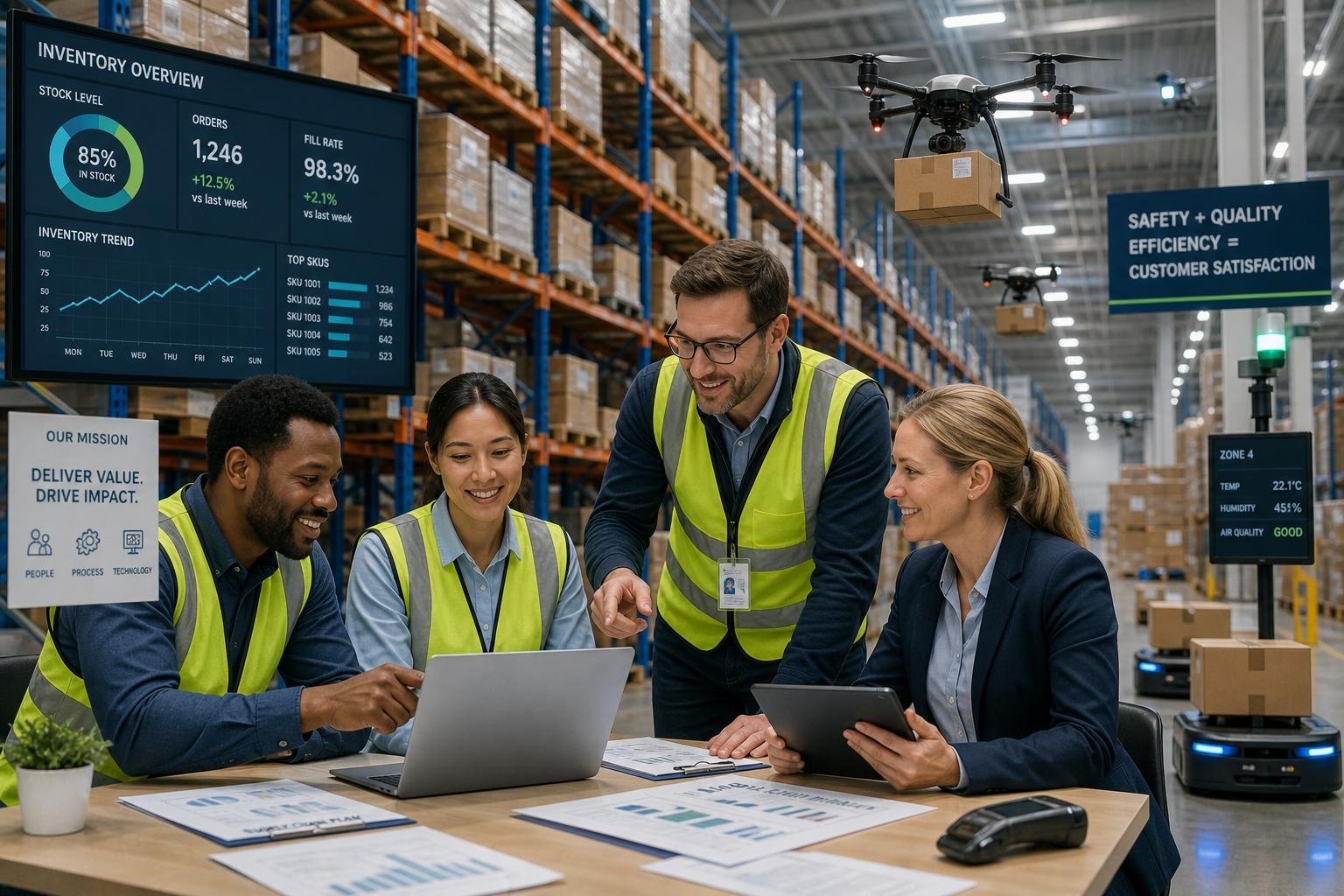
Supply chain transparency is moving well beyond its long-standing role as a compliance safeguard in retail and consumer packaged goods. What was once mainly about meeting regulatory demands, documenting sourcing and handling recalls is increasingly being treated as a commercial capability that can shape performance, protect brand trust and improve decision-making under pressure.
That shift reflects a broader change in what businesses need from visibility. According to Gartnerâ€...
Continue Reading This Article
Enjoy this article as well as all of our content, including reports, news, tips and more.
By registering or signing into your SRM Today account, you agree to SRM Today's Terms of Use and consent to the processing of your personal information as described in our Privacy Policy.
™s 2025 retail supply chain work, the strongest operators are not simply those that can withstand disruption, but those that preserve performance even as regulation, complexity and volatility intensify. In that environment, transparency is no longer a passive record of what has happened. It is becoming part of how companies operate.
Kristina Rogers, chief growth officer and global head of retail, CPG and luxury at HCLTech, said transparency has moved from being something businesses proved after the fact to something they compete on in real time. That framing captures the new commercial logic: the value of traceability lies not only in audit readiness, but in how quickly a retailer can isolate a quality problem, redirect stock, reassure customers or press suppliers for accountability.
The point is especially clear in food and grocery, where weak visibility can quickly become expensive. HCLTech points to work with a large US grocery chain that needed to comply with stricter food safety rules across more than 130 stores. Because its operating model was decentralised, tracing ingredients with precision was difficult, which raised the risk of broad recalls, avoidable waste and poor communication with customers during incidents. HCLTech helped the retailer centralise parts of the operation and connect the new structure to existing systems, enabling lot- and bin-level tracking from supplier to store.
The result was not just better compliance with food safety requirements. It also improved the retailer’s ability to target recalls, manage inventory more effectively and gain clearer insight into waste, demand and profitability. That broader lesson extends across retail and CPG: transparency becomes strategically important when it shortens the distance between a problem emerging and a response being made.
Technology is accelerating that change. HCLTech argues that AI- and IoT-enabled track-and-trace systems are turning transparency into an operational intelligence layer rather than a reporting function. In practice, that means bringing provenance, cold-chain monitoring, supplier traceability and recall readiness into a single view, allowing businesses to act more quickly when disruption strikes. Other industry commentary points in the same direction, noting that retailers with legacy systems struggle to keep pace unless they connect digital and physical inventory more tightly and use data tools that support real-time action.
For retailers and CPG groups, the strategic challenge is no longer whether to pursue visibility, but how to make it useful. Transparency that merely satisfies reporting requirements has limited commercial value. Transparency that improves control, speed and response gives companies a stronger basis for sourcing, replenishment, communication and risk management.
That is why the language around supply chain transparency is changing. It is increasingly being described not as a back-office obligation, but as an intelligence function that helps businesses protect trust and perform better when conditions become difficult. The companies that make that shift will be better placed to respond to disruption, reduce losses and build resilience in ways that are operational, not just reputational.
Source: Noah Wire Services