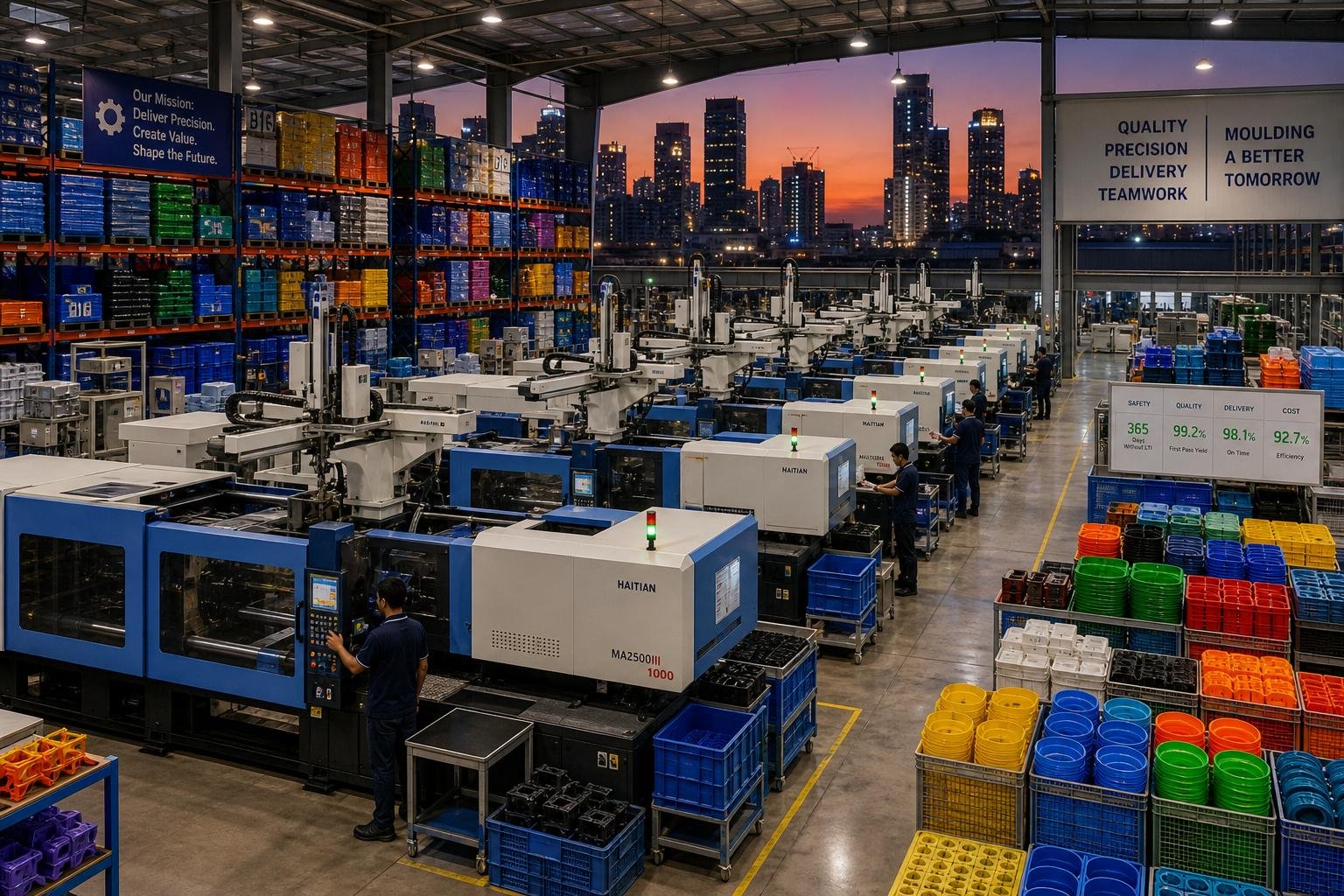
When a plastic part arrives late, the damage is rarely confined to that single component. Production can stop, orders slip and emergency freight bills start climbing. For manufacturers that depend on outsourced injection moulding, lead time is not a back-office metric; it is one of the main drivers of service levels and cost control.
That matters because lead times in plastic parts supply chains are rarely as straightforward as procurement plans suggest. Industry guides note th...
Continue Reading This Article
Enjoy this article as well as all of our content, including reports, news, tips and more.
By registering or signing into your SRM Today account, you agree to SRM Today's Terms of Use and consent to the processing of your personal information as described in our Privacy Policy.
at the timetable depends on more than just capacity at the moulding shop. Tool complexity, material choice, cavity count, surface finish requirements and even the supplier’s location can all move delivery dates. In many cases, the tool itself is the slowest part of the process, with steel moulds often taking many weeks to complete and, for more demanding programmes, several months is not unusual.
The reason is that injection moulding is a multi-stage process, not a single manufacturing event. A part must be designed, the tool must be built, tested and, if necessary, refined before stable production can begin. Guides aimed at buyers often put mould lead times in the range of four to ten weeks, while more intricate tools can stretch much longer. Some rapid moulding services can turn around simple parts in as little as a day, but that is an exception for short-run work rather than the norm for production supply.
Material selection can be just as decisive. Standard polymers are often available quickly through distributors, but specialist compounds, medical-grade materials and filled or flame-retardant grades may require longer sourcing windows. If a programme is forced into a late-stage material change because the original specification is unavailable, the schedule can unravel quickly. The same applies when parts need a particular finish or tighter tolerances, since these requirements often add extra time to tooling and validation.
Production itself has its own constraints. A typical moulding cycle may last only seconds, but the total time to get parts into steady output includes set-up, sampling and ramp-up. Cooling is usually the biggest variable inside the cycle, and engineering changes to cooling channels or gate design can make a meaningful difference. Even so, once demand increases or a programme sits behind other jobs in the factory, the customer may see the effect in delayed call-offs rather than in the machine room.
That is why forecasting and communication are so important. A manufacturer with predictable volumes can plan better, hold the right stock and sequence work more efficiently. By contrast, erratic call-offs make it harder to protect delivery dates and increase the chance of expensive expedites. In today’s supply chains, where shipping disruption and capacity pressures are still common, that gap between planned and actual demand can be costly.
The most resilient approach usually combines several safeguards. Strategic stock holding can help absorb temporary shocks, while pre-approved alternative materials can prevent a single sourcing problem from halting production. Clear visibility from the moulding partner also matters: early warning on a tooling issue, material delay or scheduling conflict gives buyers time to respond. By the time a missed delivery is confirmed, many of the cheaper options have already disappeared.
Choosing a contract manufacturer therefore means looking beyond technical competence alone. Toolmaking capability, production capacity and quality control are essential, but so is the way a supplier manages risk. Businesses often benefit most from a partner that keeps tooling, production and dispatch under one roof, because it reduces hand-offs and makes accountability clearer when timings start to slip.
OGM says it operates as a UK injection moulding contract manufacturer with sites in Oxford and South Wales, covering tool design and manufacture, production, assembly and despatch. It also says each programme has dedicated project management and in-house tooling support. For buyers trying to reduce lead-time exposure, those are the kinds of operational features that can make a practical difference when supply chains come under pressure.
Source: Noah Wire Services