Suppliers asked to help customers cut supply-chain emissions are sending a blunt message: many are willing, but too often the commercial model works against them.
That is the central conclusion from a survey of more than 180 suppliers, conducted by the Scope 3 Peer Group, a network of about 4,000 professionals focused on reducing supply-chain emissions. The group asked sellers a single open question: what do they most want customers to understand about the reality of being aske...
Continue Reading This Article
Enjoy this article as well as all of our content, including reports, news, tips and more.
By registering or signing into your SRM Today account, you agree to SRM Today's Terms of Use and consent to the processing of your personal information as described in our Privacy Policy.
d to decarbonise? According to Oliver Hurrey, the group’s founder and chair, respondents were encouraged to speak freely and anonymously, and they did.
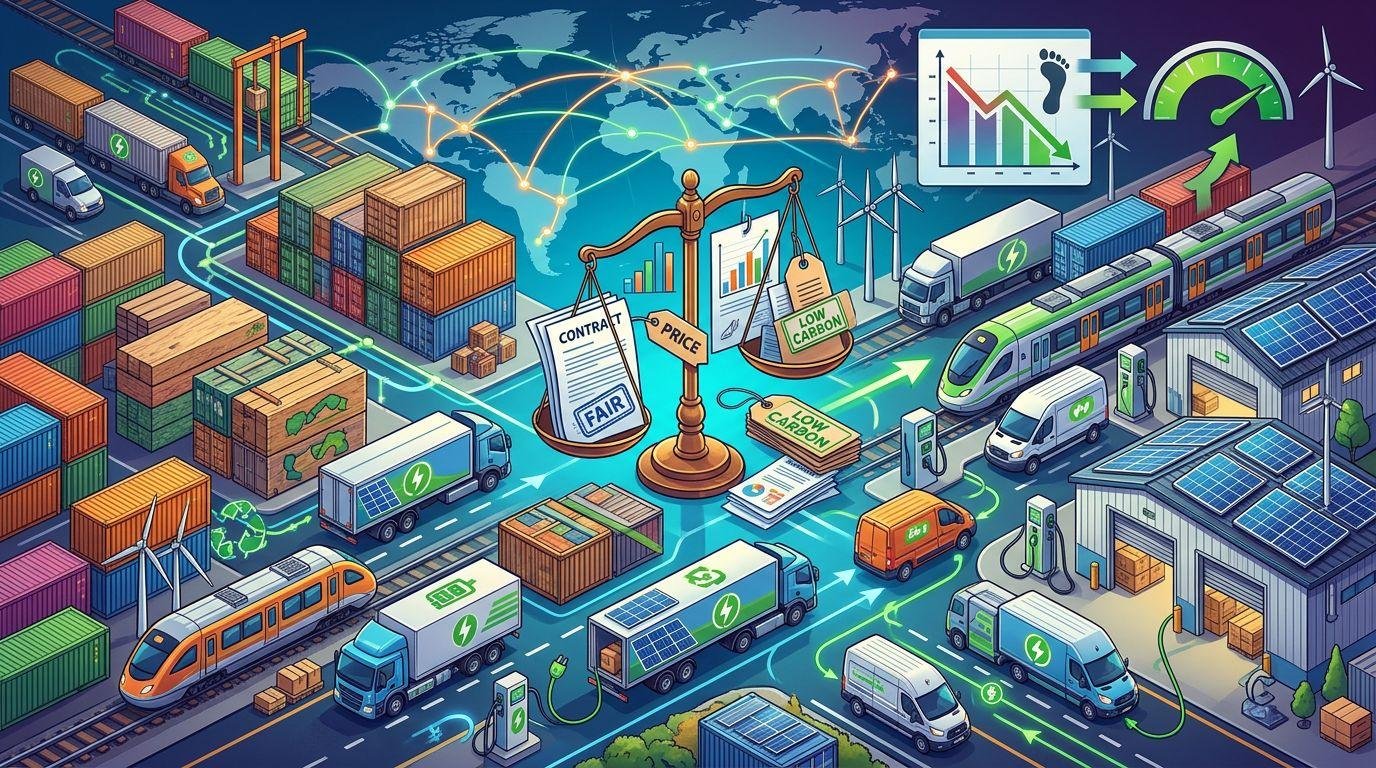
The strongest complaint was straightforward. Suppliers said they are frequently asked to provide lower-carbon products or services, yet contracts are still awarded largely on unit price. That tension appeared in 43% of the responses reviewed by the group. In practice, it means sustainability teams may request emissions cuts, but commercial teams still reward the cheapest offer, leaving suppliers to absorb the extra cost of cleaner inputs or production methods.
Hurrey said the responses suggested suppliers are not resisting the transition so much as struggling with the way it is being managed. Their message, he said, was that the expectations are often not matched by practical procurement decisions or credible commercial support.
A second major frustration concerned product specifications. Nearly a quarter of respondents said buyers can undermine their own climate goals by locking suppliers into materials, components or approved vendors that make lower-carbon production difficult or impossible. For many manufacturers, the majority of a product’s emissions are embedded in the materials they buy, which means even modest changes to specifications can have a large effect on the footprint. Some suppliers said customers wanted them to decarbonise while simultaneously dictating the exact materials to be used, or even the suppliers from whom those materials had to be sourced.
The survey also exposed a familiar problem from the other side of the reporting chain: administrative overload. Suppliers said they are being asked to complete more questionnaires, follow more methodologies and meet more reporting deadlines, often for multiple customers at once. Several said they spend more time responding to surveys than taking action, while receiving little feedback in return. Others complained that different buyers demand different platforms, data formats and timelines, creating a heavy burden especially for smaller firms.
The findings echo wider research on supply-chain decarbonisation. A guide published by the World Economic Forum has argued that effective supplier engagement depends on clear signals, shared data and active capability-building, rather than one-off requests for information. Academic research published this year has also highlighted the scale of the challenge, noting that the upstream portion of many value chains accounts for most emissions while remaining outside the buyer’s direct operational control. That makes supplier investment, rather than simple target-setting, a critical part of the solution.
The suppliers in the Scope 3 Peer Group survey also described what better engagement would look like. They wanted customers to recognise the cost premium of lower-carbon options and to factor it into commercial decisions. They called for more common methods, fewer duplicated questionnaires and greater use of shared or once-only reporting systems. They also urged buyers to be more willing to revise material specifications, commit to longer-term contracts and share the cost of new technologies or production changes. For smaller businesses, they said, expectations need to be proportionate and realistic.
The broader context is not lost on corporate sustainability teams. Supply-chain emissions are now central to many net zero strategies, and groups such as the World Economic Forum and Boston Consulting Group have described supply-chain decarbonisation as one of the biggest levers available to companies seeking credible climate progress. Yet the survey suggests that ambition alone is not enough. If procurement, product design and sustainability functions are not aligned, suppliers are left carrying the responsibility without the authority or margin to act.
The Scope 3 Peer Group said more detail on the findings will be presented at its Value Exchange Summit, a virtual event scheduled for 20 to 22 October. For buyers hoping to make progress on supply-chain emissions, the message from suppliers is already clear: if decarbonisation is the goal, commercial terms, specifications and reporting demands will all have to change too.
Source: Noah Wire Services