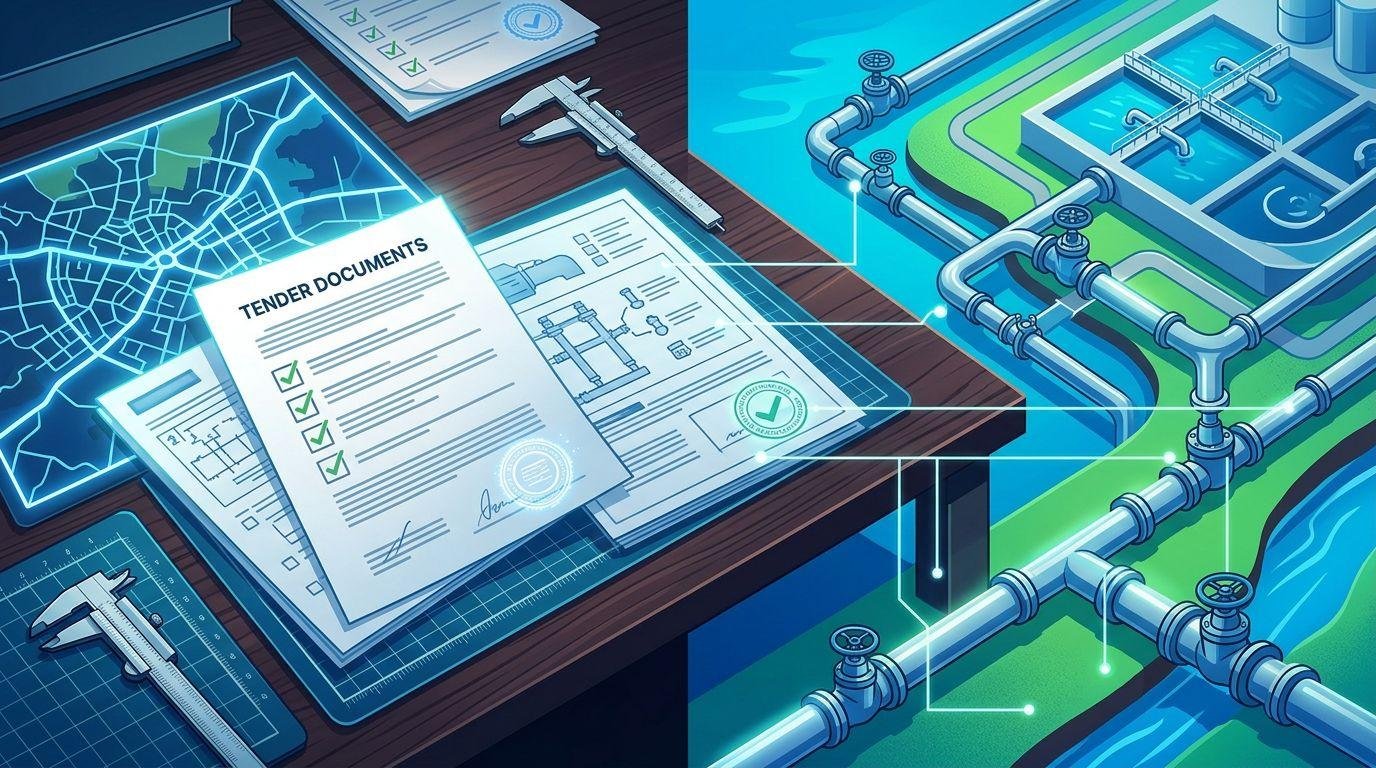
Many of the decisions that determine whether a water and wastewater project succeeds are made long before work begins on site. At the procurement stage, the quality of the tender documents often sets the tone for the entire project. If the brief does not clearly express the client’s needs, objectives and priorities, even a capable contractor may struggle to deliver the right result.
That point is echoed by experience from the U.S. Department of Veterans Affairs, where procure...
Continue Reading This Article
Enjoy this article as well as all of our content, including reports, news, tips and more.
By registering or signing into your SRM Today account, you agree to SRM Today's Terms of Use and consent to the processing of your personal information as described in our Privacy Policy.
ment guidance places strong emphasis on understanding requirements, past performance and the contractor’s ability to meet the stated need. In practice, the lesson is the same across sectors: the more precisely the client defines what success looks like, the better the chance of finding a partner who can deliver it.
For water utility projects, especially those involving treatment plants or wastewater facilities, procurement should begin with a clear picture of what the completed facility must achieve. The most successful projects, according to experience from NCC, tend to be those in which the client has already worked out what matters most, what constraints apply and where the project’s non-negotiables lie. A carefully prepared tender document is therefore not just an administrative step, but the foundation for the whole assignment.
The first question to ask is what goals and requirements matter most. The operational outcome should be described in concrete terms: how must the facility function once the project is complete, and what value should it create for the organisation? In projects involving critical infrastructure, that may include reliability, resilience, security requirements, and obligations connected to NIS2 or security-protected procurement arrangements. Financial certainty is also important. If budget discipline is a priority, that should be stated plainly so bidders understand the balance between cost, performance and risk.
The second question is what kind of experience the contractor needs to have. A project should not become a learning exercise for the selected contractor. That is particularly important where work is carried out while operations continue, since water supply and wastewater treatment are essential public functions. An upgrade to an operating water plant is very different from building on undeveloped land. The contractor, and the key people assigned to the job, should therefore have relevant experience in similar live environments.
The U.S. Veterans Affairs procurement guidance takes a comparable approach, assessing not only whether bidders understand the requirement, but also whether they have a strong performance history on similar work. That emphasis on demonstrated capability is especially relevant where mistakes could affect essential services or cause costly delays.
The third question concerns project organisation. Which people are needed for effective dialogue and decision-making? How much local presence is required? What specialist support should be available? A procurement process should not only identify the right contractor, but also make clear how that contractor’s organisation will complement the client’s own team. In complex infrastructure work, the relationship between client, project management and technical specialists can be just as important as the contract form itself.
The fourth question is which payment model best supports the project’s aims. The chosen remuneration structure should reinforce the outcome the client wants to achieve, rather than distort it. In collaborative contracts, whether based on fixed fees or reimbursement of actual costs, it is important to be clear about what is included in the fee. Overly intricate schedules of separate payments can create poor incentives and make it harder to use the right expertise at the right time. The focus should be on total project cost and the value created, not simply on the headline level of the fee.
This is another area where public-sector procurement guidance abroad offers a useful parallel. The Veterans Affairs department also stresses the importance of complete and accurate submissions, while project management examples from its academy highlight how a clear statement of work can reduce later changes and give stakeholders a more realistic view of what the project will mean in practice. Those principles apply equally to infrastructure procurement: clarity at the outset reduces friction later.
A successful procurement is about much more than choosing the lowest price. Clear objectives, relevant experience, an appropriate project organisation and a payment model that supports the project’s purpose all improve the chances of appointing the right contractor and creating the conditions for a good outcome. In water and wastewater projects, where the stakes are high and the systems are vital, that early discipline can make the difference between a difficult contract and a well-run delivery.
Source: Noah Wire Services