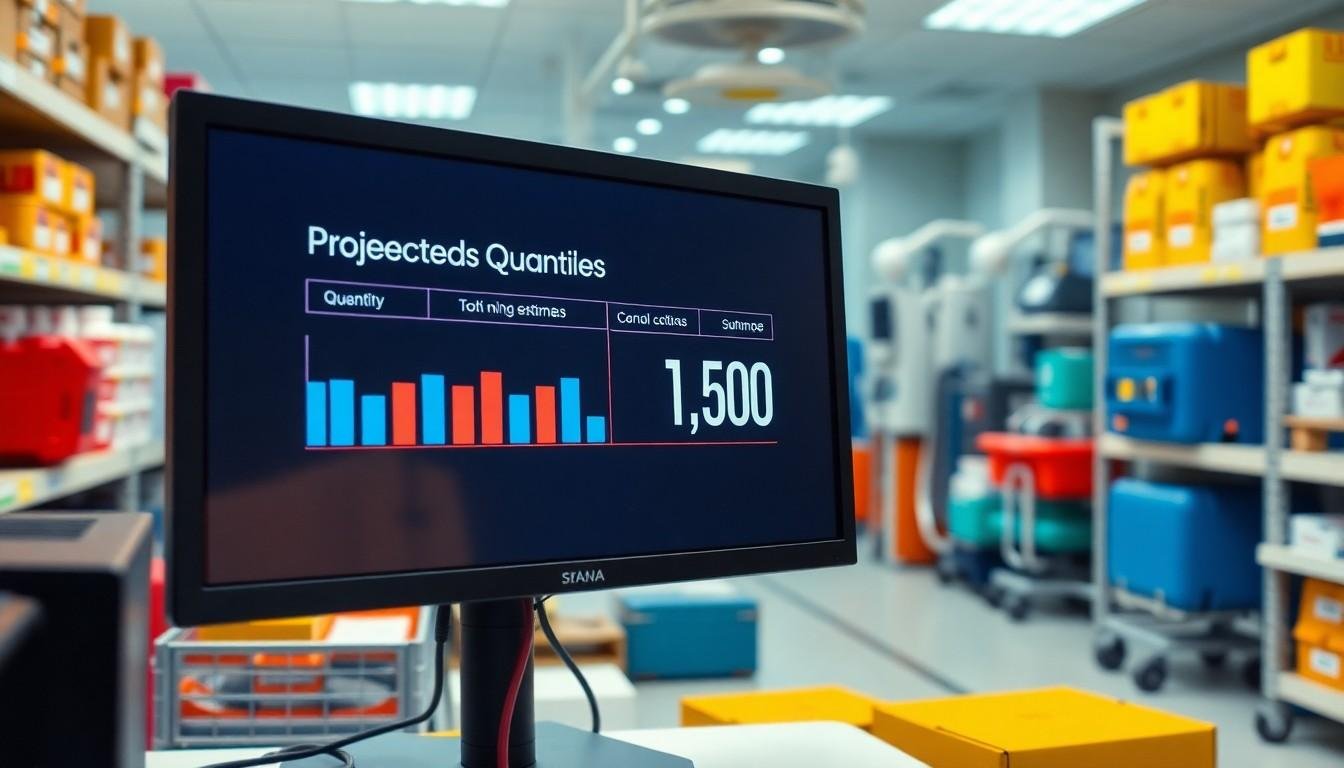
Procurement Partners is pushing further into AI-assisted healthcare purchasing with an update to its Hybrent platform that will not only suggest which products may need replenishing, but also estimate how many units to order. The company says the tool is designed to reduce routine admin for healthcare teams that spend a large share of their time rebuilding repeat orders from scratch.
Hybrent already introduced an earlier AI feature that highlighted items a customer was likely t...
Continue Reading This Article
Enjoy this article as well as all of our content, including reports, news, tips and more.
By registering or signing into your SRM Today account, you agree to SRM Today's Terms of Use and consent to the processing of your personal information as described in our Privacy Policy.
o need, using recent purchasing behaviour as a guide. The next stage adds quantity recommendations, turning the system from a simple reminder tool into something closer to an ordering assistant. According to Procurement Partners, the software reviews a customer’s buying history from the previous 90 days and uses that information to predict likely needs over the next two weeks.
The idea is straightforward: give procurement teams a starting point that reflects their own ordering patterns, then allow staff to review and adjust it before anything is submitted. The company says recommended items and quantities can be transferred directly into a cart, which should make it quicker to assemble routine orders while keeping humans in charge of the final decision.
That caution matters. In healthcare, supply needs can shift rapidly with changes in patient volume, seasonal pressure, staffing or procedure schedules, so the software is positioned as an aid rather than an autopilot. Procurement Partners says the recommendations are intended to support judgement, not replace it.
The move fits a broader shift across healthcare supply chain software towards more predictive tools. GHX has been promoting predictive and prescriptive automation through its own AI-enabled platform, while SCWorx recently announced an AI-assisted data management model aimed at improving the classification and enrichment of healthcare item data. Elsewhere in the market, Ordely says its platform forecasts demand 30 days ahead, and Chooch has focused on camera-based inventory monitoring for real-time stock visibility.
Taken together, those offerings point to the same underlying problem: hospitals and clinics want fewer stockouts, less waste and less manual reordering. Industry commentary on AI in healthcare logistics increasingly centres on the same themes – better forecasting, cleaner data and tighter inventory control. That is also where Hybrent is placing its bet, with a system aimed at making everyday purchasing less reactive and more data-led.
Procurement Partners says the feature should be especially useful for organisations with higher and more regular ordering volumes, because more purchasing history gives the algorithm more to work with. But even smaller teams, the company argues, can benefit from having a structured, history-based draft order rather than starting each procurement cycle from a blank screen.
The broader promise is not that AI will take over healthcare procurement, but that it can remove some of the most repetitive work from it. If the software can reduce time spent checking old orders, building carts and second-guessing quantities, that leaves staff free to focus on exceptions, urgent needs and the parts of supply management that still require human oversight.
For a sector where shortages can be costly and over-ordering can be just as wasteful, that balance between speed and control is likely to remain the real appeal of AI-assisted ordering.
Source: Noah Wire Services