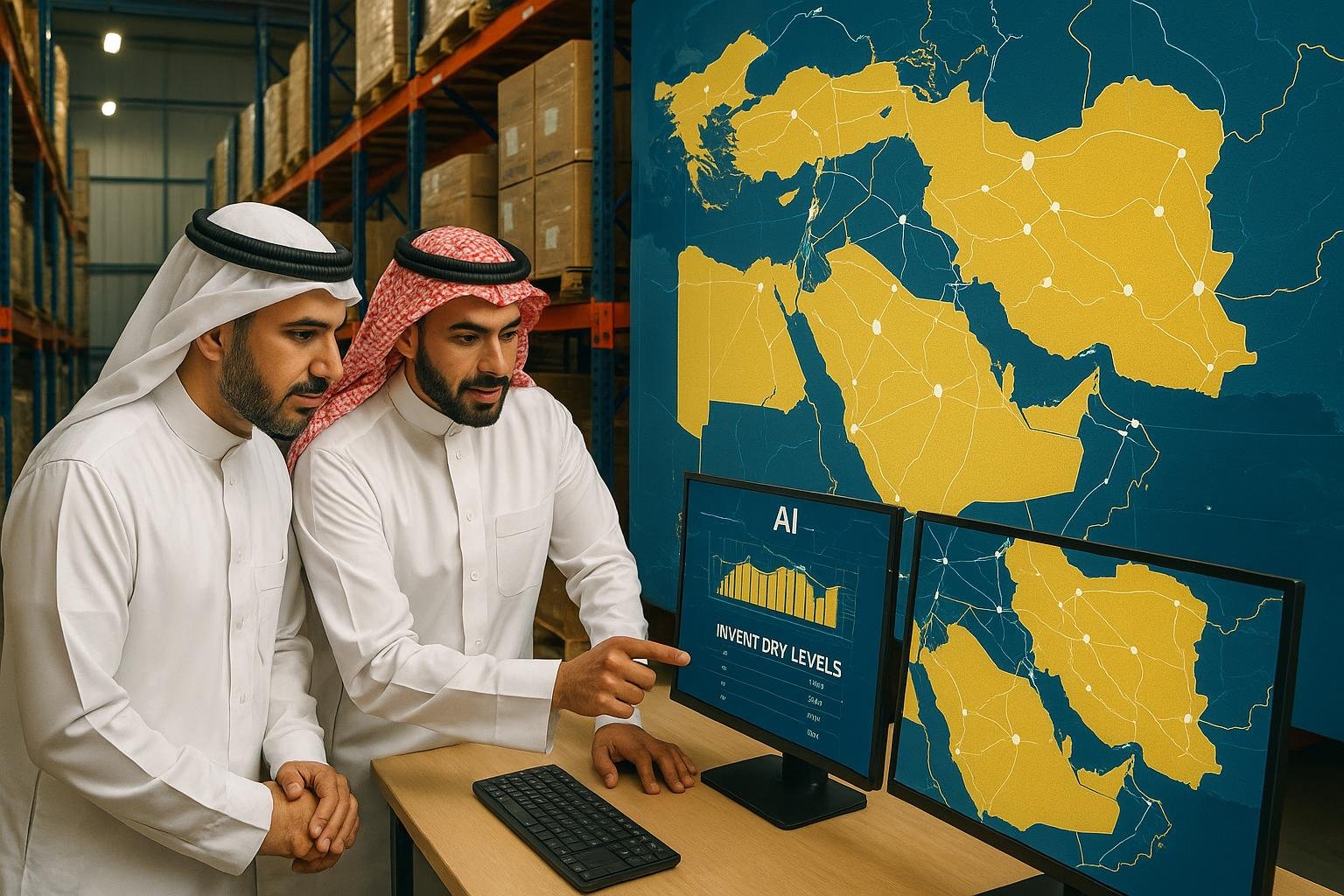
Following recent regional disruptions, supply chain conditions have started to settle, with transport and input costs easing somewhat. For many businesses, that has brought short-term relief after a period of delay, uncertainty and sharper costs. But executives and logistics specialists say the deeper lesson is not that the threat has passed, only that volatility has become the new operating environment.
That shift is especially relevant in the Middle East, where geopolitical t...
Continue Reading This Article
Enjoy this article as well as all of our content, including reports, news, tips and more.
By registering or signing into your SRM Today account, you agree to SRM Today's Terms of Use and consent to the processing of your personal information as described in our Privacy Policy.
ensions, climate pressures, cyber risks and uneven demand have all pushed firms to rethink how goods move through the region. S&P Global has warned that conflicts in the Middle East are already affecting energy, transport, food and manufacturing networks, and that interruptions to exports from the region amount to a measurable drag on global output. In that context, supply chain visibility is no longer being treated as a reporting tool. It is increasingly seen as a strategic necessity.
Irina Albanese, vice-president and global head of innovation centres and head of innovation for the Middle East, Africa and Türkiye at DHL, says visibility has moved well beyond basic tracking. She argues that companies now need to see inventory, capacity and movement almost as they happen, so they can spot problems earlier, protect service levels and choose between cost, speed, resilience and sustainability with greater confidence.
The point, she says, is not simply to observe what is happening. It is to act on it. That may mean reprioritising orders, shifting labour, adjusting automation or rerouting shipments when conditions change.
Skander Kastalli, a partner in supply chain advisory at KPMG Middle East, says this is why visibility has become a competitive differentiator rather than an operational convenience. In a region shaped by conflict, disease outbreaks, cyberattacks and weather-related disruption, he says companies that can see their supply chains end to end are better placed to forecast demand, make faster decisions and maintain customer trust through more reliable delivery promises.
Ebraam Elias, a supply chain engineer at Innovo Group, makes a similar case, arguing that the real value now lies in using live information to support predictive planning and cross-functional coordination. In his view, visibility helps organisations anticipate disruption, preserve continuity and improve service while keeping a tighter grip on cost.
The urgency is reinforced by broader digital trends in the region. Adobe research released this year found that 88% of Middle East organisations are experimenting with or deploying AI, while 61% say they have mature cloud infrastructure. Yet the same study pointed to persistent problems with execution, measurement and integration, suggesting that many companies still struggle to turn ambitious digital investment into operational gains.
That gap matters because the next stage of supply chain management is being shaped by AI, automation and analytics. Instead of relying only on dashboards, firms are increasingly using systems that can flag anomalies, model scenarios and recommend actions. Digital twins are also being used to test changes before they are made in the real world, while control towers are evolving from monitoring hubs into decision centres.
Albanese says the goal is shifting from visibility to prediction and prescriptive action. In practice, that means detecting change early, testing response options and then making adjustments quickly and safely. She adds that this requires closer integration between warehouses, transport, inventory and customer service, supported by real-time data and clearer governance.
The broader direction of travel is also being shaped by a reassessment of sourcing risk. Viktor Sartakov-Korzhov, chief executive and founder of SMEY’s, says instability is pushing companies away from models built mainly around lowest cost and towards systems designed for resilience. He points to alternative production methods, including fermentation-based manufacturing, as a way of reducing dependence on geographically concentrated agricultural inputs and creating supply lines that are less exposed to political volatility.
Across the Gulf, governments have already invested heavily in smart ports, digital trade platforms and customs modernisation, but KPMG’s Kastalli says the hardest part now is integration. Real-time visibility still runs into friction when partners use different systems and data standards, he says, adding that future progress will depend on interoperability between shippers, carriers and regulators as much as on infrastructure spending.
The message from business leaders is clear: the region has made notable progress in digital logistics, but visibility is only the starting point. The companies likely to gain an edge are those that can combine live data, AI and coordinated execution, turning supply chain transparency into faster decisions and more durable resilience.
Source: Noah Wire Services