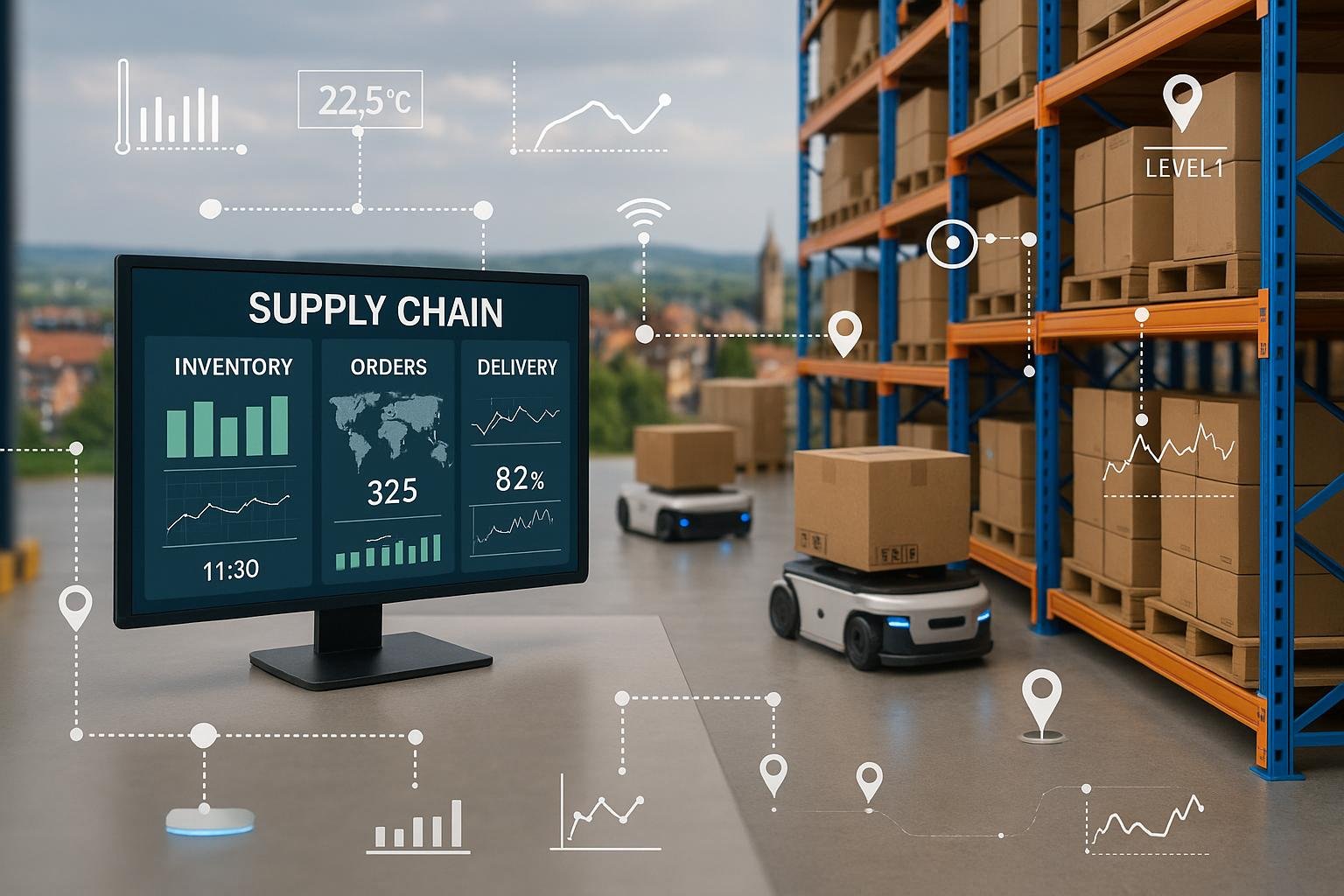
For many businesses, supply chain visibility has moved from a back-office concern to a board-level issue. In the UK, where firms are dealing with volatile demand, tighter margins and rising cyber risk, the ability to see what is happening across suppliers, inventory, logistics and fulfilment has become central to resilience. Yet, as the ERPSoftwareBlog guide argues, many organisations still rely on disconnected systems, spreadsheets and delayed reporting, leaving managers to make deci...
Continue Reading This Article
Enjoy this article as well as all of our content, including reports, news, tips and more.
By registering or signing into your SRM Today account, you agree to SRM Today's Terms of Use and consent to the processing of your personal information as described in our Privacy Policy.
sions based on incomplete information.
At its simplest, supply chain visibility means being able to monitor the movement of goods, data and commitments across the full chain in real time. That includes stock levels across sites, order progress, supplier lead times, transport updates and demand signals. If any of those inputs arrive late or sit in separate systems, the picture quickly becomes unreliable. The result is familiar: inaccurate forecasts, stockouts, surplus inventory and expensive firefighting.
The problem is often structural. Finance, operations and inventory teams may each work from different platforms, creating conflicting figures and slow reconciliation. Spreadsheets add another layer of risk because they depend on manual updates and version control rather than live data. Businesses that only refresh information once a day, or even once an hour, are always looking backwards. By the time a shortage or delay appears in a report, the commercial damage may already be underway.
That lack of visibility is no longer just an operational nuisance. According to ITPro, supply chain resilience is under increasing scrutiny because cybercriminals are exploiting weak points in third-party networks, with around 30% of breaches now involving suppliers. The article notes that companies need to map dependencies more carefully, strengthen governance and monitor third parties continuously. TechRadar has also reported that major UK businesses have suffered severe disruption from supply chain-linked cyberattacks in 2025, reinforcing the idea that resilience and visibility are now inseparable.
The compliance angle is becoming more important too. ITPro has pointed out that businesses outsourcing data handling to suppliers need a clear understanding of where information is stored, who can access it and how it is governed, particularly for UK companies processing European data under GDPR. In other words, visibility is not only about operations. It is also about risk, data control and accountability.
Artificial intelligence is starting to offer a way forward, though adoption remains uneven. ITPro reported that only 32% of UK firms have integrated AI into their supply chains, with many still held back by legacy systems and caution. The technology can improve forecasting, automate routine tasks and help teams respond faster to disruptions, but experts say the most effective approach is usually incremental rather than sweeping. Small pilots tend to work better than big-bang transformation programmes.
That is where Microsoft Dynamics 365 Supply Chain Management is being positioned as a remedy. According to Microsoft, the platform brings operational data into a single cloud-based environment and is designed for real-time decision-making, AI-assisted productivity and phased modernisation. The company also says it offers extensibility through thousands of developer touchpoints, along with privacy, security and reliability features.
In practical terms, the appeal is straightforward. A unified system can help businesses track inventory across locations, trace the movement of goods from supplier to customer, and connect planning with live operational data. Built-in analytics can improve demand forecasting, while integrated supplier and logistics information can give managers earlier warning of delays or bottlenecks. For manufacturers, retailers and food producers in particular, that kind of joined-up view can mean fewer shortages, less excess stock and better service levels.
The wider lesson is that visibility is no longer something companies can patch together with more reporting or more manual effort. As ITPro and TechRadar both suggest, the modern supply chain is too exposed, too interdependent and too vulnerable to rely on fragmented tools. Businesses that want to stay competitive need systems that combine real-time data, intelligent forecasting and tighter control over third-party risk.
Source: Noah Wire Services