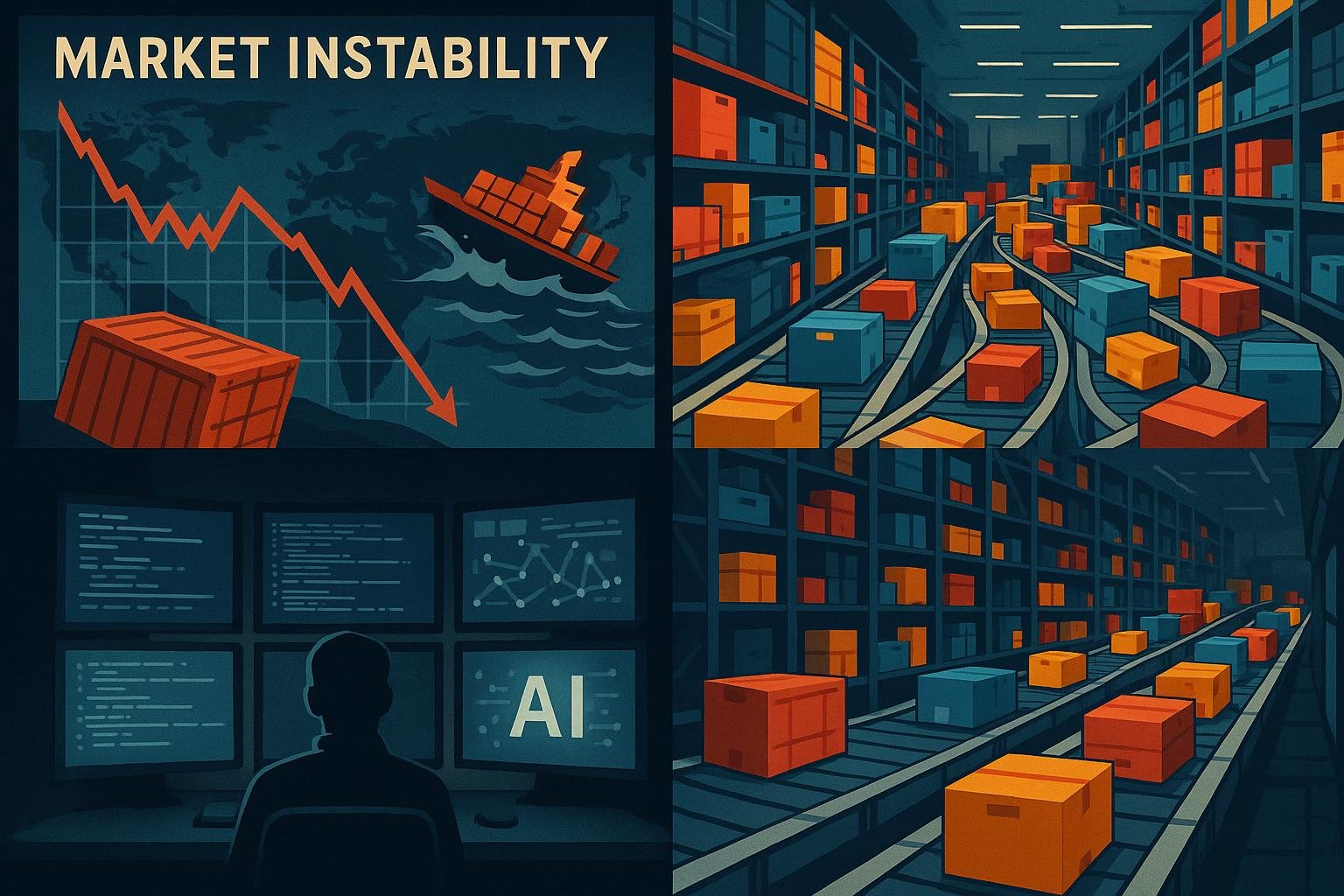
Procurement has moved far beyond its old reputation as a quiet back-office discipline. In an environment shaped by higher financing costs, supplier instability and volatile prices, it has become a test of whether a business can keep operating at all, according to Stas Nikонов, managing director for product development at ETP GPB, speaking to Computerra.
The shift is not merely semantic. Where purchasing once focused on getting goods in on time and, if possible, cheaply, it ...
Continue Reading This Article
Enjoy this article as well as all of our content, including reports, news, tips and more.
By registering or signing into your SRM Today account, you agree to SRM Today's Terms of Use and consent to the processing of your personal information as described in our Privacy Policy.
is now tied directly to resilience, cash flow and operational continuity. Delayed payments have become harder to absorb when borrowing costs are elevated. Supply chains have been disrupted. Long-standing foreign partners have exited. Prices can move sharply in the time it takes a traditional tender process to run its course.
That is why digital procurement platforms are increasingly being treated as strategic infrastructure rather than administrative software. Their value lies less in headline savings than in speed, visibility and control. A conventional procurement cycle can stretch for months, but digital tools can compress that to days or even weeks, allowing companies to respond before budgets are eroded by inflation or currency moves.
Competition among suppliers is another advantage. Digital marketplaces widen the pool of potential vendors and reduce dependence on a handful of entrenched counterparties. They also give buyers a more realistic sense of market pricing at the moment of purchase, rather than forcing them to rely on stale assumptions from earlier in the budgeting cycle.
Risk management has become equally important. If a supplier fails part-way through a contract, the consequences can spread quickly through production, logistics and service delivery. Digital systems help procurement teams assess counterparties faster, monitor contract performance and spot warning signs before they become operational crises.
Computerra’s report highlights several practical examples from ETP GPB’s own platform. In one case involving a major airline, emergency orders for spare parts and consumables had previously been placed under pressure, with suppliers able to quote prices far above market levels because there was no time to seek alternatives. Once the process was digitised, bidding could take place within hours, with multiple offers visible in real time.
The same logic is being applied in other sectors. For large companies operating under Russia’s 223-FZ procurement regime, long purchasing cycles have often been a structural problem. Market-style catalogues, such as VESNA.Market, are designed to shorten that journey by letting buyers choose from pre-listed supplier offers and receive goods within about a week. For suppliers, this creates a direct route to major corporate customers without the burden of lengthy accreditation or drawn-out paperwork.
Construction is another area where speed matters. According to the Computerra piece, a mechanism introduced on the Trading Portal from 2026 is meant to help subcontractors receive advance payments directly into their bank accounts rather than waiting for funds to move through treasury-controlled channels. For firms that live close to the edge on working capital, the difference can be material.
The broader industry direction is also changing. McKinsey has argued that procurement is becoming a data-driven function, with artificial intelligence and analytics creating a strategic advantage, although the consultancy notes that poor data quality and weak business cases still slow adoption. In cloud procurement, McKinsey warns that dynamic pricing and rising complexity require a more deliberate, technology-led approach to prevent overspending.
That fits with a wider push towards cloud-based systems. Many large organisations have long been cautious about moving core processes off-premises, but concerns over internal infrastructure resilience have made that stance harder to defend. Cloud providers, with their investment in security and redundancy, are increasingly seen as a more robust option than some in-house systems.
Artificial intelligence is also starting to move from pilot projects into everyday procurement work. ETP GPB says its AI assistant for buyers is already in industrial use, handling routine tasks such as comparing commercial offers, analysing pricing and searching for suppliers. The aim is not to replace procurement specialists, but to free them for higher-value decisions.
The message from the sector is clear: procurement is no longer just about saving money. In unstable markets, it is about keeping the business upright. Companies that still depend on spreadsheets and email chains may be able to function in calmer times. In the current environment, they are increasingly exposed.
Source: Noah Wire Services