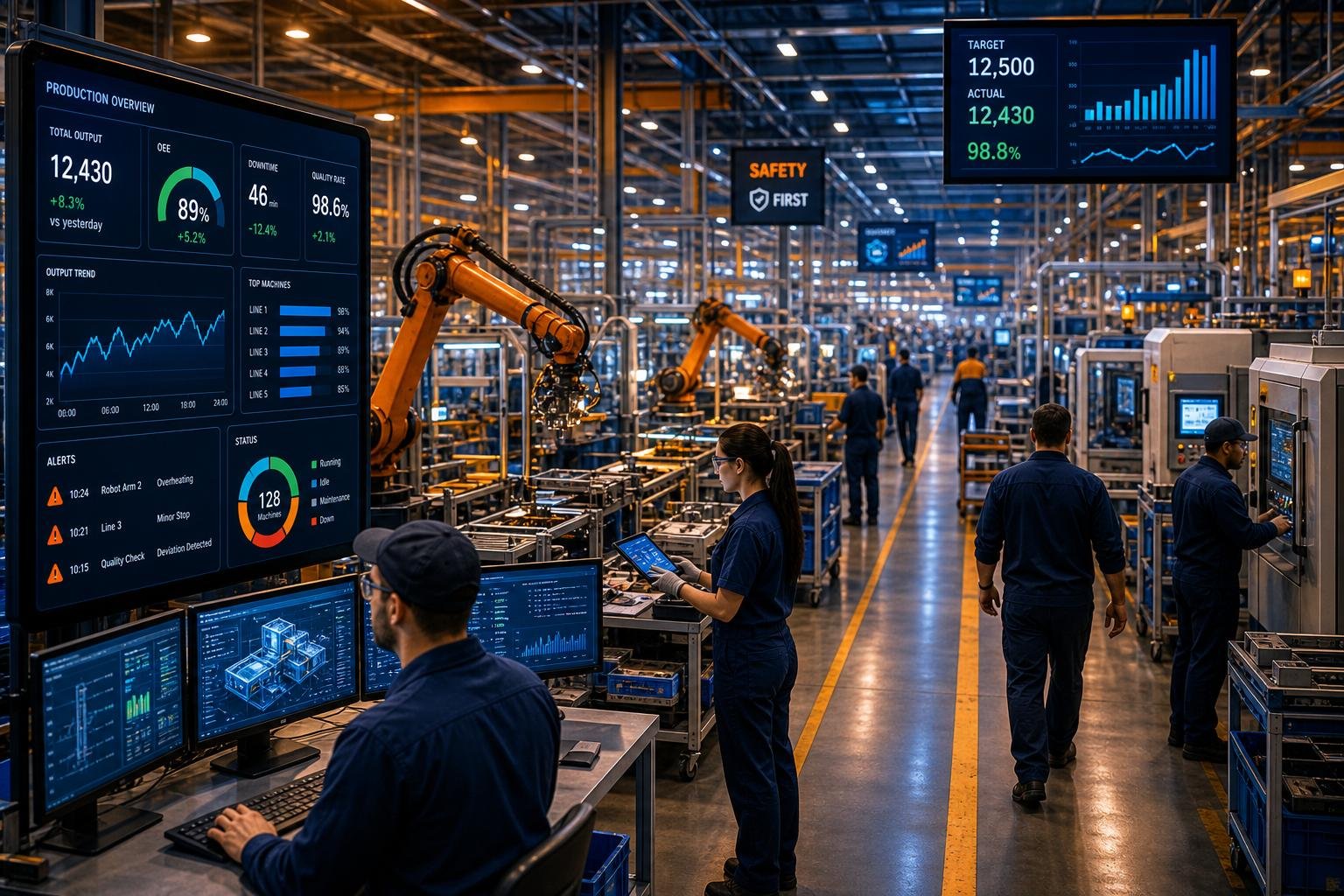
The market for modern manufacturing execution systems is moving from a specialist software niche to a core part of digital factory strategy, as manufacturers look for tighter control over production, better visibility on the shop floor and faster responses to disruption. The Business Research Company says the sector is on track for strong expansion, supported by the spread of smart factories, cloud delivery and analytics tools that help operators manage quality, output and compliance ...
Continue Reading This Article
Enjoy this article as well as all of our content, including reports, news, tips and more.
By registering or signing into your SRM Today account, you agree to SRM Today's Terms of Use and consent to the processing of your personal information as described in our Privacy Policy.
in real time.
That outlook is broadly echoed by Grand View Research, which in April 2026 projected the wider manufacturing execution systems market would reach $41.60 billion by 2033, growing at 11.7% a year from 2026. Its analysis points to Industry 4.0 programmes, IoT adoption and greater use of AI and advanced analytics as central to the market’s momentum. In practice, that means MES platforms are increasingly being used not just to collect production data, but to turn it into operational decisions that can reduce downtime and improve efficiency.
The Business Research Company’s own forecast is more aggressive, putting the market at $47.82 billion by 2030 and describing a 15.9% annual growth rate. The company links that growth to rising demand for operational transparency, modular software architectures and systems that can be scaled across multiple sites. It also identifies cloud-based MES, real-time production monitoring and data-led manufacturing as key themes shaping purchasing decisions.
Corporate activity has reinforced that shift. Schneider Electric completed its acquisition of AVEVA in January 2023, according to AVEVA’s own announcement, with the aim of strengthening Schneider Electric’s industrial software portfolio and folding AVEVA’s MES capabilities into its broader automation offering. AVEVA said at the time that the deal would support data-driven decision-making and more immediate control across manufacturing operations.
Product development has followed suit. AVEVA also announced an updated MES offering in February 2023 designed for data centre environments, with multi-site monitoring and performance optimisation features. The company framed the launch as part of a wider effort to digitise and standardise workflows, while also improving oversight of inventory, production and quality control.
The market is typically segmented by component, deployment and application. Software and services remain the main categories, while deployment models include on-premise, cloud and hybrid systems. Use cases stretch across fast-moving consumer goods, medical, automotive, electronics, aerospace and defence, among others, reflecting the broad push to connect manufacturing systems more closely with business planning and compliance requirements.
As manufacturers continue to modernise operations, MES is increasingly being treated as a foundational layer rather than a back-office tool. The direction of travel is clear: more connected plants, more automated insight and more pressure on vendors to deliver flexible systems that can keep pace with complex production environments.
Source: Noah Wire Services