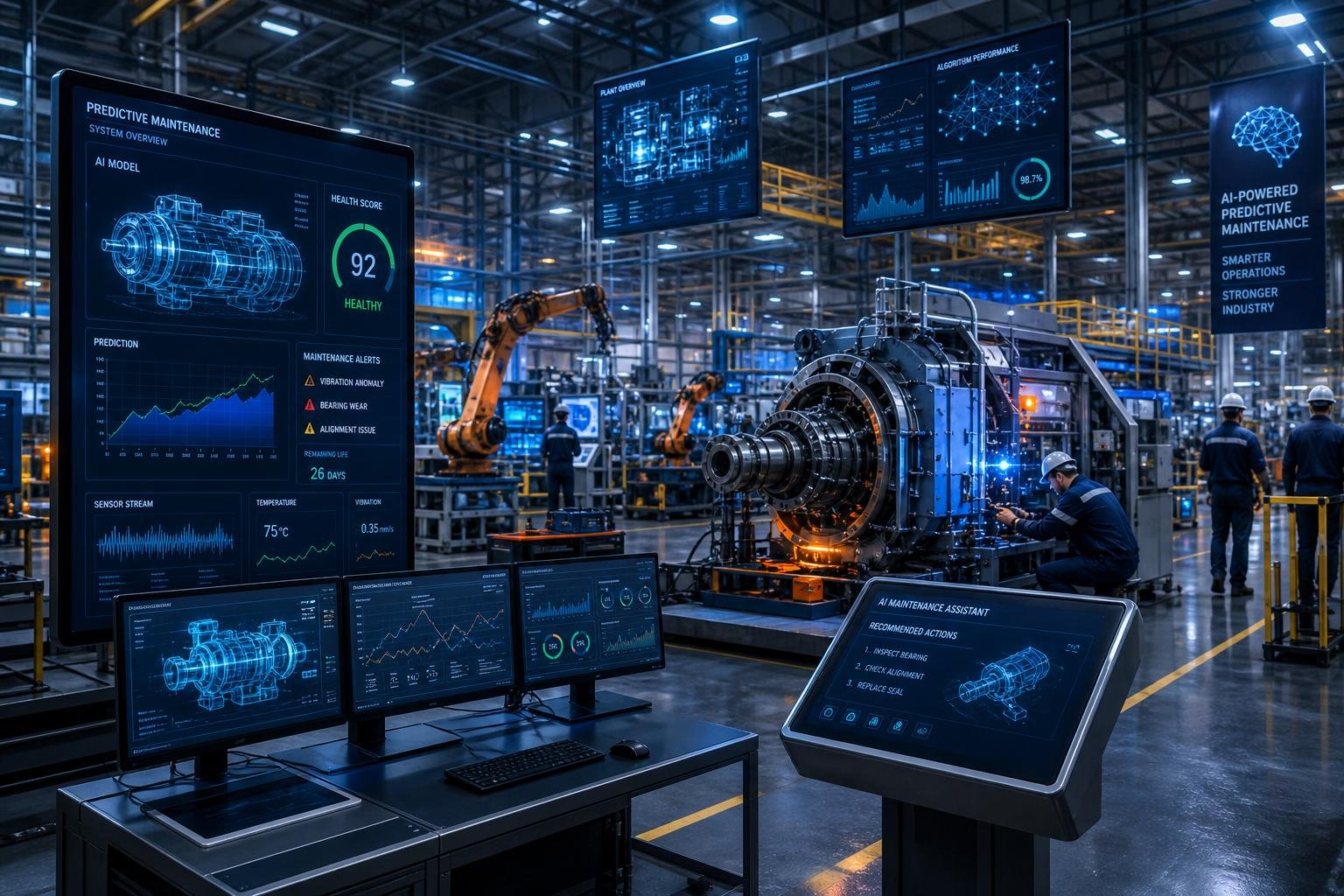
AI-driven predictive maintenance is moving quickly from pilot projects into the daily machinery of manufacturing and supply chains, and the appeal is obvious: fewer breakdowns, better planned servicing and longer life for expensive equipment. In plants running stamping presses, welding robots and CNC machines, even a short unplanned stoppage can cascade into missed deliveries, premium freight costs and strained customer relationships.
But the same systems that promise efficienc...
Continue Reading This Article
Enjoy this article as well as all of our content, including reports, news, tips and more.
By registering or signing into your SRM Today account, you agree to SRM Today's Terms of Use and consent to the processing of your personal information as described in our Privacy Policy.
y also introduce a fresh layer of legal and commercial exposure. A missed warning on a failing component can shut down a line, trigger OEM penalties and leave suppliers facing losses that far exceed the cost of the software. That mismatch is becoming a central concern for procurement teams and plant managers who are adopting AI tools without fully accounting for how those tools fit into a manufacturing environment.
The problem, according to the growing body of commentary on AI in industrial operations, is that standard vendor terms are often built for ordinary software, not for production-critical systems. Liability is frequently limited to the value of the subscription, while performance promises are vague and detached from real-world outcomes. In a factory setting, that can leave the customer carrying the consequences of an error even when the AI product was sold as a way to avoid exactly that kind of disruption.
Legal advisers are increasingly warning that suppliers should negotiate these agreements with the same care they apply to customer contracts. Among the key protections often recommended are specific performance warranties, clear allocation of data-quality responsibilities, more realistic liability caps and carve-outs for consequential losses. The aim is not simply to improve bargaining position, but to make sure the contract reflects the operational stakes of a missed prediction.
The broader context is the rapid spread of AI across manufacturing and supply chains. A 2026 industry series on AI in manufacturing and supply chain risk described a landscape shaped by autonomous systems, predictive analytics, digital twins and live sensor integration. That shift is creating new efficiencies, but also new questions about accountability when automated tools make the wrong call.
For manufacturers, the challenge is no longer whether AI can help, but how to deploy it without creating hidden liabilities. As predictive maintenance becomes more deeply embedded in production lines, the contract governing that technology may matter almost as much as the model itself.
Source: Noah Wire Services