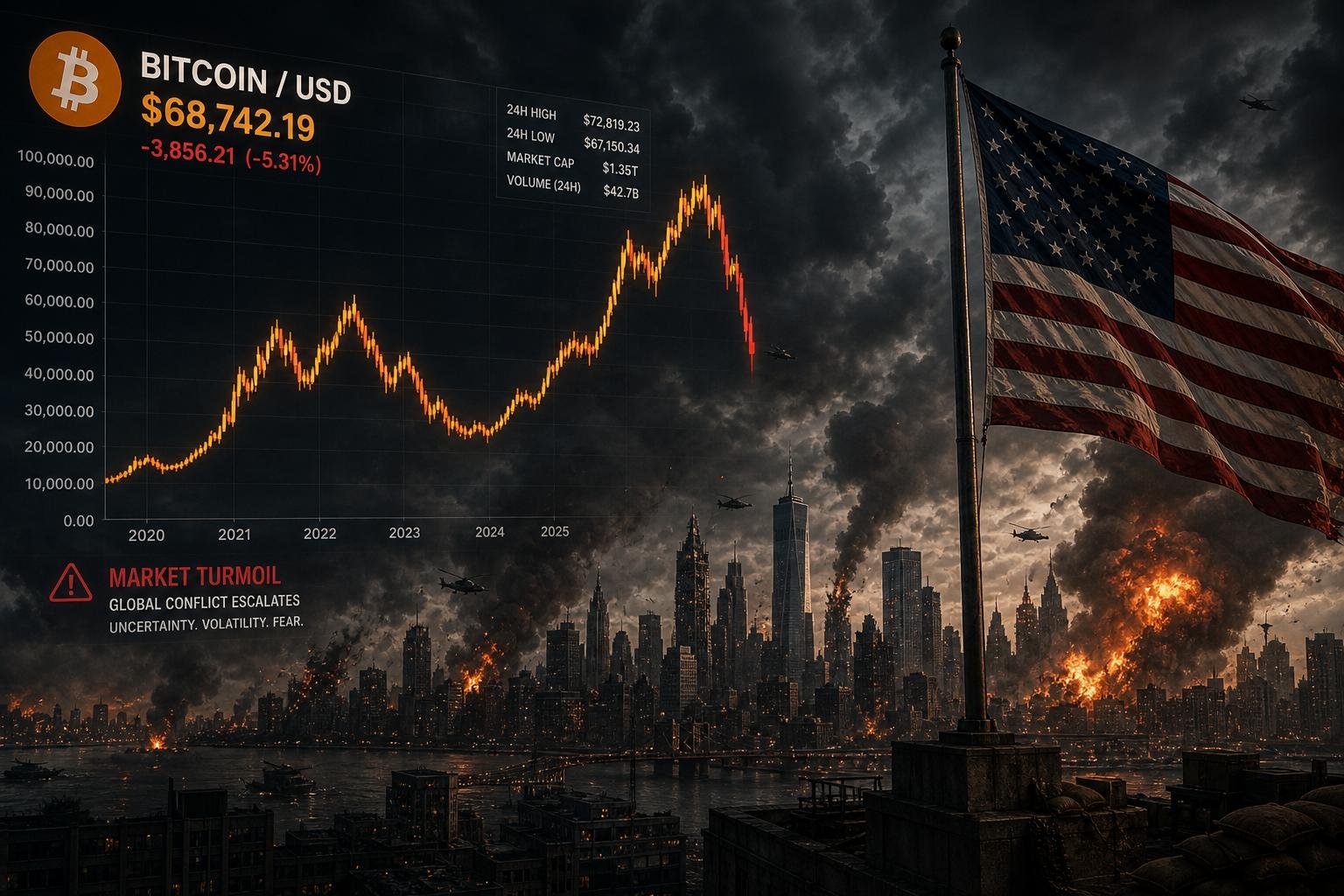
Bitcoin extended its recent rally on Sunday after Donald Trump rejected Iran’s latest peace proposal, with traders again treating the cryptocurrency as a beneficiary of geopolitical stress rather than a casualty of it.
The move briefly shook the market. Bitcoin slipped from about $81,400 to $80,500 within 45 minutes of the post on Truth Social before recovering sharply and climbing back above $82,000 within hours, according to market data cited by Bitcoinist. That rebound hel...
Continue Reading This Article
Enjoy this article as well as all of our content, including reports, news, tips and more.
By registering or signing into your SRM Today account, you agree to SRM Today's Terms of Use and consent to the processing of your personal information as described in our Privacy Policy.
ped force more than $60 million in short positions to unwind over a four-hour period.
The renewed bid came against a backdrop of escalating conflict in the Middle East. The war, which Bitcoinist said began 10 weeks ago, has continued to unsettle global markets, with the Strait of Hormuz in focus because roughly one-fifth of the world’s oil trade passes through the waterway. Oil prices also moved higher, with Brent and related benchmarks under pressure as traders priced in a more prolonged disruption.
Bitcoin’s resilience has been notable. Since the conflict began, the token has gained nearly 30%, outpacing both gold and the S&P 500, according to the same report. That strength stands in contrast to the sharper risk-off tone seen across much of traditional finance as investors weigh the economic impact of higher energy prices and uncertain diplomacy.
Attention is now shifting to Washington, where two events this week could influence sentiment further. Markus Thielen, chief executive of 10x Research, said a Senate vote on Kevin Warsh’s nomination to lead the Federal Reserve and a committee markup on the CLARITY Act may both be supportive for digital assets. He described the legislation as one of the most consequential crypto measures in years, arguing that it could finally give the market clearer regulatory footing.
Warsh, a former Fed governor and ally of Trump, has been seen as more hawkish on inflation than Jerome Powell. Coverage from Kiplinger said his confirmation would add another layer of uncertainty for rate-sensitive assets, while also signalling continuity on central bank independence. Trump nominated Warsh in January, and the White House said the choice drew broad support from lawmakers and financial figures.
The Federal Reserve left interest rates unchanged at its April meeting, holding the benchmark range at 3.5% to 3.75% amid rising inflation pressures tied in part to energy costs, according to Kiplinger. Powell’s term ends on May 15, and markets are now watching whether Warsh emerges as the next chair as scheduled.
The conflict itself appears far from resolution. Trump’s rejection of Iran’s proposal ended hopes of a breakthrough by Wednesday, while Israeli Prime Minister Benjamin Netanyahu said the fighting would continue until Iran’s uranium sites were fully dismantled.
For now, Bitcoin is behaving less like a purely speculative asset and more like a macro trade on war, oil and policy uncertainty. That may help explain why, even after an abrupt dip, the market quickly chose to buy the weakness.
Source: Noah Wire Services