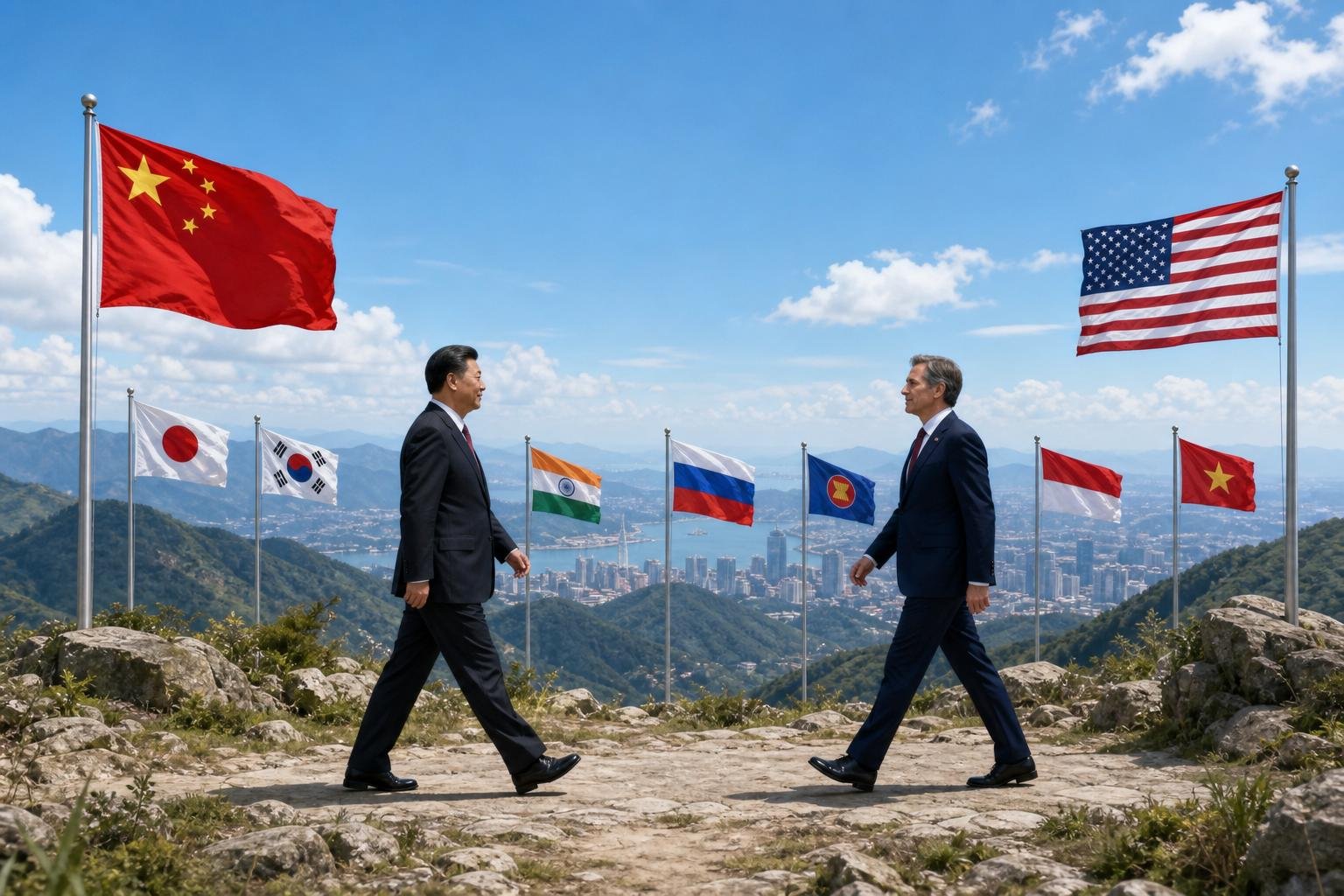
The diplomatic choreography around this week’s expected Trump-Xi summit is exposing how much wider the agenda has become than traditional trade friction.
Before U.S. President Donald Trump sits down with Chinese President Xi Jinping in Beijing later this week, Washington is dispatching senior officials across East Asia, while Chinese and U.S. trade negotiators are due to meet in Seoul to settle the details. The sequence underlines how the summit has become a regional event as...
Continue Reading This Article
Enjoy this article as well as all of our content, including reports, news, tips and more.
By registering or signing into your SRM Today account, you agree to SRM Today's Terms of Use and consent to the processing of your personal information as described in our Privacy Policy.
much as a bilateral one, with allies and rivals alike watching for clues on tariffs, security and supply chains.
U.S. Treasury Secretary Scott Bessent has already arrived in Japan for a three-day visit, where he is expected to meet Prime Minister Sanae Takaichi, Finance Minister Satsuki Katayama and Bank of Japan Governor Kazuo Ueda. According to Japanese and regional reports, the talks are likely to cover yen weakness, economic security issues such as rare earths and energy, and the impact of the war in Iran. That visit comes at a delicate moment for Tokyo, whose relationship with Beijing has deteriorated after Takaichi signalled that Japan would support Taiwan if threatened by Chinese military action.
The Taiwan issue is likely to hover over the Beijing summit too. Trump has said arms sales to Taipei are on the table, and Japan will be paying close attention to the language that emerges from any joint readout or public comment, given the direct implications for regional security.
In Seoul, meanwhile, Bessent is due to meet Chinese Vice Premier He Lifeng, who is travelling to South Korea for trade talks ahead of the leaders’ meeting. Chinese officials have framed the choice of Seoul as a sign of trust in South Korea, while analysts say the compressed timetable suggests both sides are aiming for practical deliverables rather than a broader reset.
Nomura economist Ting Lu said in a note that the talks are more likely to focus on avoiding escalation than on creating a durable new framework for the relationship. He added that the most urgent issue is the Iran-Hormuz crisis, reflecting how conflicts far beyond East Asia are now feeding into the U.S.-China agenda.
Trump is expected to arrive in Beijing on Wednesday evening, with a formal welcome ceremony, a one-on-one meeting with Xi and a visit to the Temple of Heaven the next day, followed by a state banquet. The White House has invited more than a dozen business leaders to accompany him, including Elon Musk, Tim Cook and Kelly Ortberg, though Jensen Huang is not among them.
Any economic progress is likely to be selective. The Economist Intelligence Unit expects China may increase purchases of Boeing aircraft and U.S. agricultural goods such as soybeans and beef, but says any rebound is unlikely to return to the peaks seen in previous years. It argues that China’s buying power will still be constrained by limits on U.S. technology concessions, which are themselves shaped by politics in Washington.
The summit is also being watched for signs of follow-up diplomacy. Xi is expected to travel to the U.S. later this year, and Trump is due to attend an Asia-Pacific Economic Cooperation meeting in Shenzhen in November, creating another possible encounter between the two leaders. There is also speculation about a further visit by Russian President Vladimir Putin next week, adding to the sense that this is shaping up as a crowded and strategically loaded stretch of summitry.
Source: Noah Wire Services