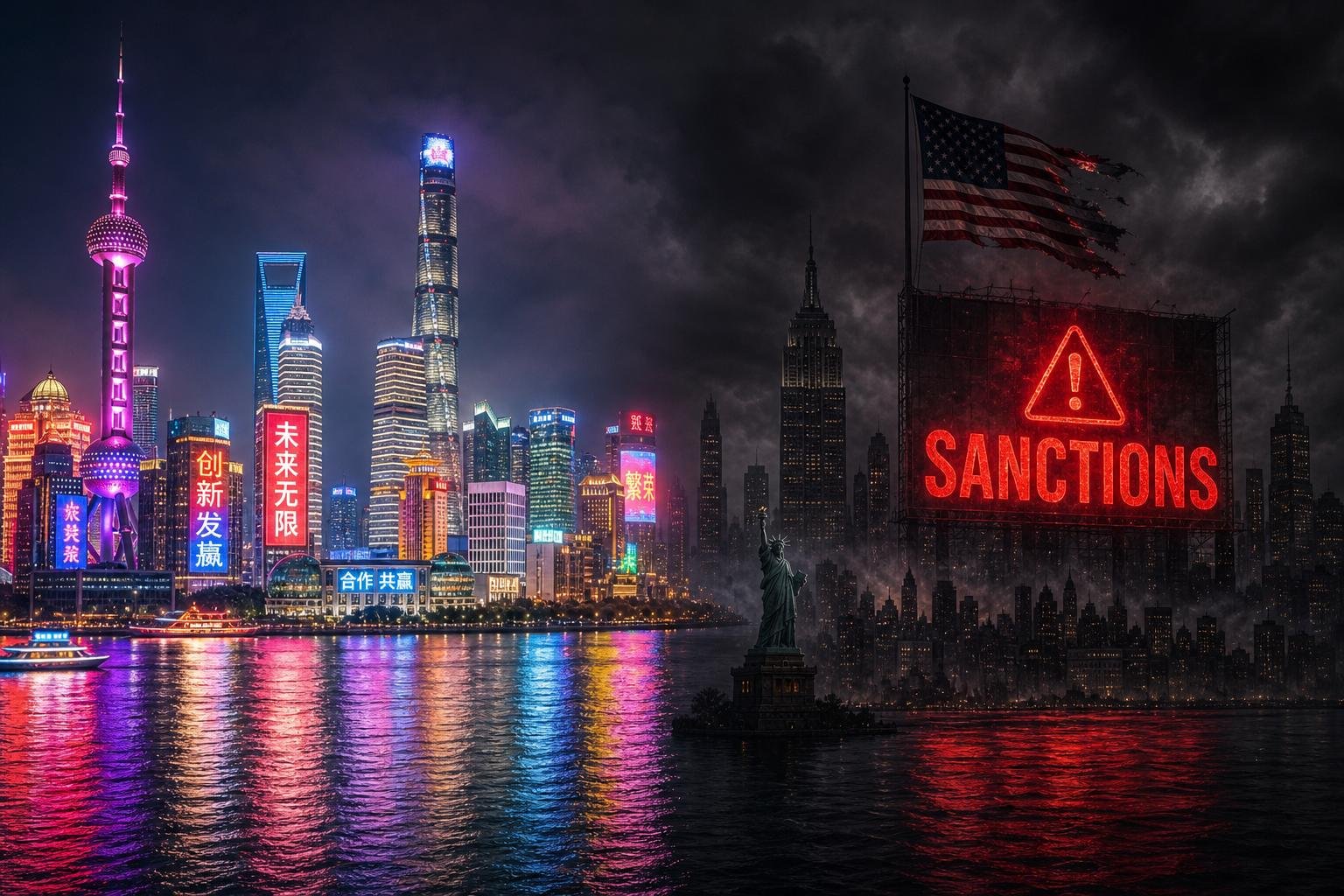
China has moved from defensive retaliation to a more assertive phase in its economic confrontation with the United States, tightening the screws on foreign firms as trade and technology tensions deepen.
In the past few weeks, Beijing has sharpened its response to Washington’s sanctions and export curbs by using a fresh legal tool to counter American measures, blocking Meta’s planned acquisition of the Chinese-founded AI start-up Manus, and setting out rules that would punis...
Continue Reading This Article
Enjoy this article as well as all of our content, including reports, news, tips and more.
By registering or signing into your SRM Today account, you agree to SRM Today's Terms of Use and consent to the processing of your personal information as described in our Privacy Policy.
h foreign companies seen as helping Western efforts to shift supply chains out of China. According to the Chinese authorities, these steps are aimed at safeguarding national security and protecting domestic industry. To critics, they mark a more confrontational use of regulation as an economic weapon.
The wider backdrop is a relationship that has been heading towards this point for years. During his first term, Donald Trump had already framed the contest with China in terms of trade, technology and strategic rivalry, and imposed tariffs on selected Chinese sectors while targeting individual companies with sanctions. Since then, the dispute has broadened beyond tariffs into semiconductors, critical materials, logistics and artificial intelligence, with both sides increasingly willing to use state power against firms caught in the middle.
The new Chinese measures show that Beijing is no longer content simply to absorb blows from Washington. In April, it announced rules giving regulators the power to inspect company records, question staff and prevent companies or executives from leaving the country if they are judged to be helping move supply chains out of China. For manufacturers supplying the US market, the implications are severe. Many have already shifted production to places such as Vietnam and Mexico to avoid higher tariffs on goods made in China, while others are preparing contingency plans.
The concern among multinational companies is that they could now be forced to choose between conflicting legal regimes. Sean Stein, president of the U.S.-China Business Council, told Reuters that the new approach creates a dilemma for firms caught between Chinese and American demands: comply with one side, and risk violating the other.
That risk became more concrete after Beijing used its blacklist system against PVH, the owner of Calvin Klein and Tommy Hilfiger, last year. China moved against the company after it stopped sourcing cotton from Xinjiang, the region at the centre of Western allegations of forced labour. Beijing accused PVH of discrimination, launched an investigation and eventually placed it on its list of unreliable entities, a designation that can bring serious consequences, including travel restrictions on senior executives.
The escalation has gathered pace as Washington has intensified its own pressure. Last year, the US raised tariffs on some Chinese goods to as high as 145%, imposed extra charges on Chinese vessels docking at American ports and further restricted access to sensitive technologies including semiconductors, chemicals and machinery. In response, Beijing has begun to frame its legal and regulatory tools as a necessary counterweight rather than an extraordinary measure.
That logic was visible this month when China ordered several major refiners to ignore US sanctions imposed over alleged ties to Iran, invoking a blocking order introduced in 2021 to shield Chinese companies from foreign laws that Beijing rejects. Chinese state media praised the move as a milestone in the country’s shift from building a legal arsenal to actively using it. People’s Daily, the Communist Party’s official mouthpiece, described US sanctions as an abuse of power and an infringement on Chinese business rights.
Wu Xinbo, director of the Center for American Studies at Fudan University in Shanghai, told Reuters that sanctions and restrictions now represent a serious threat to Chinese supply chains and must be met in a more systematic way. China, he said, needs a legal framework capable of responding to such pressure over the long term.
The clash over Manus underlines how the rivalry has spread into artificial intelligence, now one of the most sensitive battlegrounds in the wider struggle for technological dominance. According to reports from The Guardian, The Washington Post, The Los Angeles Times and others, China’s National Development and Reform Commission blocked Meta’s proposed $2 billion purchase of the start-up, requiring the parties to withdraw from the deal on national security grounds. The company, which began in Beijing and is now based in Singapore, had developed an autonomous AI agent capable of carrying out complex tasks.
Taken together, the moves suggest that the economic contest between the world’s two biggest powers is entering a harsher phase. What once looked like a cycle of tariffs and counter-tariffs is now becoming a broader fight over law, technology, capital and supply chains, with multinational companies increasingly at risk of being pulled into the crossfire.
Source: Noah Wire Services