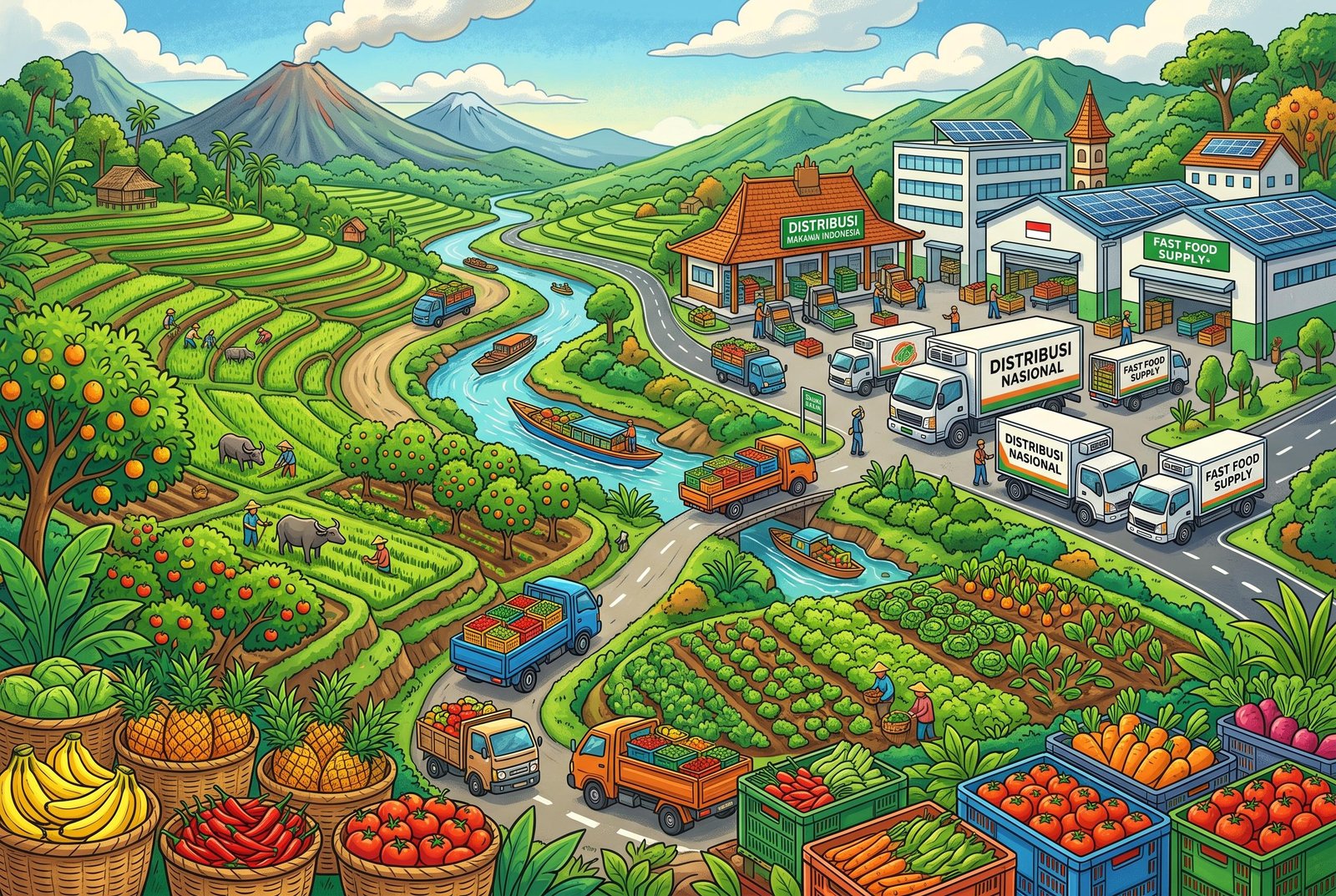
Behind the familiar crunch of McDonald’s fried chicken and the fresh vegetables served in its restaurants lies a supply chain that has been built, and repeatedly refined, over 35 years in Indonesia. The fast-food chain’s local operation says the bulk of its procurement now comes from domestic partners, with around 86% of supplier spending directed to local businesses.
That reliance on Indonesian suppliers is not limited to one or two ingredients. The company says all of its...
Continue Reading This Article
Enjoy this article as well as all of our content, including reports, news, tips and more.
By registering or signing into your SRM Today account, you agree to SRM Today's Terms of Use and consent to the processing of your personal information as described in our Privacy Policy.
chicken is sourced from domestic poultry farmers and delivered fresh each day to more than 300 outlets across the country. Other key items, including eggs, rice, vegetables and cooking oil, are also largely obtained from local producers, while bread is processed domestically as well. In company materials, McDonald’s Indonesia says more than three quarters of its main ingredients come from local suppliers, underlining how deeply embedded the brand’s operations have become in the country’s food system.
For the company, the arrangement is not only about securing ingredients. It is also presented as a means of raising standards among small and medium-sized businesses that work with a global brand. Suppliers are said to undergo regular evaluation and training, with an emphasis on food safety, halal compliance and quality control from cultivation through to processing. That process has been described by Prof Mochammad Mukti Ali, a strategic management and marketing academic at IPB University, as a form of supplier upgrading, in which local firms gain know-how, adapt to tighter requirements and improve their competitiveness over time.
The approach mirrors McDonald’s wider sourcing philosophy. In the United States, the company says it works with a broad network of farmers and suppliers for ingredients ranging from beef and chicken to potatoes and fruit, a model that emphasises responsible sourcing and consistency across markets. In Indonesia, that same framework has been adapted to local conditions, with the added aim of strengthening the domestic supply base.
The company’s local partnership model also carries broader economic implications. Industry reporting has noted that the network supports jobs and creates opportunities across farming, processing and distribution. McDonald’s Indonesia has used its 35th anniversary in the market to highlight that contribution, presenting its supplier relationships as part of its long-term commitment to the country rather than a purely transactional business arrangement.
Recent reporting has also linked that strategy to the chain’s continued expansion. When McDonald’s opened a new restaurant in the Puncak tourism corridor of Bogor Regency, it framed the move as part of a wider effort to develop local talent and reinforce Indonesian sourcing. That outlet, like the rest of the network, draws on domestic ingredients and adds another layer to a supply chain that has grown alongside the brand’s presence in Indonesia.
What emerges is a picture of a multinational that has progressively localised its operation. The company’s own figures suggest that Indonesian suppliers now sit at the centre of its business here, not at the margins. For local farmers and processors, the relationship offers steady demand; for McDonald’s, it provides proximity, freshness and a way to maintain the standards expected of a global restaurant chain.
Source: Noah Wire Services