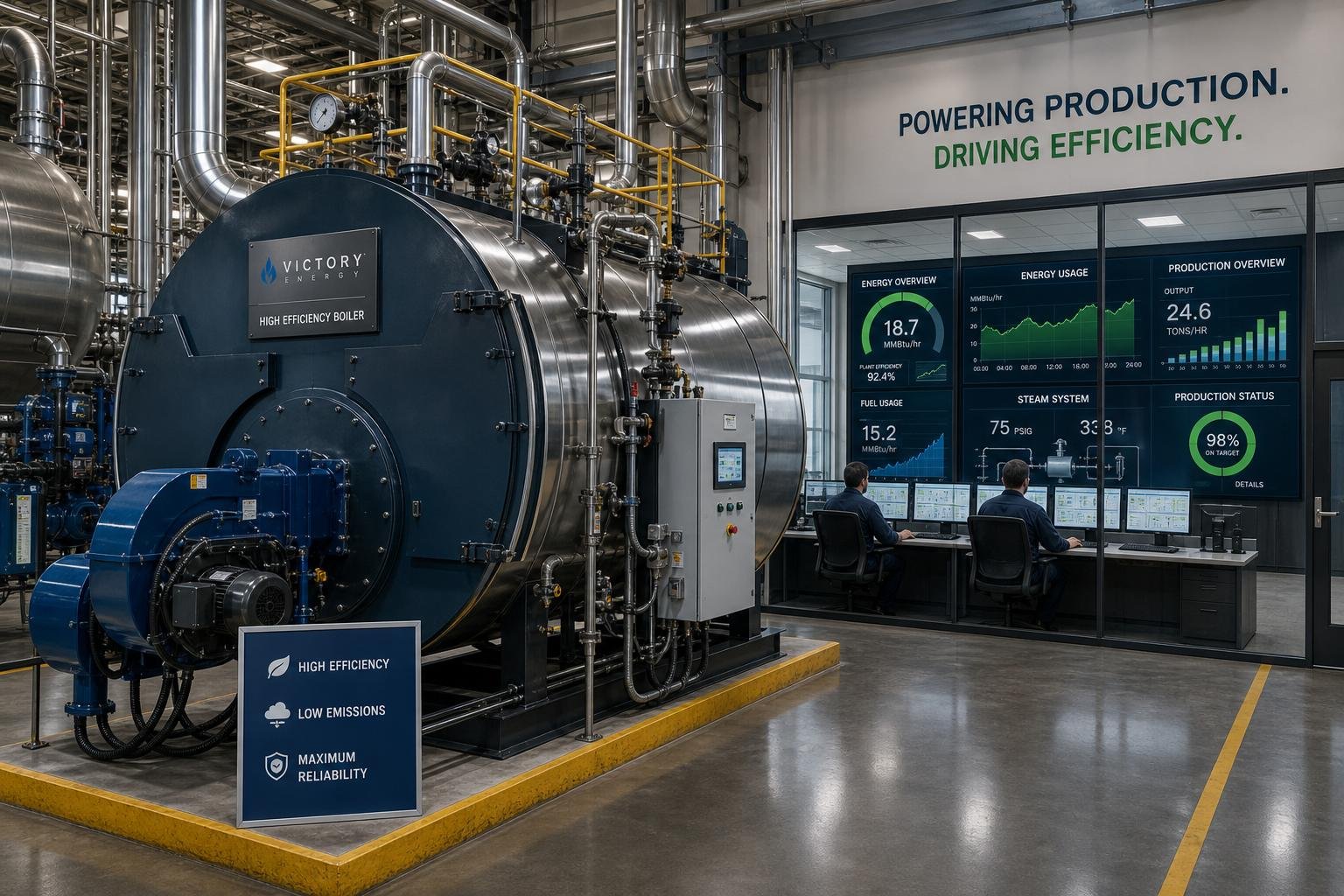
Associated Energy Services is finding that boiler efficiency is no longer just a matter of machinery, but of combining controls, remote visibility and practical human judgement. In the food manufacturing sector, where steam demand can change quickly and production downtime is costly, the company says its recent projects show how better data and tighter oversight can lift performance while reducing risk.
Dennis Williams, AES’s commercial director, says continuous data collecti...
Continue Reading This Article
Enjoy this article as well as all of our content, including reports, news, tips and more.
By registering or signing into your SRM Today account, you agree to SRM Today's Terms of Use and consent to the processing of your personal information as described in our Privacy Policy.
on is central to keeping boilers safe and efficient. He argues that remote monitoring systems give operators a clearer view of what is happening in plant, allowing problems to be spotted earlier, fuel use to be checked and production requirements to be met more reliably. The company presents this approach as a way to improve productivity without removing the human judgement still needed in complex steam systems.
One of the two projects AES highlights involved a long-term food processing customer whose ageing boiler control arrangement had become expensive to keep running. AES initially planned to upgrade one boiler before moving on to the others, but a year-end shutdown led the client to bring forward the whole job. Gavin Evezard, AES projects director, says the team completed all three upgrades in a tight window, then spent the following months fine-tuning the system after start-up. A key element was load balancing across the boiler house so that no single unit was carrying too much of the work.
The second project was for a new customer in the food sector and involved a fully tailored control and remote monitoring package with a web-based interface. AES says the system was designed to handle different steam pressure needs across different parts of the plant and to give managers live performance data. The company also had to adjust its approach because of supply chain constraints, shifting more of the build and testing work to site so the boiler could be restarted quickly and redundancy restored.
AES says the wider value of these systems lies in the ability to measure, analyse and respond. Evezard says recorded data allows the company to reconstruct faults, carry out root cause analysis and reduce the chance of repeat incidents. That matters especially in South Africa, he says, where many industrial boilers are decades old and original equipment support can be difficult or expensive to obtain. Williams adds that, despite advances in automation, operators still need to carry out checks and maintain oversight, particularly where solid-fuel boilers, combustion and pressurised steam vessels are involved. The company says more than three-quarters of boiler upgrade projects lead to longer-term service relationships, suggesting that the technology often becomes the start of an ongoing operational partnership rather than a one-off installation.
Broader industry evidence supports AES’s case. The US Department of Energy’s Federal Energy Management Program says a combustion control and monitoring system can improve boiler efficiency by continuously adjusting the fuel-to-air mix, with one demonstration producing fuel savings and lower operating costs. For AES, that kind of measurable improvement is the point: better steam control, clearer visibility and a more responsive maintenance model can all help food manufacturers cut waste, improve resilience and keep production moving.
Source: Noah Wire Services