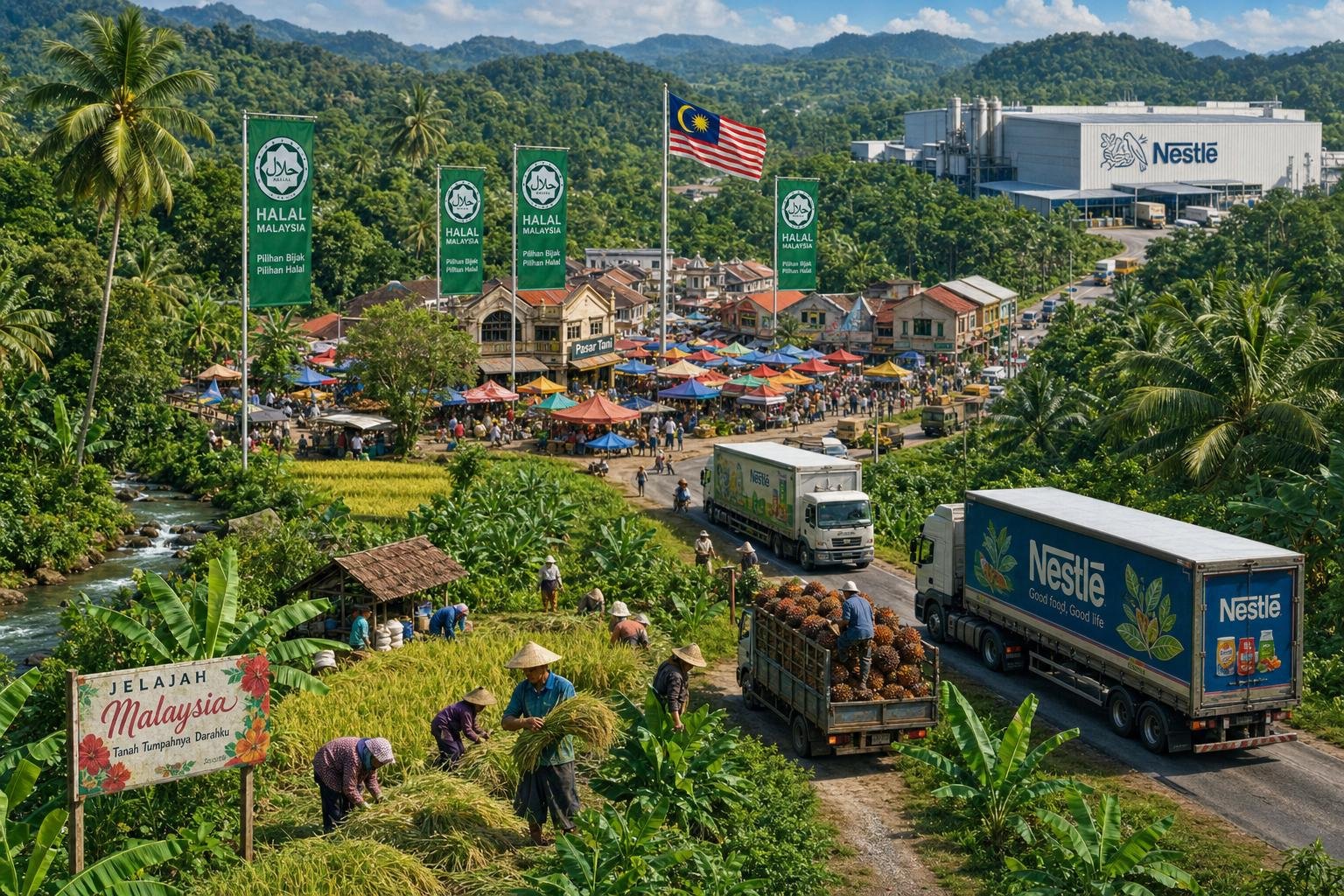
Nestlé Malaysia says it has put in place enough supply-chain safeguards to weather global disruption, leaning on local sourcing, buffer stocks and alternative suppliers as trade volatility ripples through international markets.
Chief executive Juan Aranols told reporters in Kuala Lumpur that the company had spent years strengthening its logistics and procurement base in Malaysia to reduce exposure to overseas shocks, including turbulence in the Middle East. Speaking at an even...
Continue Reading This Article
Enjoy this article as well as all of our content, including reports, news, tips and more.
By registering or signing into your SRM Today account, you agree to SRM Today's Terms of Use and consent to the processing of your personal information as described in our Privacy Policy.
t with the Department of Islamic Development Malaysia, he said Nestlé had been building resilience by identifying substitute supply options that could be brought in if needed.
The strategy comes as fast-moving consumer goods companies in Malaysia face margin pressure from higher input costs and unstable supply conditions. Aranols said Nestlé remained comfortable with its ability to manage the uncertainty, pointing to first-quarter earnings that showed a 27.1% rise in net profit and suggesting the company expected a solid performance in 2026.
He also indicated that export growth could slow from last year’s pace, although he said shipments were still rising. “As you have been following the results, we had a very strong growth last year in exports. This year is probably a bit more moderate, but you saw it continued to be positive growth and we would expect that this trend will continue,” he said.
One of Nestlé’s recent investments has been at its Sri Muda factory in Shah Alam, where it began producing a new coffee line. The company said that expansion underscored the competitiveness of its Malaysian operations within Nestlé’s wider global manufacturing network.
The company also used the occasion to reaffirm its collaboration with Jakim under the Synergy programme, an initiative aimed at strengthening Malaysia’s halal ecosystem through education, SME development and supply-chain upgrades. Nestlé said its halal work extends beyond manufacturing to school outreach, entrepreneurship training, mentoring for small businesses and support for logistics firms seeking halal certification.
That broader halal push fits with Nestlé Malaysia’s long-standing position as one of the country’s best-known food manufacturers in the sector. The company says it has been a pioneer in halal practices since the 1980s and now produces more than 500 halal-certified products. It has also described itself as Nestlé’s global halal centre of excellence, with certification and oversight running across sourcing, manufacturing, packaging, logistics and distribution.
Nestlé Malaysia has also increasingly tied its supply strategy to sustainability. The company says all of its palm oil is RSPO-certified and sourced from deforestation-free land, while its responsible sourcing standards require suppliers to meet social, environmental and animal welfare requirements. In that sense, the push for resilience is not only about protecting output from geopolitical shocks, but also about keeping the company’s supply base closer to home and more tightly controlled.
Source: Noah Wire Services