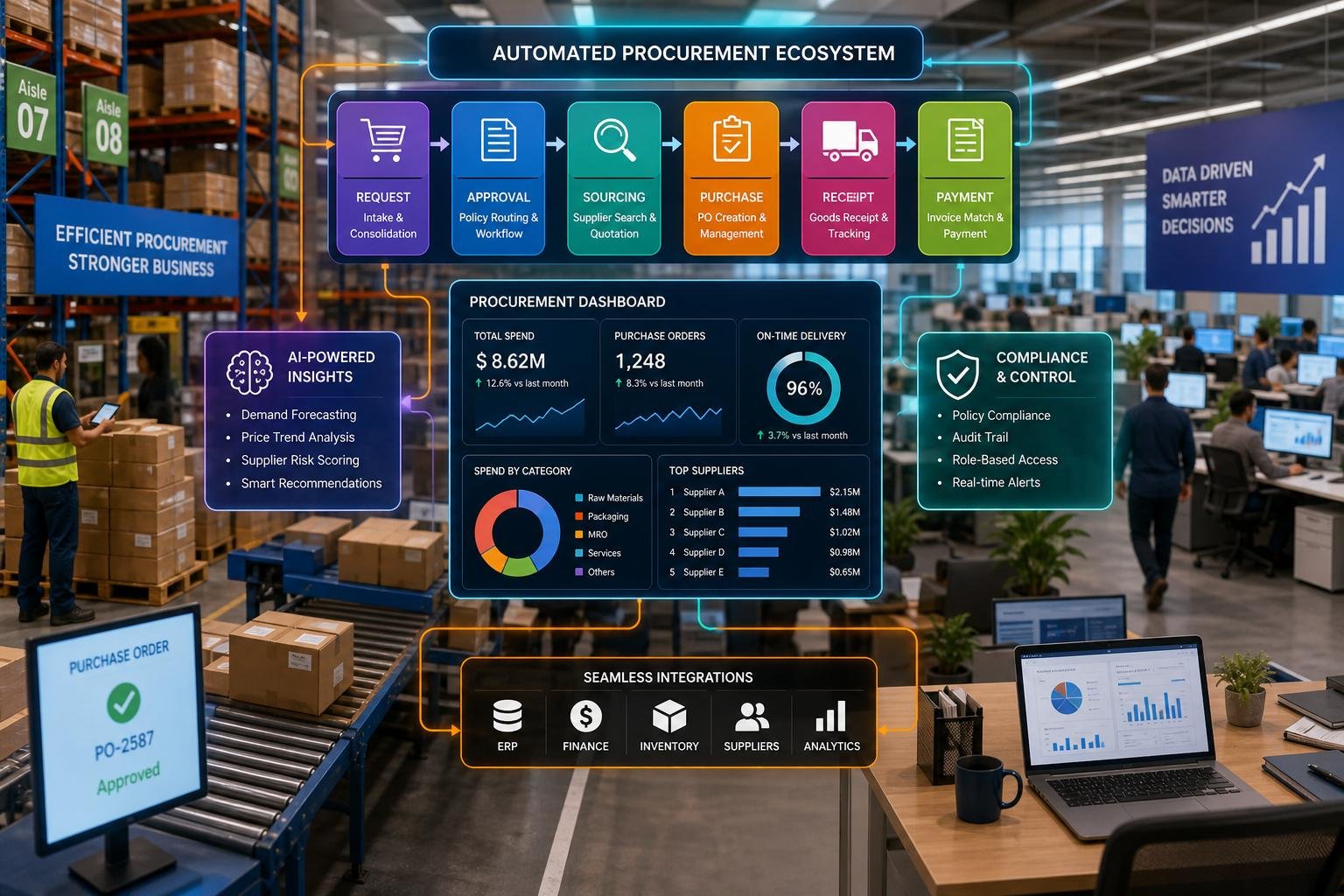
AI is reshaping procurement because the old mix of emails, spreadsheets and manual approvals struggles to keep pace with modern buying. As organisations grow, so does the volume of supplier data, purchase requests, invoices and contracts they have to manage. The result is often slower decision-making, weak visibility and avoidable errors.
AI procurement software is designed to tackle those problems by automating routine work and turning procurement data into something more acti...
Continue Reading This Article
Enjoy this article as well as all of our content, including reports, news, tips and more.
By registering or signing into your SRM Today account, you agree to SRM Today's Terms of Use and consent to the processing of your personal information as described in our Privacy Policy.
onable. Instead of relying on fragmented systems and reactive processes, teams can use AI to spot spending patterns, compare suppliers, flag anomalies and speed up approvals. In practice, that means procurement becomes less administrative and more strategic.
The strongest platforms go beyond basic automation. They can analyse historical spend, support forecasting, assist with supplier discovery, extract clauses from contracts and guide users through purchasing workflows. Some tools are broad, end-to-end suites built for large enterprises. Others are narrower, focusing on sourcing, contract lifecycle management, spend analytics or workflow orchestration. That distinction matters, because the best system for one organisation may be the wrong fit for another.
For companies that want a full source-to-pay environment, platforms such as Coupa, SAP Ariba, Ivalua, Oracle Procurement Cloud and Zycus are among the most established options. These systems aim to bring sourcing, supplier management, purchasing, invoicing and contract oversight into one place. They are typically better suited to larger organisations with complex needs, deeper budgets and the resources to manage implementation.
Coupa is positioned as a broad spend management platform with strong analytics and real-time visibility, but it can be costly and complex. SAP Ariba offers access to a huge supplier network and strong governance features, though it is also known for being demanding to implement. Ivalua is highly configurable and well regarded for handling complicated enterprise workflows, while Zycus pushes heavily on AI-driven automation through its Merlin AI suite. Oracle Procurement Cloud sits in the same enterprise category, especially where deep integration with wider finance systems is important.
Other tools are more specialised. Suplari, Sievo and SpendHQ focus on spend intelligence and analytics, helping teams understand where money is going and where savings may be hiding. Ironclad, Icertis and ContractPodAi concentrate on contract lifecycle management, using AI to extract key terms, manage renewals and reduce the burden of document review. For sourcing optimisation, Keelvar and Fairmarkit stand out, particularly where organisations need to compare bids, run sourcing events or automate tail spend. Pactum AI takes a different route again, using autonomous negotiation to improve supplier terms at scale.
There is also a growing class of orchestration platforms that sit on top of existing procurement systems rather than replacing them. Zip HQ, Tonkean, Oro Labs and Omnea are examples of tools built to simplify intake, route approvals and connect procurement with other departments. These platforms are often attractive to teams that want better adoption and cleaner workflows without a full system overhaul.
Precoro sits somewhere between those categories. It is aimed at organisations that want to centralise procurement and gain clearer control over spend without taking on the weight of a traditional enterprise suite. The platform brings requests, approvals, purchasing, accounts payable and supplier management into one workflow. It also uses Gemini AI to extract invoice line items and match them against purchase orders, while its AI Assistant allows users to ask questions about spend, reports and budget risks in natural language. For mid-sized businesses, that combination of structure, visibility and usability is likely to be the main appeal.
Choosing the right AI procurement software is not just about feature lists. The more important question is whether the tool matches the way the organisation actually works. A system that is powerful on paper may still fail if it is hard to adopt. Usability, integrations, scalability and data quality all matter as much as raw capability.
Before implementation, organisations need to prepare properly. That means cleaning procurement data, setting clear goals, involving procurement and IT teams early, and defining how the platform will fit into existing systems. ERP, finance and SSO integrations are especially important because they shape how well the new tool connects with day-to-day operations. If the data is messy or the workflows are unclear, AI will struggle to deliver reliable results.
The return on investment usually comes from several places at once: faster processing, fewer manual tasks, better supplier decisions, stronger compliance and reduced leakage in spend. But buyers should also budget for the hidden costs. Implementation, integration, training and data preparation can all add to the total cost of ownership, particularly in larger deployments.
Security and compliance are also central. Procurement systems hold sensitive supplier, pricing and contract data, so buyers need to look for access controls, audit trails, encryption and clear governance. They should also consider how the vendor handles bias, explainability and accountability in AI-driven recommendations.
In the end, AI procurement software is less about replacing procurement teams than giving them better tools. Used well, it can bring more order to a process that has long been too manual, too slow and too difficult to scale. For organisations under pressure to spend smarter and move faster, that may be the biggest value of all.
Source: Noah Wire Services