At Sage Future 2026 in San Francisco, one message cut through the noise: the real argument over artificial intelligence in enterprise software is no longer about what it can do, but whether people can trust it enough to let it make decisions that affect the books, the workforce and the supply chain.
Across the three-day event, Sage executives, customers and partners repeatedly returned to the same idea: AI in ERP only becomes useful when it is transparent, auditable and tightly...
Continue Reading This Article
Enjoy this article as well as all of our content, including reports, news, tips and more.
By registering or signing into your SRM Today account, you agree to SRM Today's Terms of Use and consent to the processing of your personal information as described in our Privacy Policy.
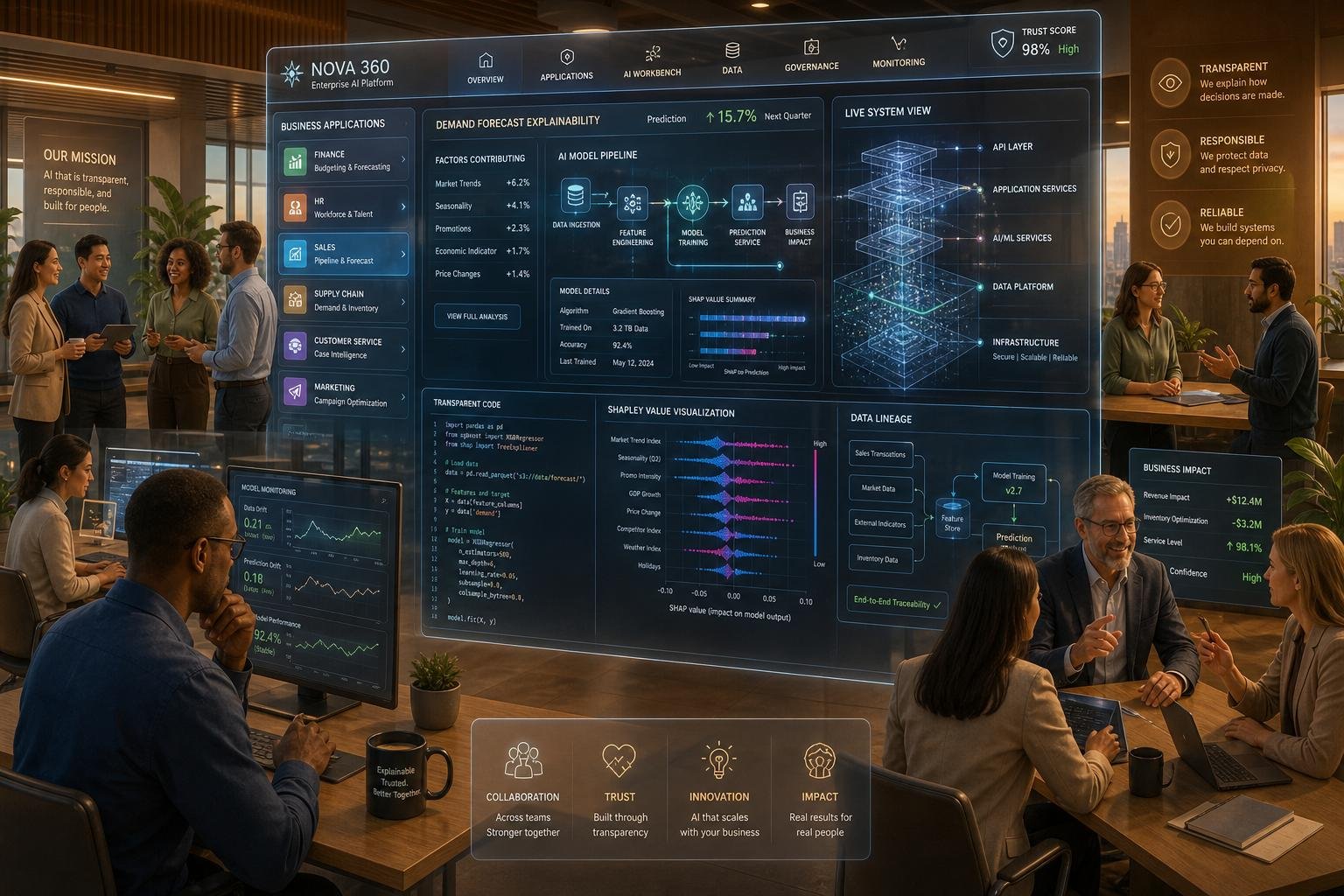
governed. Sage said the goal is to move customers away from opaque automation and towards what it calls “glass box” AI, where outputs can be traced, explained and challenged inside real business workflows.
That shift matters because finance leaders remain wary. In its “Beyond the Black Box” initiative with PwC, Sage said research from IDC showed 71% of finance leaders would reject AI systems that could not explain their outputs, even if those systems were accurate. The company argues that this trust gap is now one of the biggest barriers to broader enterprise adoption.
Sage CTO Aaron Harris said the company’s AI labs processed 40 million predictions in 2025 and 400 million in 2026, a scale that, in his view, makes governance non-negotiable. To manage that volume, Sage has built an internal “arbiter” layer designed to intercept hallucinations, prompt injection and toxic responses before they enter financial processes. The system also attempts to interpret context, so the same term can be understood differently depending on whether it appears in accounts payable or revenue recognition.
That emphasis on explainability was echoed by IDC analyst Kevin Permenter, who argued that AI which cannot explain itself is effectively unusable in finance. His broader point was that trust is not a nice-to-have but a commercial requirement, especially once audit and compliance teams become involved.
Customer examples were used to show what that looks like in practice. Byler Holdings said its use of AI-enabled Sage workflows has saved more than 100 hours a month previously spent on manual checks, allowing staff to focus more on analysis and business support. For Sage, that kind of time shift is the operational outcome it wants to normalise: less reconciliation, more judgement.
The partner ecosystem reflected the same theme. Expensify described a hybrid AI expense agent that builds an auditable trail through each transaction, while Zap Analytics said its data models are designed to show users where information comes from before any AI-assisted decision is made. Routable pointed to fraud detection in payments as one of the sharpest tests of AI accountability, and Avalara said human confirmation remains essential even as agentic systems take on more decision-making. PairSoft, meanwhile, framed its own AI tools as a way to reduce manual entry in accounts payable, particularly in regulated sectors where accuracy matters.
Outside finance, Sage pushed the argument into operations. Gareth Guest, a staff architect director at Sage, described a progression from systems that simply record activity to systems that can reason and act on it. His example was a supply chain shortfall identified overnight and turned into a revised plan before the workday begins, shifting the burden from reactive firefighting to proactive planning.
Sage X3 customers were presented as evidence that this is already happening. Enzymedica said it cut mock recall response time from two hours to under 10 minutes, while Yakima Chief Hops said it had recorded no major or minor non-conformances across five years of production audits, crediting lot-level traceability in X3. In construction, Lumber said it is using integrated compliance tools to help workers manage certifications and licences digitally, reducing onboarding friction and giving field teams a more visible credential record.
The event also underlined Sage’s broader product strategy. In its own announcements around Sage Future 2026, the company said it is expanding AI-powered advisory tools in Sage Intacct, accelerating implementation with agentic AI, launching Sage HCM to connect HR, payroll and finance, and deepening its cloud and AI tie-up with AWS. It also said it had acquired Doyen AI to support migration and implementation.
Taken together, the message from Sage Future 2026 was clear: enterprise AI is moving from novelty to infrastructure. The winners, Sage argued, will be the vendors that can prove not only that their systems work, but that they can be inspected, governed and trusted by the people responsible for the numbers.
Source: Noah Wire Services