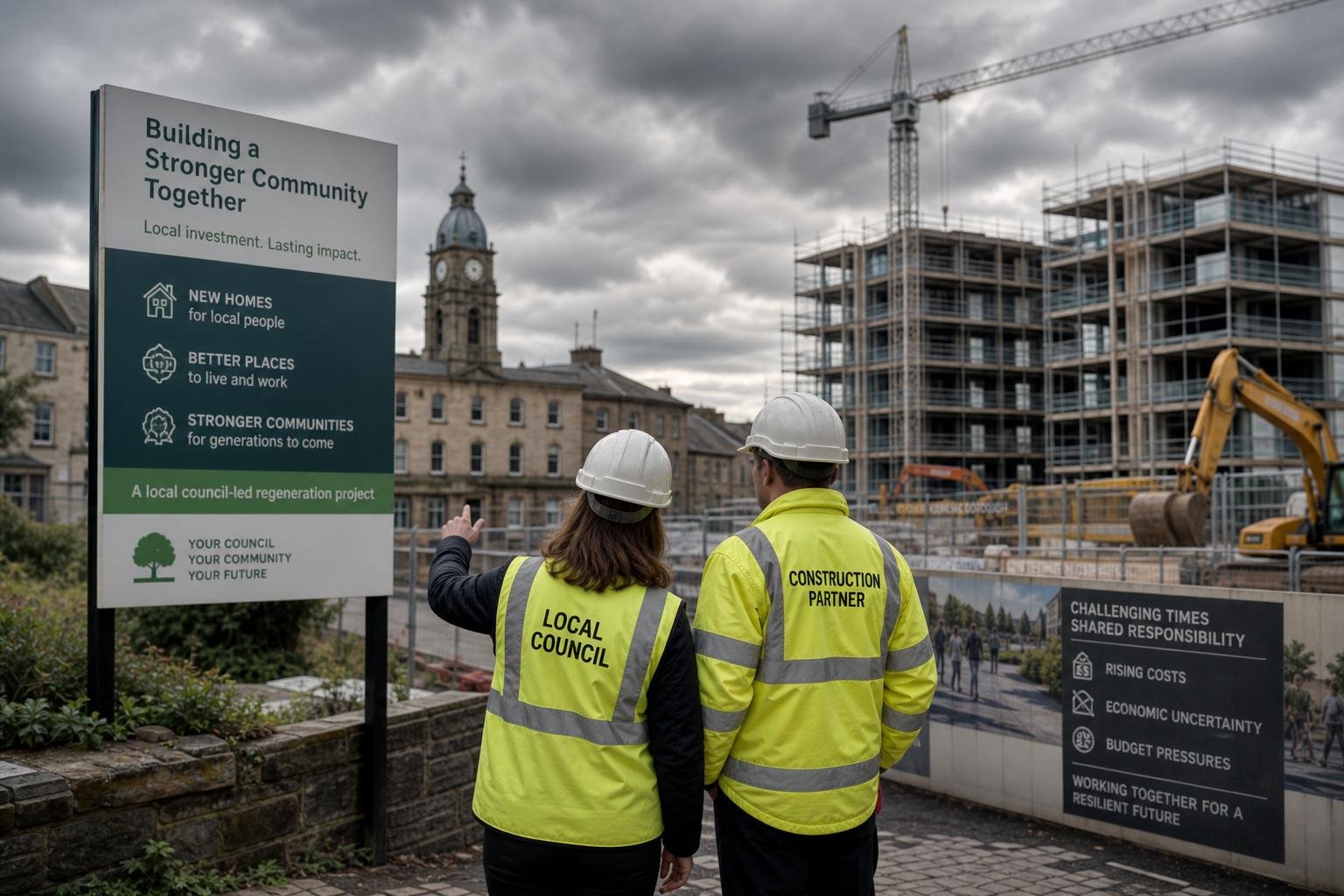
Uncertainty over government policy and a volatile economic backdrop are making it harder for councils in England to move regeneration, housing and infrastructure schemes from ambition to delivery, according to a new report by SCAPE with the Local Government Information Unit.
The findings suggest that the bottleneck begins well before construction starts. In a survey of 70 senior officers across 63 councils, 81% said the biggest disruption comes during the business case and appr...
Continue Reading This Article
Enjoy this article as well as all of our content, including reports, news, tips and more.
By registering or signing into your SRM Today account, you agree to SRM Today's Terms of Use and consent to the processing of your personal information as described in our Privacy Policy.
oval stages, rather than on site. That is a significant warning sign for projects that are often central to local growth plans but depend on steady funding, specialist expertise and clear decision-making over several years.
Regeneration, housing and transport are the schemes most exposed to delay, the report says. Those are also the kinds of programmes most likely to be caught by changes in national policy, rising costs and wider market uncertainty. SCAPE said 64% of councils are dealing with inflation and market volatility, leaving less room to commit to long-term schemes when the financial outlook shifts so quickly.
The report argues that stop-start funding is undermining confidence in delivery. Almost all respondents, 94%, called for greater certainty in funding or multi-year settlements. The message is that local authorities cannot plan effectively if grants arrive in short bursts or if access to money depends on competitive bidding rounds that absorb time and capacity.
Skills shortages are adding to the pressure. According to the survey, 40% of councils said a lack of in-house commercial and early-stage expertise is holding projects back. That matters increasingly as local schemes become more complex, particularly where net zero requirements, digital infrastructure and wider regeneration demands need specialist input at an early stage.
The report also points to the disruption caused by local government reorganisation. A third of respondents said restructuring is one of the top three constraints on delivery, with concerns that project scoping and pipeline development could be lost during administrative change.
Against that backdrop, 57% of councils said the answer lies in moving away from piecemeal delivery towards a more strategic, partnership-led model. SCAPE says long-term procurement frameworks with trusted partners can help authorities secure early feasibility support and commercial advice, giving projects a better chance of surviving political and economic turbulence.
The report cites Arc Partnership, SCAPE’s joint venture with Nottinghamshire County Council, as an example. It says £394m of investment has supported more than 3,500 projects over the past decade, with £344m spent locally and 93% of work delivered by local SMEs.
SCAPE says the lesson is that councils need stability, trusted commercial support and a stronger relationship with central government if they are to turn policy into delivery. Without that, the report warns, the gap between planning and building will continue to widen.
Source: Noah Wire Services