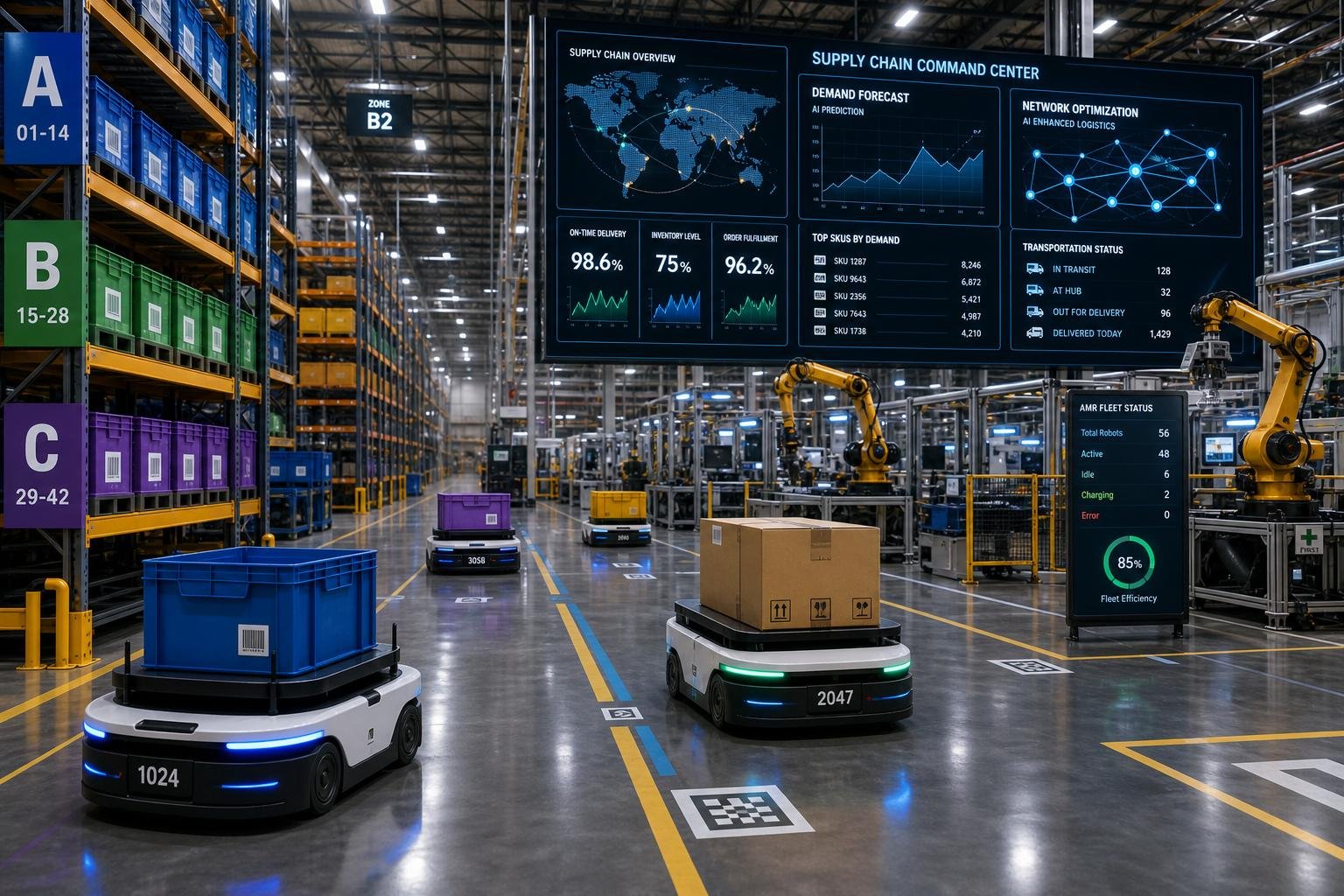
The smart and mobile supply chain solutions market is moving from a niche technology play into a core part of enterprise logistics strategy, as companies seek better visibility, faster decision-making and greater resilience across increasingly complex networks. According to The Business Research Company, the market is projected to reach $98.33bn by 2030, supported by a compound annual growth rate of 12.3% as businesses invest in AI-led optimisation, cloud platforms and tools that can ...
Continue Reading This Article
Enjoy this article as well as all of our content, including reports, news, tips and more.
By registering or signing into your SRM Today account, you agree to SRM Today's Terms of Use and consent to the processing of your personal information as described in our Privacy Policy.
link planning, warehousing and transport more tightly than before.
A major force behind that expansion is the pressure on supply chains to become both more agile and more predictive. Firms are no longer simply trying to track goods in transit; they are looking for systems that can anticipate disruption, rebalance inventory and coordinate actions in real time. That has lifted demand for real-time visibility platforms, mobile inventory applications, predictive planning software and digital ecosystems that can connect suppliers, carriers and internal teams more seamlessly.
The report highlights AI-driven orchestration as one of the most important trends shaping the sector. These platforms combine analytics, machine learning and automation to help companies manage end-to-end supply chain activity with less manual intervention. In May 2024, GEP introduced an AI-based orchestration offering built around its procurement and supply chain products, a sign that vendors are increasingly packaging intelligence and execution into a single layer of software rather than selling isolated tools.
Mobile and cloud adoption is also reshaping the market. As operations become more distributed, businesses are placing greater value on systems that can share data instantly across locations and devices. That shift is particularly important in volatile conditions, where delays, stock imbalances and forecasting errors can quickly become expensive. Predictive analytics is now being used not just to report what has happened, but to guide purchasing, production and distribution decisions before problems emerge.
The market is broadening across several solution types. Transportation management systems, warehouse management systems, sourcing and procurement platforms, supply chain planning tools and manufacturing execution systems are all part of the competitive landscape. Within those categories, demand is being driven by fleet and route optimisation, inventory control, supplier management, demand forecasting, sales and operations planning, and production monitoring.
Adoption is not limited to large multinationals. Small and medium-sized enterprises are increasingly turning to smart supply chain software as prices fall and deployment models become more flexible. End users span retail, consumer goods, technology, manufacturing, energy, healthcare, transport and logistics, reflecting the growing recognition that supply chain performance now affects almost every part of the economy.
Competition in the space remains intense. The Business Research Company names SAP, Oracle, Manhattan Associates, IBM, Blue Yonder, Infor, Honeywell, Kinaxis, Logility, Descartes, project44 and FourKites among the best-known players, alongside a wider group of specialist software firms. Many of these companies are competing on the same themes: automation, integration, visibility and the ability to support end-to-end decision-making.
Corporate consolidation is also helping define the next phase of the market. In August 2025, WiseTech Global completed its $2.1bn acquisition of E2open Parent Holdings, a move intended to deepen its logistics technology offering and strengthen its position in global trade management. WiseTech said the deal would help it build towards becoming the operating system for global logistics, while E2open brings cloud-based supply chain and trade software aimed at large enterprises.
That acquisition underlines a broader industry pattern: the race is no longer just to digitise existing processes, but to build connected platforms that can orchestrate the whole supply chain. As companies continue to prioritise resilience, responsiveness and data-driven planning, the smart and mobile supply chain solutions market appears set for another period of strong expansion.
Source: Noah Wire Services