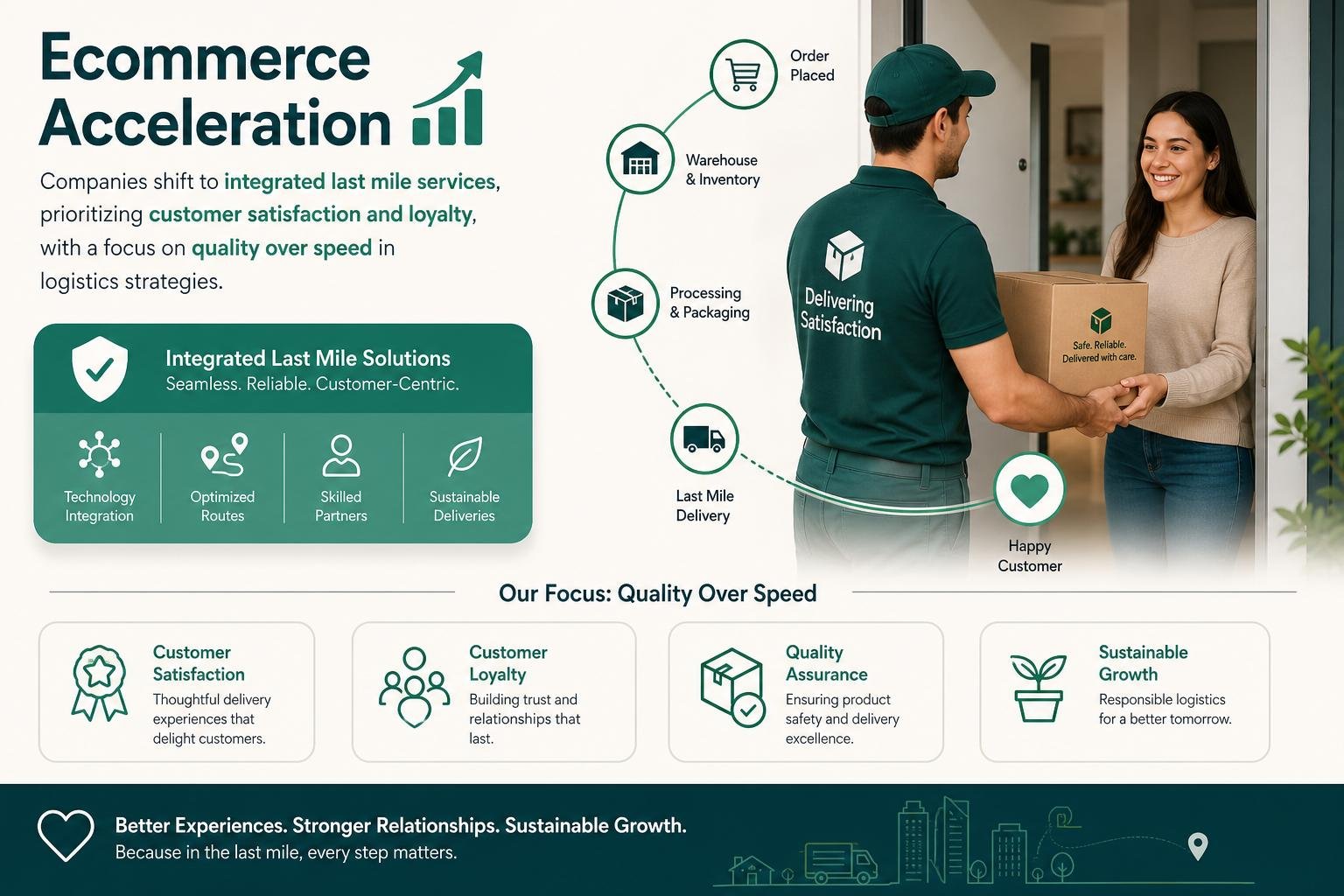
Final mile delivery has become far more than the last hand-off in the supply chain. For many retailers and brands, it is the point at which a promise is either confirmed or broken, and the pressure to get it right has intensified as customers demand faster service, tighter visibility and more flexible options.
That was the central theme of a recent Talking Logistics conversation with Nate Browne, senior vice-president of final mile at Werner, and Meg Meurer, vice-president of f...
Continue Reading This Article
Enjoy this article as well as all of our content, including reports, news, tips and more.
By registering or signing into your SRM Today account, you agree to SRM Today's Terms of Use and consent to the processing of your personal information as described in our Privacy Policy.
inal mile sales. Their message was clear: the companies setting the pace in final mile are not simply chasing speed. They are building delivery models that are predictable, integrated and designed around the customer experience.
The shift has been especially pronounced since the e-commerce surge during the pandemic. According to Browne, delivery speed is now only one part of the equation. Customers increasingly expect live updates, accurate arrival windows and a service experience that extends beyond dropping a parcel at the door. For large or bulky goods, that can include set-up, placement and other forms of white-glove handling that have become central to satisfaction and repeat purchasing.
Meurer said those expectations are no longer limited to direct-to-consumer deliveries. They are now shaping business-to-business distribution as well, which means shippers have to think across truckload, middle-mile and final mile operations at the same time if they want to improve both responsiveness and efficiency.
One of the most common mistakes, Meurer argued, is treating final mile as a short-term fix for a specific pain point. That often leads to fragmented arrangements involving multiple providers or highly transactional networks that may solve an immediate problem but create longer-term inconsistency. A more strategic approach, she said, can support scale, improve service and become an extension of the brand itself.
Browne stressed that speed matters, but predictability matters even more. In sectors such as retail, customers often care less about getting something as quickly as possible than about knowing it will arrive when promised. He also warned against viewing final mile in isolation, saying that middle-mile decisions and final-mile outcomes are tightly connected.
When asked what defines success, Browne said on-time delivery is now only a baseline expectation. What really matters is whether the customer is satisfied enough to buy again. That means delivery teams need proper training, consistent processes and a way to capture feedback while the experience is still fresh.
That view is backed by Ryder’s 2025 Consumer Study, which found that 96% of consumers who had a positive delivery experience were more likely to shop with the retailer again. The study also found growing appetite for premium services, with more than 70% of consumers willing to pay for installation, set-up and haul-away. Ryder said nearly one in three consumers now schedules deliveries online, underlining how much control shoppers expect to have over the final stage of the journey.
Driver experience also emerged as a critical factor. Meurer put it bluntly: “A happy driver equals a happy customer.” She said Werner invests heavily in recognition and workplace culture because motivated drivers are more likely to deliver the kind of consistent service that customers remember.
For shippers evaluating a final mile partner, Browne said the right network fit is essential, but technology and visibility alone are not enough. The carrier must also understand the customer’s business, integrate well operationally and demonstrate a culture built on reliable execution. In his words, final mile is still very much a people business.
Werner pointed to a retail example in which a customer already using the company for appliance delivery began combining that flow with e-commerce shipments to make better use of available capacity. By linking middle-mile and final-mile operations more closely, the retailer improved efficiency, reduced costs and strengthened service performance.
That kind of integration is increasingly attractive to shippers. Meurer said customers are looking to reduce the number of carriers they manage and are seeking broader partnerships that bring together multimodal, middle-mile and final mile capabilities. She added that safety, compliance, financial strength and the ability to scale are now key selection criteria, alongside the technology needed to provide real-time visibility and proactive communication.
Evidence from other operators points in the same direction. Ryder’s work with the luxury mattress brand Essentia, for example, used real-time tracking and improved communication to cut delivery-related complaints by half and achieve a 92% on-time delivery rate. The case suggests that better visibility and tighter carrier collaboration can translate directly into stronger customer satisfaction.
The broader lesson from Talking Logistics is that final mile excellence is no longer about simply getting products from A to B. It is about creating a delivery experience that is dependable, transparent and aligned with how customers now judge brands. In a market where service is part of the product, that distinction can decide who wins repeat business and who loses it.
Source: Noah Wire Services