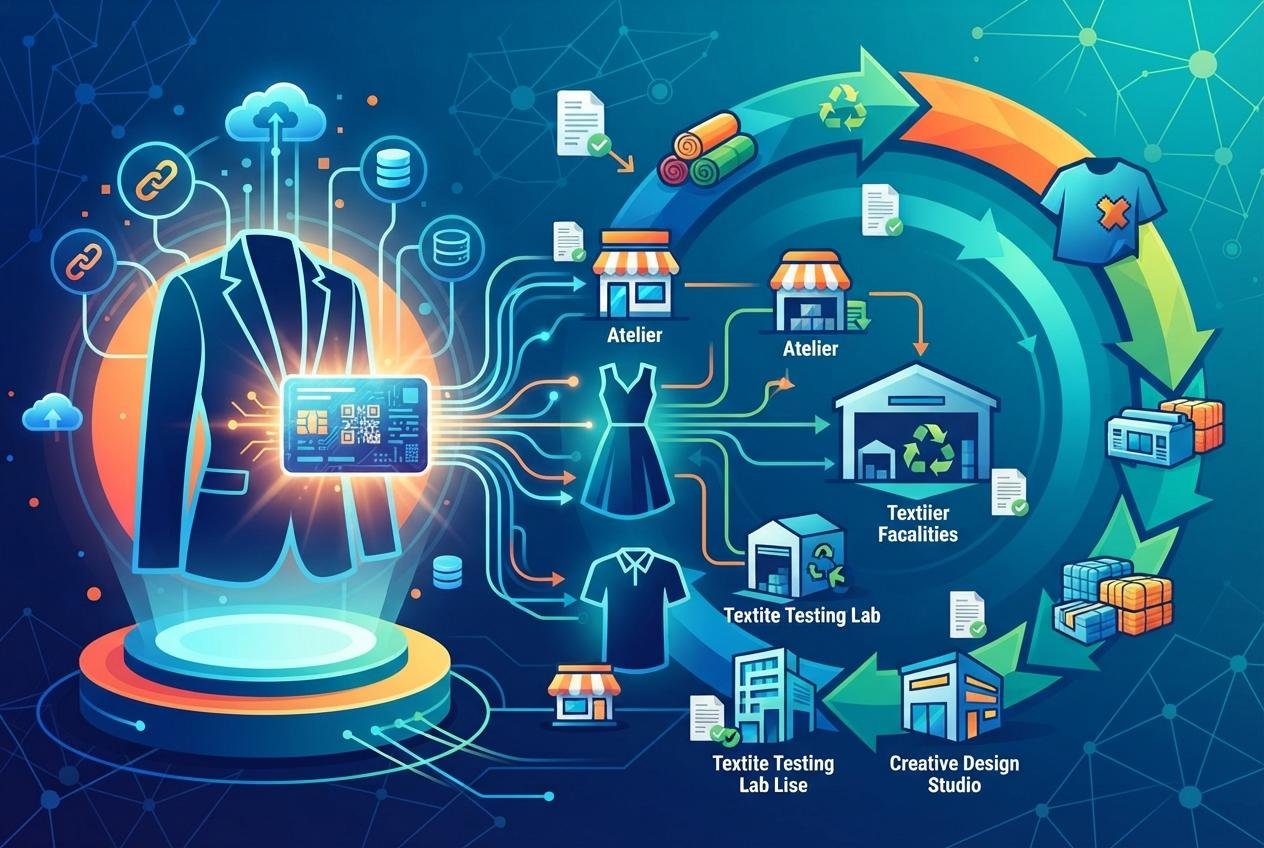
A study published in Business Strategy and the Environment argues that the circular economy in fashion supply chains cannot be advanced by technology alone, but depends on how firms organise knowledge, capabilities and data across the product lifecycle.
The paper focuses on the digital product passport, or DPP, which it describes as a digital identity for a product that can store and share information among supply chain actors. In the authors’ view, this kind of system can he...
Continue Reading This Article
Enjoy this article as well as all of our content, including reports, news, tips and more.
By registering or signing into your SRM Today account, you agree to SRM Today's Terms of Use and consent to the processing of your personal information as described in our Privacy Policy.
lp close information gaps that often block reuse, repair, recycling and refurbishment, especially when suppliers and downstream partners do not have a clear picture of product composition or end-of-life handling.
That problem is particularly acute in fashion, where the research says much of the existing discussion has been conceptual rather than empirical. Large global textile companies have already begun experimenting with DPPs, but smaller firms are still working out how to apply the idea in practice. The study says this is especially true for SMEs outside the EU regulatory orbit and in global supply chains, where implementation is likely to be more uneven.
The authors place their analysis within social practice theory, breaking implementation down into competence, material and meaning factors. They argue that success depends on more than compliance or software adoption: firms need the right capabilities, supporting infrastructure and shared understanding across the chain. To rank the most important factors and map how they relate to one another, the study uses a mixed decision-making approach combining the Best–Worst Method and fuzzy DEMATEL.
The paper also situates DPPs within the wider circular economy agenda. The World Economic Forum has argued that manufacturers can strengthen resilience by moving away from linear production models and designing goods for durability, repair and recovery. Similarly, the Ellen MacArthur Foundation has said circular supply chains can cut emissions, reduce costs and improve resilience when businesses redesign operations around material recovery rather than disposal.
In textiles, the policy backdrop is becoming more concrete. Industry guidance from Dassault Systèmes says the DPP is becoming a mandatory structured digital record under the European Union’s Ecodesign for Sustainable Products Regulation, covering product-level information from fibre sourcing to disposal. That regulatory shift helps explain why interest in the textile sector is growing, even as the study warns that scaling remains one of the biggest obstacles.
Its broader conclusion is that DPP-enabled circular supply chains should be seen as an evolving ecosystem rather than a simple managerial project. The researchers argue that adoption will depend on how firms coordinate behaviour, build literacy across partners and adapt over time as expectations, regulations and capabilities change. For managers and policymakers, the message is that the challenge is not just implementing a digital tool, but building the conditions that allow it to work across a fragmented and fast-moving industry.
Source: Noah Wire Services