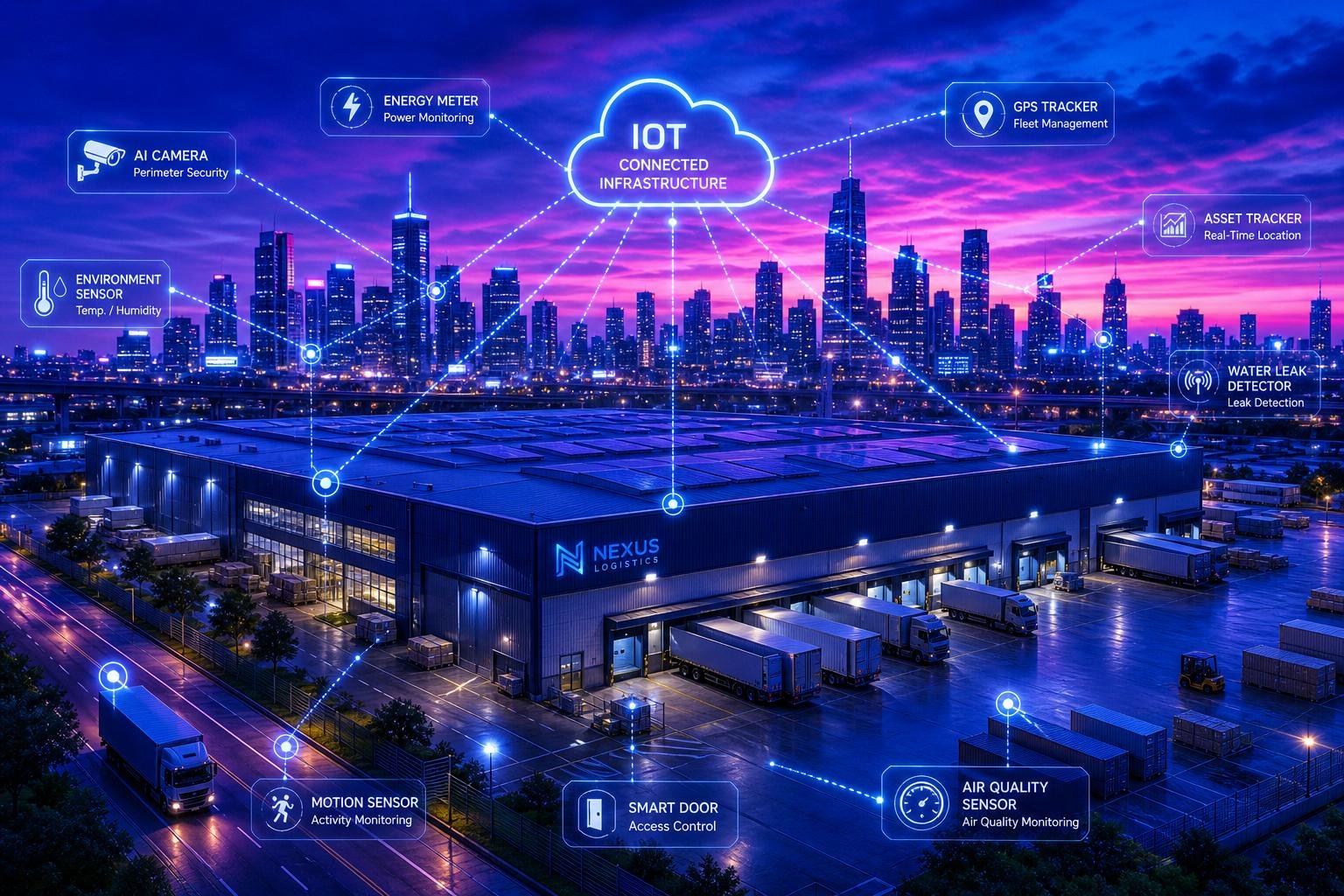
AT&T is broadening its role in supply chain IoT through an expanded collaboration with Wiliot that goes beyond simple network provision and into deployment, certification and ongoing support for enterprise systems.
According to the announcement covered by IoT Business News and Wiliot, the two companies are formalising a model in which AT&T helps integrate Wiliot’s Physical AI platform into large-scale supply chain operations. That means the carrier is not merely suppl...
Continue Reading This Article
Enjoy this article as well as all of our content, including reports, news, tips and more.
By registering or signing into your SRM Today account, you agree to SRM Today's Terms of Use and consent to the processing of your personal information as described in our Privacy Policy.
ying connectivity; it is also taking responsibility for field execution, device certification and operational support across warehouses, stores, distribution centres and transport networks.
Wiliot’s platform is built around battery-free IoT Pixels that collect item-level information such as location and temperature from goods and reusable assets. AT&T’s contribution sits further up the stack, providing network infrastructure, cellular connectivity and the on-the-ground work needed to install and maintain the system in complex enterprise environments.
The partnership matters because supply chain technology programmes often fail not on the sensing side, but on deployment. Turning a pilot into a repeatable service across many sites usually requires standardised installation, certified hardware and a clear support model. By bringing those functions into its enterprise portfolio, AT&T appears to be positioning itself as a delivery partner rather than just a telecoms supplier.
Wiliot says the approach has already been used with retailers, food and drink companies and quick-service restaurant operators. The company also claims deployments span tens of thousands of sites and are nearing hundreds of millions of tracked assets, with work under way across a large share of Fortune 50 supply chain initiatives.
The vendor has also published performance figures from its own deployments, saying customers have seen inventory accuracy at 99% or higher, faster dock-to-stock times, lower receiving labour and fewer mis-shipments. Those figures will depend on the specifics of each installation, but they indicate the kind of operational gains Wiliot is seeking to associate with the platform.
The collaboration also reflects a wider shift in industrial IoT, where the value is moving away from basic connectivity and towards managed data services. In that model, the carrier, platform provider and systems integrator increasingly overlap, especially when the technology depends on gateways, network certification and ongoing fleet management rather than a SIM in every asset.
Wiliot has recently been building out the software side of the proposition as well. In April, the company announced a partnership with Databricks to help run and analyse the large data volumes generated by its Physical AI platform, underscoring its push to turn item-level sensing into a broader enterprise data service.
For AT&T, the arrangement suggests a deeper ambition in enterprise IoT: not just carrying the data, but helping to operationalise the physical infrastructure that produces it.
Source: Noah Wire Services