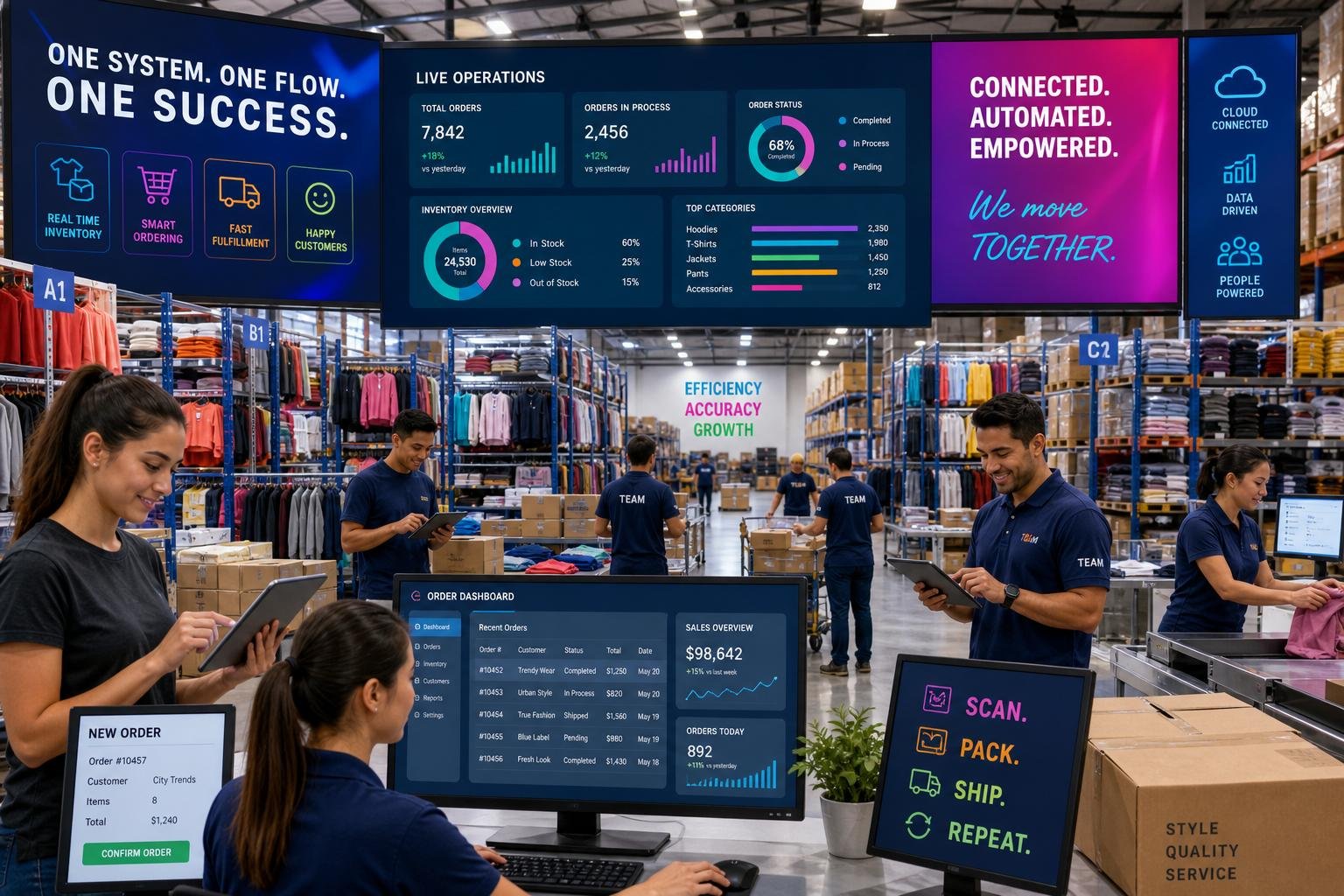
A misaligned spreadsheet is all it can take to lose a wholesale account. In apparel, where timing, availability and buyer confidence matter as much as product, duplicated data and disconnected workflows can quickly turn a routine season order into a commercial failure.
That is why more brands are moving towards collaborative online order entry systems that place sales teams and retail buyers in the same digital environment. Rather than passing requests back and forth by email, ...
Continue Reading This Article
Enjoy this article as well as all of our content, including reports, news, tips and more.
By registering or signing into your SRM Today account, you agree to SRM Today's Terms of Use and consent to the processing of your personal information as described in our Privacy Policy.
phone and manual entry, the newer model gives both sides access to one live workspace, cutting the chance of errors and speeding up the route from order capture to fulfilment.
The appeal is straightforward. Apparel wholesalers increasingly need a process that supports both the buyer who wants self-service convenience and the sales representative who still plays a central role in relationship management. Platforms from providers such as JOOR and Uphance are built around that idea, combining account-specific pricing, customer-specific catalogues, digital line sheets and live inventory links in a single portal. The result is a more responsive buying experience, while still leaving room for guided selling.
For operations teams, the bigger prize is control. A shared ordering environment can reduce the risk of overselling by tying order entry directly to stock records and order management systems. It also gives brands a clearer view of what is available to promise, which matters when a low-stock style, size or colourway can jeopardise a key seasonal programme. Real-time updates help prevent the kind of inventory surprise that can damage both revenue and long-term retailer relationships.
Security and access remain central to the pitch. Wholesale brands do not want every account seeing the same information, and robust systems are designed to show buyers only the pricing, catalogues and inventory relevant to their tier or region. At the same time, internal teams can keep broader visibility over pipeline data, analytics and order exceptions. That separation is important for brands trying to balance openness with commercial discipline.
The shift also has implications beyond the order itself. According to JOOR, brands that manage wholesale through a unified platform can generate reports, analyse sales trends and monitor buyer behaviour more easily, while buyers can browse collections and track order status from any device. JOOR also points to virtual showrooms and shoppable line sheets as part of the modern wholesale experience, reinforcing the growing expectation that B2B buying should feel as intuitive as consumer retail.
Other apparel software vendors make a similar case. Uphance says its portal links buyer self-service and sales rep workflows to product, inventory, pricing and fulfilment data, while ApparelMagic highlights order approvals, allocation, invoicing and backorder handling as part of a more accurate sales-order process. Taken together, the sector’s direction is clear: wholesale is moving away from fragmented administration and towards systems that treat ordering as a shared, collaborative process.
For sales teams, that does not mean disappearing from the process. It means spending less time correcting records and more time advising on assortments, substitutions and seasonal planning. For buyers, it means faster access to the information they need, without waiting for someone to pull together a response.
In a market where speed and precision can decide whether a line sells through or stalls, the case for a unified order entry platform is becoming harder to ignore.
Source: Noah Wire Services