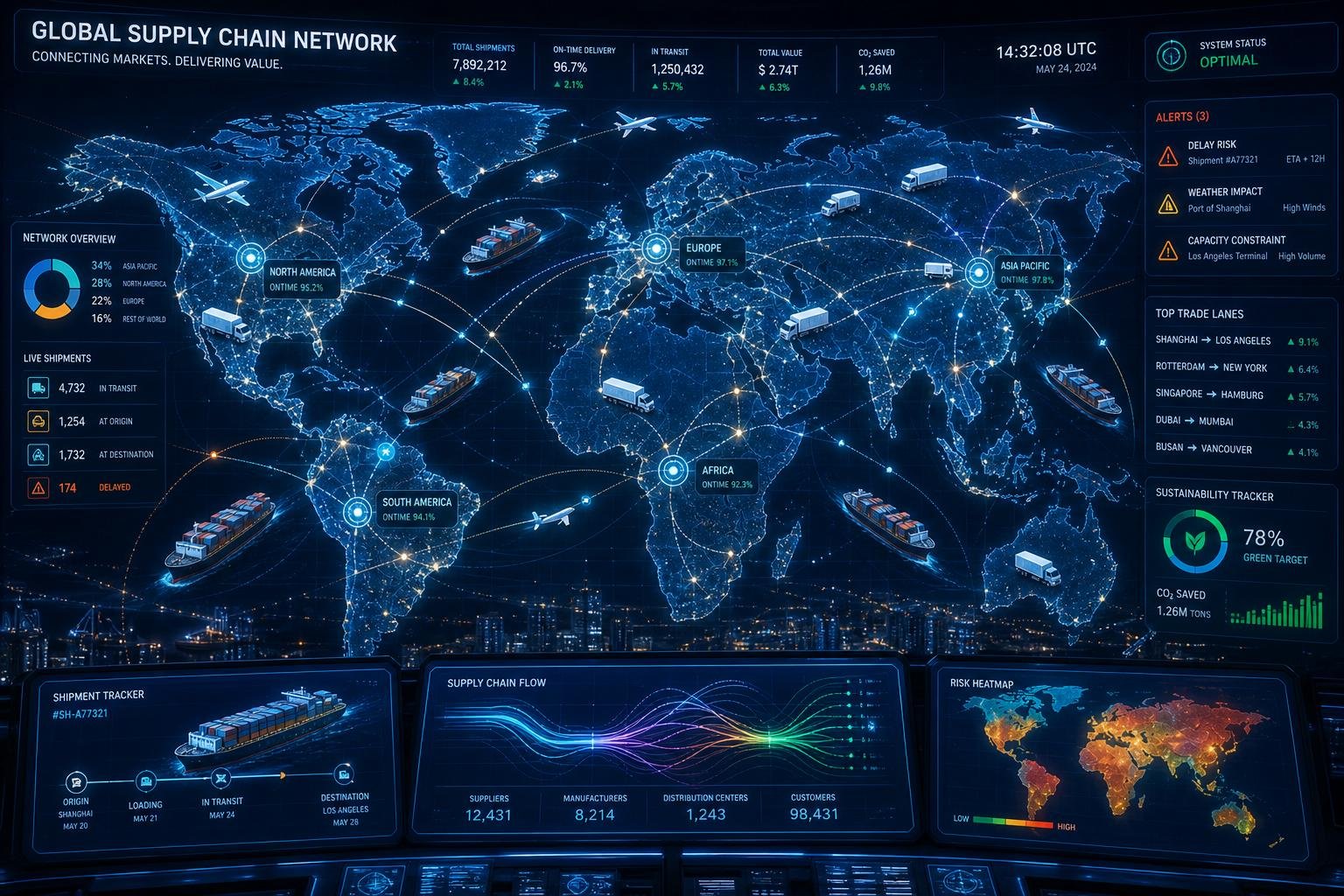
Market researchers say the control tower sector is moving rapidly from a niche supply-chain tool into a broader orchestration layer for global operations, as companies seek sharper visibility over inventory, transport and supplier networks. Persistence Market Research estimates the market will be worth US$12.9 billion in 2026 and climb to US$53.1 billion by 2033, while Grand View Research puts the 2024 value at US$9.67 billion and forecasts US$32.14 billion by 2030.
The appeal ...
Continue Reading This Article
Enjoy this article as well as all of our content, including reports, news, tips and more.
By registering or signing into your SRM Today account, you agree to SRM Today's Terms of Use and consent to the processing of your personal information as described in our Privacy Policy.
is straightforward: businesses are trying to manage increasingly fragile supply chains with systems that can pull together data from carriers, warehouses, manufacturers and vendors in one place. According to Grand View Research, the strongest demand is coming from firms that want real-time oversight and predictive tools that can flag disruption before it spreads.
The software is also changing in character. What began as a visibility dashboard is now being shaped by artificial intelligence, machine learning, cloud computing and digital twin modelling. Persistence Market Research says these features are helping firms automate responses, test disruption scenarios and improve resilience, particularly when logistics networks are under pressure from geopolitical tensions, labour shortages and shifting demand.
Cloud deployment remains the preferred model. Persistence Market Research says cloud-based platforms lead the category because they are easier to scale, quicker to install and simpler to connect with outside systems. Grand View Research makes a similar point, saying cloud and big-data tools are making it easier to process the large volumes of information now flowing through supply chains.
The market’s strongest application remains transport and logistics visibility, but inventory monitoring, demand planning and order management are also gaining ground. That reflects a wider shift in priorities, with companies trying to reduce stockouts, improve forecasting and tighten working capital control. Large enterprises still account for most spending, although smaller firms are increasingly entering the market through subscription-based services.
Regionally, North America remains the clear leader. Persistence Market Research says the region benefits from advanced digital infrastructure, high technology spending and the concentration of multinational businesses operating complex logistics networks. Grand View Research’s U.S. outlook also points to strong adoption of AI, machine learning and IoT in transport and supply-chain functions, alongside tighter integration with transportation and warehouse management systems.
Europe is also a significant market, especially where regulatory pressure, cross-border trade and sustainability goals are pushing companies towards better orchestration tools. Asia Pacific, meanwhile, is expected to grow fastest as e-commerce, manufacturing and smart logistics investment expand across China, India, Japan and Southeast Asia.
Despite the upbeat outlook, adoption still faces obstacles. High implementation costs, legacy system integration problems, cybersecurity risks and a shortage of skilled staff continue to slow deployment, especially among smaller organisations. Even so, the direction of travel appears clear: supply chain control towers are becoming a core part of the push towards more automated, predictive and resilient operations.
Source: Noah Wire Services