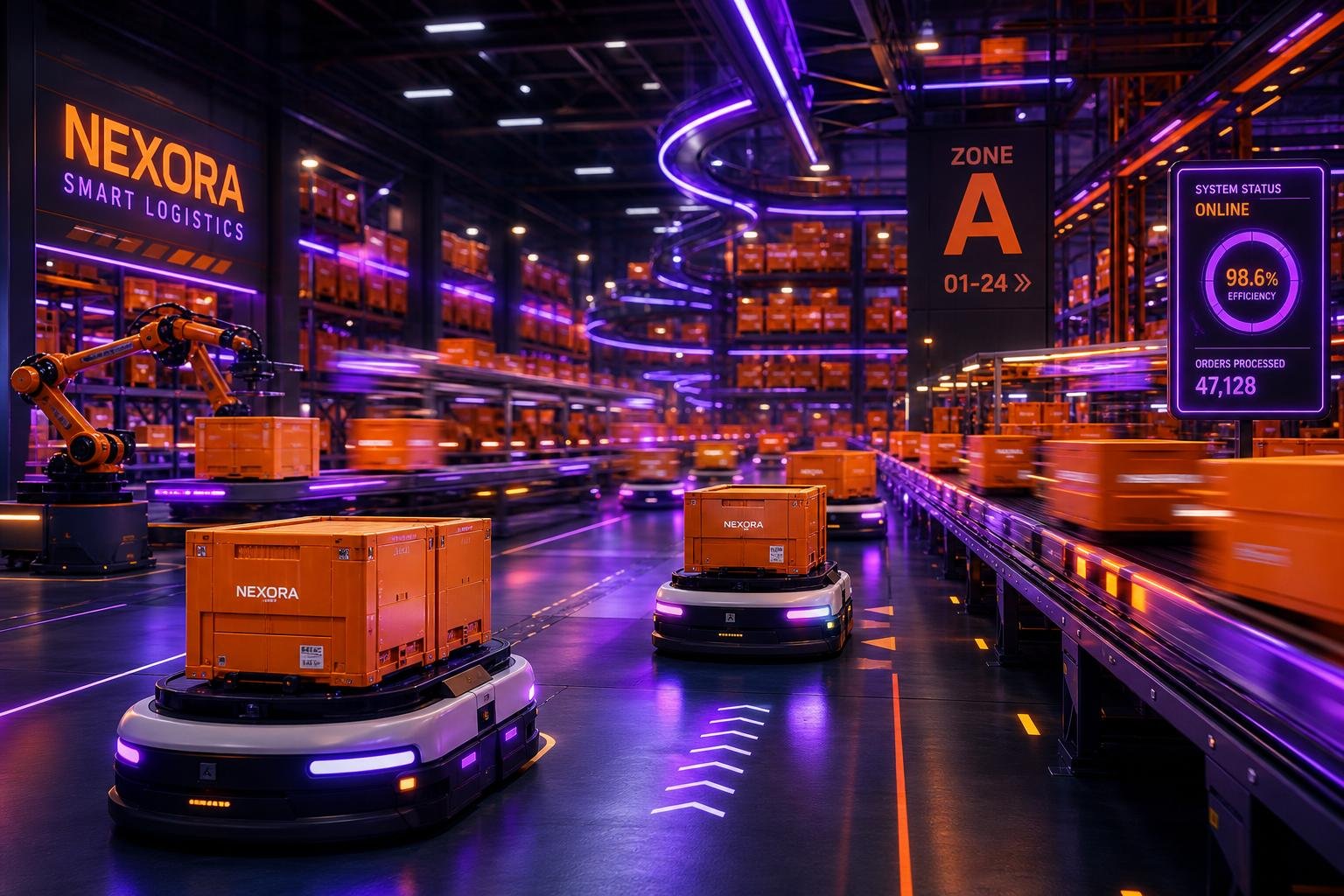
Amazon is broadening its artificial intelligence push from online retail and customer support into the less visible machinery of procurement, planning and logistics, a move that could sharpen competitive pressure on distributors and other supply chain intermediaries.
The company is now promoting a new set of autonomous AI tools aimed at automating tasks that once sat with procurement managers, inventory planners and supply chain analysts. According to Amazon Web Services, the l...
Continue Reading This Article
Enjoy this article as well as all of our content, including reports, news, tips and more.
By registering or signing into your SRM Today account, you agree to SRM Today's Terms of Use and consent to the processing of your personal information as described in our Privacy Policy.
atest system brings together multiple planning functions through AI “teammates” that can watch for disruptions, assess bottlenecks and recommend responses with only limited human intervention.
That matters because the technology is not arriving as a standalone software layer. Amazon is coupling it with its own logistics network and, increasingly, with services that allow outside businesses to use that network. Amazon Supply Chain by Amazon, announced in 2023, was billed as an end-to-end service for moving goods from manufacturers to customers across sales channels, while newer materials from Amazon describe a broader supply chain service offering freight, warehousing, fulfilment and delivery capabilities to external firms.
The combination of software and infrastructure is what makes the move significant. Amazon says its AI tools can track inventory, spot variances, perform root-cause analysis and flag the most urgent issues for people to review. In practice, that points to a model in which routine buying and replenishment decisions are increasingly handled by machines, especially in standardised categories where price, availability and speed matter most.
For distributors, that raises a direct challenge. AI procurement assistants can reduce the need for manual supplier comparison, substitution advice and repetitive order placement, all of which have historically supported the value proposition of many wholesale intermediaries. As Amazon’s systems become more tightly linked to fulfilment and transport, the company is also better placed than pure software vendors to turn recommendations into physical movement of goods.
The pressure will not be uniform. Technical, project-based and regulated supply chains still rely heavily on human expertise, application support and long-term relationships. But companies built mainly around transactional fulfilment are more exposed, especially as enterprise buyers become accustomed to software that can manage sourcing and replenishment with little oversight.
Amazon is not alone in this direction. In April, AWS and Infor said they were bringing agentic AI to manufacturing at enterprise scale, underscoring a wider shift across industrial software toward systems that can reason, plan and act across workflows. Amazon has also been investing in AI for forecasting, mapping and robotics, suggesting the company sees logistics as one of the most practical uses for the technology.
The broader strategic picture is familiar. Just as Amazon Web Services turned Amazon’s internal computing infrastructure into a commercial platform, the company is increasingly packaging its logistics and planning capabilities for outside users. For distributors, the question is no longer whether AI will change supply chains, but how much of the customer relationship can remain human as autonomous systems take over more of the work.
Source: Noah Wire Services