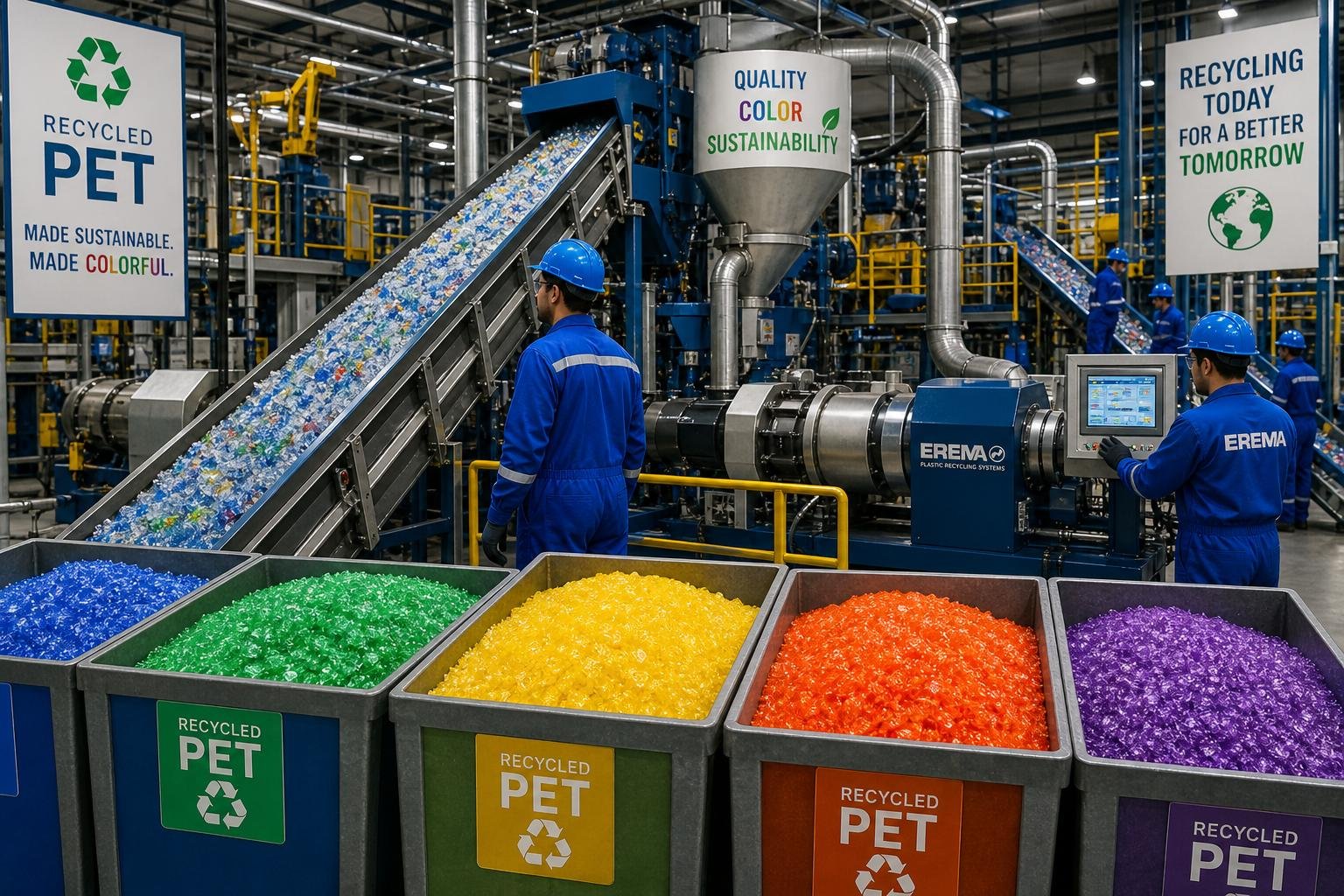
As manufacturers come under growing pressure to cut costs and shrink their environmental footprint, recycled PET has emerged as one of the most practical materials in the plastics market. Often chosen for its strength, light weight and recyclability, it is now being woven into supply strategies well beyond packaging, with producers looking for steadier access to recycled feedstock rather than one-off spot purchases.
Industry interest is being driven by more than sustainability ...
Continue Reading This Article
Enjoy this article as well as all of our content, including reports, news, tips and more.
By registering or signing into your SRM Today account, you agree to SRM Today's Terms of Use and consent to the processing of your personal information as described in our Privacy Policy.
messaging. According to McKinsey, recycled content is already used at scale in packaging, while uptake is also rising in sectors such as automotive, construction and electronics. The consultancy says the market remains constrained by supply, noting that only around 27% of PET bottles and 18% of recyclable PET waste are collected, leaving a large gap between demand and available material.
That shortage has made sourcing decisions more important. The market typically distinguishes between post-consumer recycled PET, or PCR, which comes from household waste such as bottles and packaging, and post-industrial recycled PET, or PIR, which is recovered from manufacturing scrap. PIR is generally cleaner and more consistent, while PCR is more abundant but can vary more in quality. Manufacturers are also choosing between compressed bottles, washed flakes and pellets, depending on how much preprocessing they want to handle in-house.
The trend is supported by improvements in recycling, compounding and product design. M. Holland says these developments have broadened the uses of recycled plastic resins, helping them meet the technical demands of more applications. UL Solutions has also stressed the importance of verification, traceability and certification when companies are buying recycled PET, particularly where quality and safety standards must be proven before materials can be used at scale.
The practical sourcing process usually starts with a clear specification of grade, colour, melt flow and volume. Industrial suppliers say matching those characteristics to the end application is essential, especially for manufacturers that need predictable processing behaviour and stable mechanical performance. Trial orders are often used to confirm how a material performs in real production conditions before longer-term contracts are signed.
What stands out is that recycled PET is no longer being treated as a simple commodity. It is becoming a strategic input that can influence supply stability, production efficiency and sustainability reporting at the same time. For companies willing to build stronger supplier relationships and accept more tailored procurement models, recycled PET offers a route to lower dependence on virgin resin while improving long-term resilience.
Source: Noah Wire Services