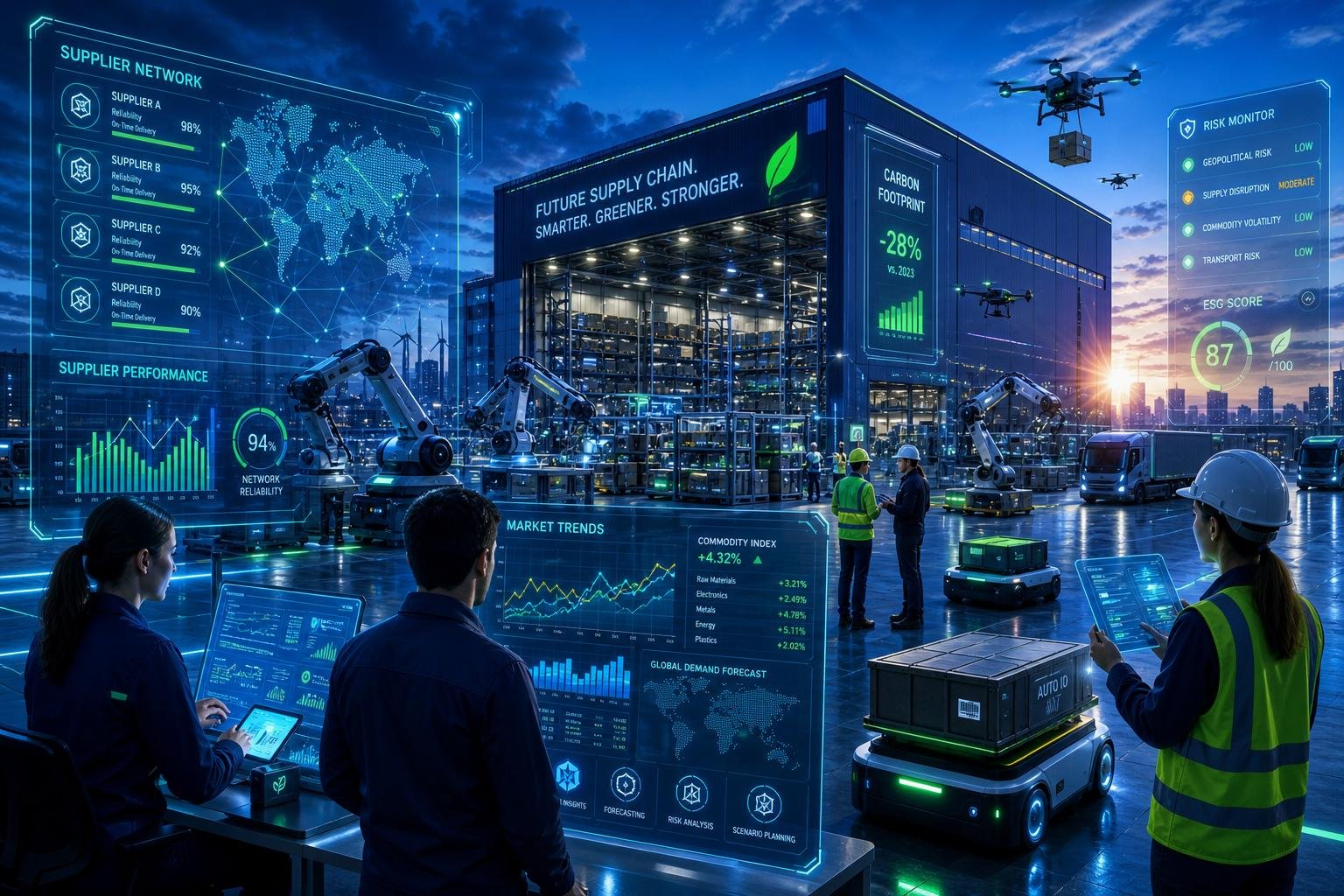
Artificial intelligence is moving supplier management away from firefighting and towards foresight, and the appeal is clear: procurement teams are being asked to do more with less, while dealing with volatile markets, fragmented data, tighter compliance demands and persistent talent shortages. HICX says that combination has made older, manual approaches too slow for the realities of modern sourcing.
That is the context for a growing wave of AI tools and prompt libraries aimed a...
Continue Reading This Article
Enjoy this article as well as all of our content, including reports, news, tips and more.
By registering or signing into your SRM Today account, you agree to SRM Today's Terms of Use and consent to the processing of your personal information as described in our Privacy Policy.
t helping procurement teams behave less like administrators and more like strategic advisers. The idea, as framed by Supply Chain Today, is to give buyers something close to an always-available consultant: a way to spot risk earlier, improve supplier performance, find savings, strengthen collaboration and tighten contract discipline.
The shift is not simply about automation for its own sake. IBM has argued that AI is increasingly valuable in supply chain operations because it can process large volumes of data, recognise patterns and support real-time decisions. In supplier management, that means faster qualification, more proactive monitoring and earlier warnings when delays or disruptions are likely. Sunrise Techs says generative AI is also being used to help draft contracts and anticipate supply interruptions, while a separate overview from Artoon Solutions points to intelligent evaluation, risk detection, supplier discovery and performance tracking as core use cases.
The attraction is also practical. Procurement teams often work with supplier data scattered across systems, spreadsheets and emails, making it hard to build a reliable view of risk or performance. Ivalua says AI can help unify that information, automate workflows and improve visibility across compliance and supplier relationships. SAP has taken a similar line with its Supplier Management Assistant, which it says can automate supplier creation, data gathering and validation, while also segmenting suppliers and producing dynamic performance assessments.
Some of the momentum is being driven by expectation as much as current deployment. Sunrise Techs cites research suggesting that 78% of procurement leaders believe AI will have a significant impact on the field by 2025. Whether that forecast proves exact or not, the direction of travel is already visible: supplier management is becoming less reactive, more predictive and more tightly linked to resilience.
For companies under pressure to reduce disruption and improve control, that matters. The question is no longer whether suppliers are simply meeting orders, but whether they are supporting a broader, longer-term partnership model. In that sense, the most useful AI prompts may not just help teams ask why a shipment was late again; they may help them ask why the relationship was structured that way in the first place.
Source: Noah Wire Services