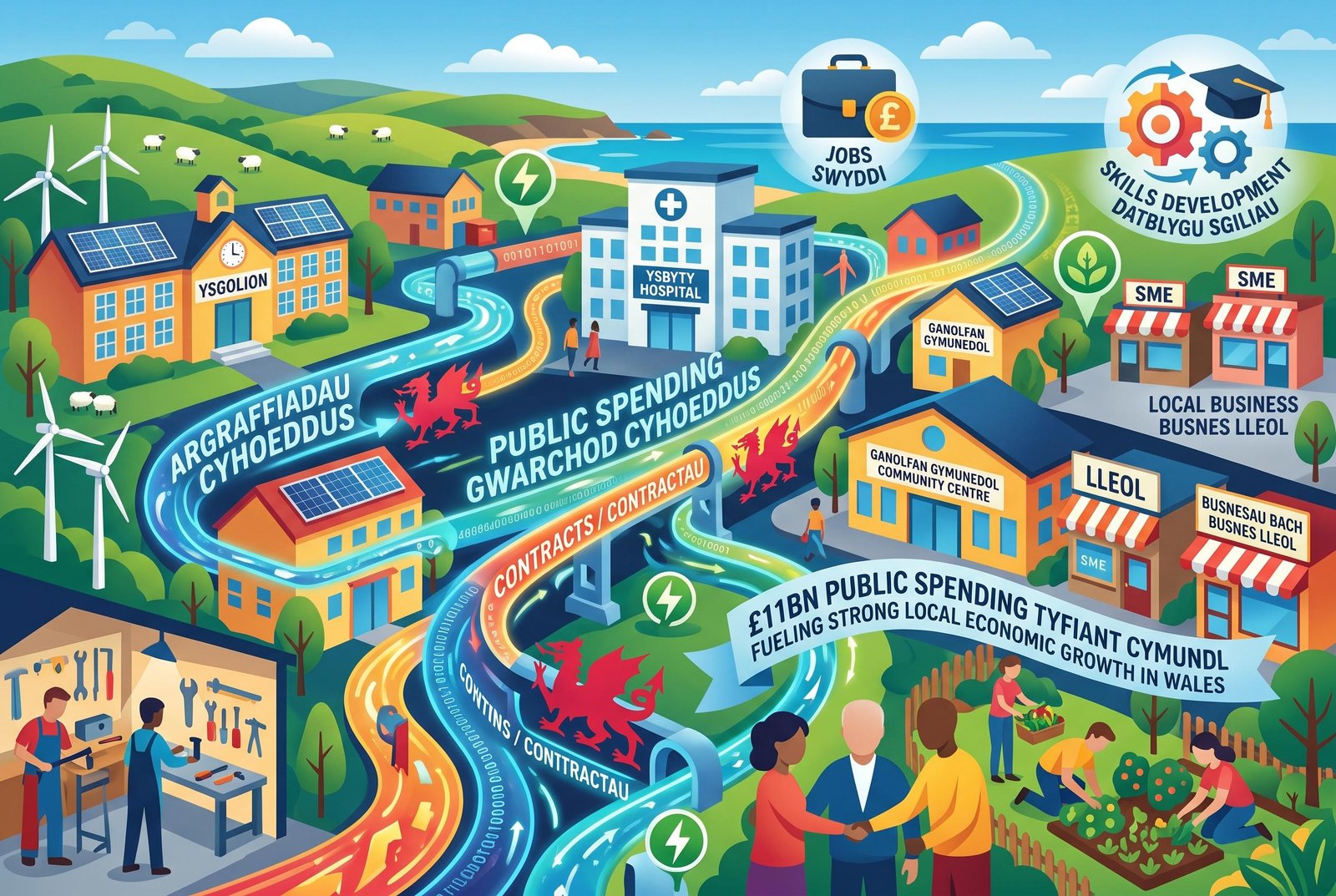
Wales’ public procurement system should be seen less as a routine administrative function and more as a powerful economic instrument, according to the Welsh Local Government Association, which says the country’s £11 billion-a-year purchasing activity could be used far more deliberately to support local growth.
Richard Dooner, a programme manager at the WLGA, argues that the real question is not simply whether public bodies have bought goods and services at the right price,...
Continue Reading This Article
Enjoy this article as well as all of our content, including reports, news, tips and more.
By registering or signing into your SRM Today account, you agree to SRM Today's Terms of Use and consent to the processing of your personal information as described in our Privacy Policy.
but what wider return they have secured from the money they spend. That means looking beyond immediate cost and asking whether contracts are helping to sustain jobs, open doors for small and medium-sized firms, build skills and apprenticeships, and deliver social value in the communities that public services serve.
The argument reflects a broader shift already under way in Wales. According to reporting by The National earlier this month, public bodies are increasingly weighing community, skills and supply-chain benefits alongside price when contracts are awarded. That change has been encouraged by procurement reforms that replaced the language of the “most economically advantageous tender” with “most advantageous tender”, giving buyers more room to consider the wider effect of their spending on regions, communities and society as a whole.
For Mr Dooner, that creates an opportunity to rethink how procurement is managed from start to finish. In his view, it should not be treated as a narrow purchasing exercise that ends once a contract is signed. Instead, procurement, economic development, supply-chain management and contract management need to be joined up so that public bodies can track whether a contract is actually delivering the outcomes they intended in the first place.
That approach, however, requires more than policy language. The WLGA has warned that procurement teams are often expected to deliver increasingly complex outcomes with limited resources, turning them into something like the overlooked “Cinderella” service of the public sector. If procurement is to be used as a strategic tool for economic and social development, the association says, then local authorities and other bodies will need to invest properly in staff, skills and professional capacity.
The stakes are considerable. Business Wales says the public sector supply chain in Wales offers opportunities worth more than £7 billion each year, with the Sell2Wales platform acting as a route for companies to find and bid for contracts. Support programmes also guide firms through tendering, including advice on the foundational economy and on how to compete successfully for public work. Those initiatives underline how procurement policy can shape not only where money is spent, but also which businesses are able to grow from it.
That wider ambition is already visible in parts of local government. Cardiff Council’s Ardal procurement team, which also works with Monmouthshire, Torfaen and the Vale of Glamorgan, says its approach is built around socially responsible procurement and seeks to maximise economic, social, environmental and cultural benefits through regional frameworks. Carmarthenshire County Council has set similar objectives under Welsh legislation, including support for SMEs, stronger supply chains, fair work, reduced carbon impact and ethical procurement.
Sector-specific schemes are also being used to push the agenda further. Business Wales has highlighted work under its food and drink project, funded through the Welsh Government’s foundational economy team, to increase the amount of Welsh food and drink used in public sector settings. The programme has backed workshops, supply-chain collaboration and local authority partnerships, including efforts to bring more Welsh produce into health board menus and to help public buyers coordinate demand at a regional level.
Taken together, the message from across Welsh public life is clear: procurement is no longer being discussed only as a means of getting the best deal on paper. It is increasingly being viewed as a way of shaping the economy itself.
For the WLGA, that shift should go further. Wales, it argues, has a chance to connect its spending power more intentionally to local development, fair work, skills and stronger domestic supply chains. Not every pound spent by the public sector can stay in Wales, and nor should that be the test. But if public money is to do more than buy services, then procurement must be treated as one of the country’s most important economic levers.
Source: Noah Wire Services