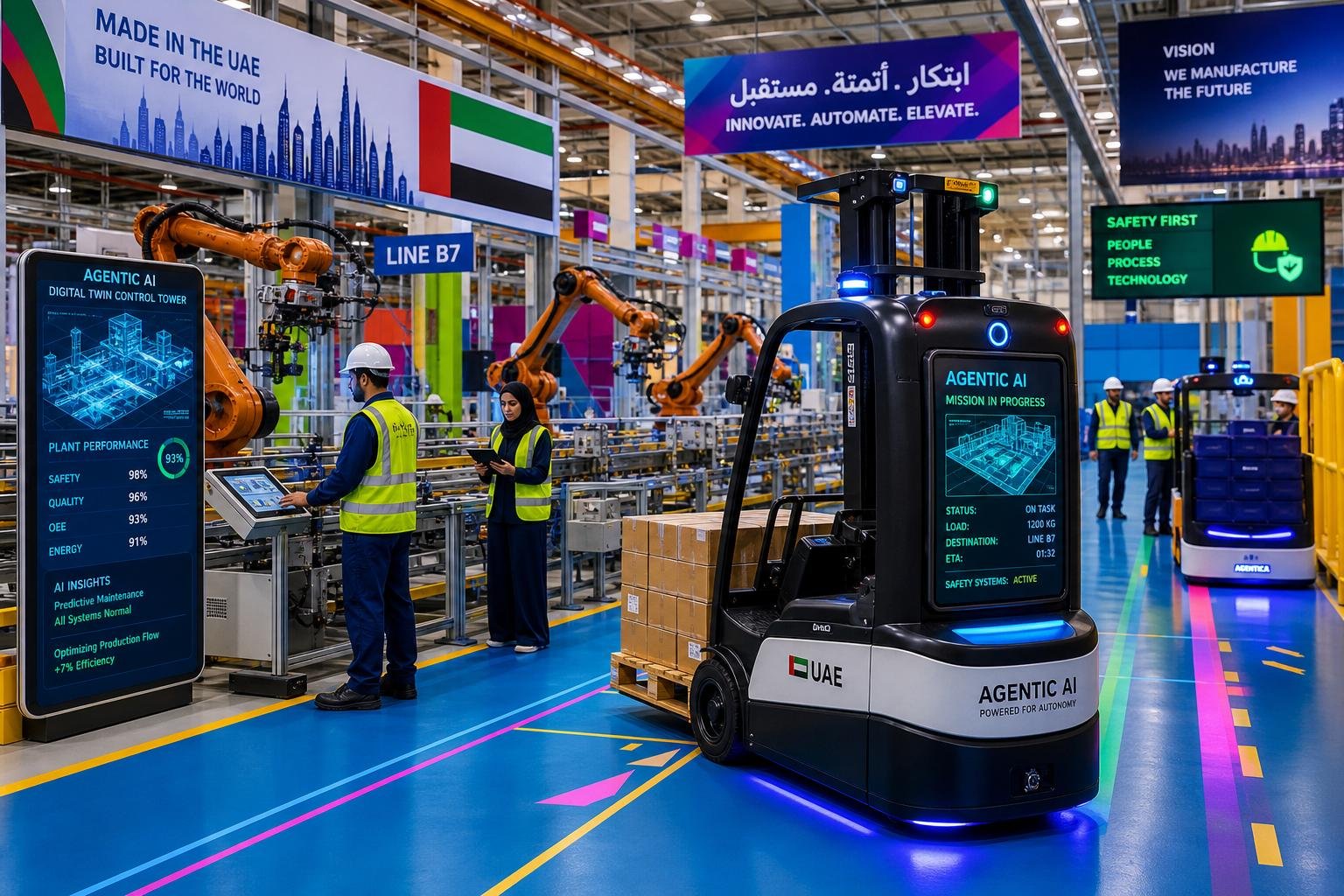
Retailers and manufacturers in the UAE are stepping up investment in artificial intelligence-driven automation as they contend with tighter margins, changing customer habits and supply chains that have become harder to manage.
The latest shift is towards so-called agentic AI: systems that can interpret operational data, make recommendations and, in some cases, carry out tasks with limited human intervention. In practice, that is beginning to affect everything from pricing and p...
Continue Reading This Article
Enjoy this article as well as all of our content, including reports, news, tips and more.
By registering or signing into your SRM Today account, you agree to SRM Today's Terms of Use and consent to the processing of your personal information as described in our Privacy Policy.
romotions to inventory planning, merchandising and commercial sales.
Sulaiman Yusuf, regional vice-president for the Middle East and Africa at UiPath, said the appeal is straightforward. In an ideal setting, decisions on assortment, pricing and promotional activity should be made quickly and on the basis of reliable data. In reality, he noted, companies often rely on disconnected merchandising platforms, e-commerce systems, ERP tools and spreadsheets that slow the process down.
That fragmentation is precisely what many businesses are trying to address. AI agents can pull together information from multiple systems, assess demand patterns and stock positions in real time, and then suggest or trigger actions that would previously have required several layers of manual review.
Pricing is among the clearest use cases. Retailers operating across multiple channels and thousands of stock keeping units often struggle to measure price sensitivity quickly enough to keep pace with the market. Yusuf said AI agents can model the likely impact of pricing changes on demand product by product, helping firms protect margins while reducing the time spent on analysis. The same logic applies to markdowns and promotions, where poor timing can create unnecessary cost or erode revenue when stock levels are moving fast.
Manufacturers across the Gulf are looking at similar systems for procurement, replenishment and commercial pricing. In sectors such as industrial production, consumer goods and logistics, the pressure is often twofold: shortages of raw materials can stall output, while excess stock ties up cash and warehouse space. AI tools can analyse demand signals, identify likely shortages and automate replenishment decisions.
The technology is also being applied to B2B sales. Yusuf said many sales teams still prepare quotations manually, often using outdated historical information. Agentic automation can continuously monitor production costs, raw material availability, market conditions and transaction histories, which in turn can shorten quotation cycles from days to minutes.
That prospect helps explain why interest in the technology is spreading quickly. A separate report cited by TechRadar Pro found that 70% of retailers have already piloted or partly deployed AI agents, although only a small minority consider their systems mature. The report also pointed to obstacles including data integration problems, ethical concerns and a shortage of specialist skills.
Integration remains a recurring theme. Industry observers in the region have argued that AI adoption will only deliver meaningful gains if businesses first connect fragmented systems and clean up their data foundations. Without that, even sophisticated automation can struggle to produce dependable results.
There is also a growing governance issue. Yusuf warned that many organisations are now facing “shadow AI”, as employees use unapproved tools outside formal oversight. As with the earlier rise of shadow IT, that creates risks around transparency, security and control just as companies are trying to widen automation across core operations.
The UAE’s push towards agentic AI sits within a broader regional drive to improve productivity and support national digital transformation goals. For retailers and manufacturers under pressure to do more with less, the attraction is clear: faster decisions, leaner operations and a better chance of keeping pace in a highly competitive market.
Source: Noah Wire Services