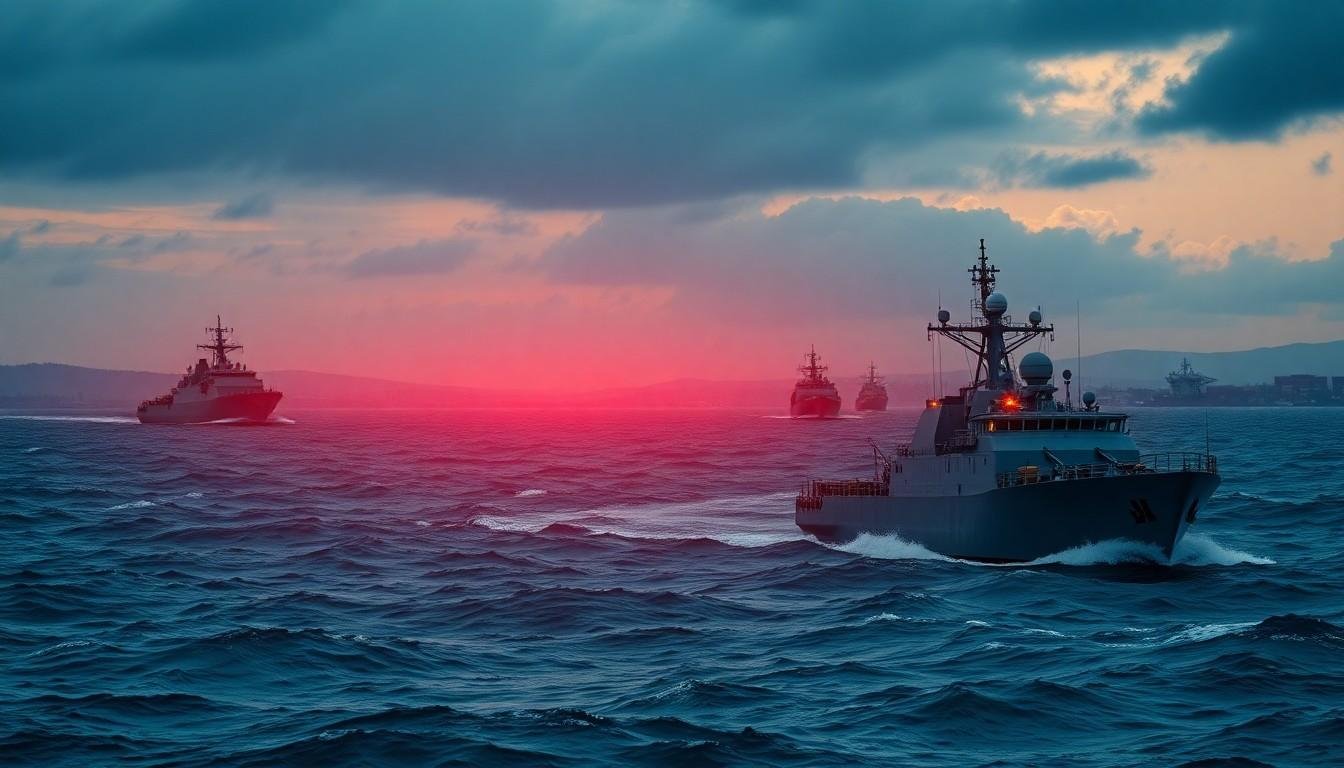
Europe’s problem in the Red Sea has never been simply about whether ships can pass safely. It has been about which ships are deemed worth protecting, who pays for that protection, and how far European governments are willing to go to defend trade routes that sit far from their own shores but are central to their economies.
That tension has become increasingly visible as the European Union has turned its attention to the Bab el-Mandeb Strait and the waters around it, where Hou...
Continue Reading This Article
Enjoy this article as well as all of our content, including reports, news, tips and more.
By registering or signing into your SRM Today account, you agree to SRM Today's Terms of Use and consent to the processing of your personal information as described in our Privacy Policy.
thi attacks on commercial shipping have disrupted one of the world’s most important maritime corridors. Since October 2023, repeated assaults on international vessels have forced carriers to reroute, lengthen journeys and absorb higher costs, with knock-on effects for supply chains and energy prices. The EU responded in February 2024 by launching EUNAVFOR Aspides, a defensive naval mission based in Larissa, Greece, and led by Rear Admiral Vasileios Gryparis.
The mission was conceived as a shield rather than a strike force. According to the European External Action Service, Aspides is intended to restore and protect freedom of navigation in the Red Sea and nearby waters, while also improving maritime awareness and gathering information on arms trafficking and shadow fleets. The operation covers key sea lanes including the Gulf of Aden, the Arabian Sea, the Gulf of Oman and the Persian Gulf, underlining the breadth of the maritime threat the EU believes it faces.
Yet the politics around the mission have proved more complicated than the naval deployment itself. The Council of the European Union prolonged Aspides’s mandate in February 2025 until 28 February 2026, after a strategic review, and then extended it again on 23 February 2026 until 28 February 2027. The latest extension came with a financial reference amount of nearly €15 million to cover common costs for the year from March 2026. That followed an earlier figure of more than €17 million for the preceding period, showing that Brussels is willing to sustain the mission, but only within carefully defined limits.
The debate now is not whether the Red Sea matters to Europe, but what kind of protection Europe is prepared to provide. Aspides is framed as a defensive operation in accordance with international law, designed to protect vessels and support stability along key routes. But the mission’s scale has prompted questions about adequacy. In September 2026, EU foreign policy chief Kaja Kallas urged member states to bolster the mission as threats from the Houthis intensified, signalling that officials in Brussels fear the existing footprint may no longer be enough. The EU has also considered adding ships and aircraft to reinforce the deployment, particularly around the Bab el-Mandeb Strait, where the passage between the Indian Ocean and the Mediterranean is strategically critical.
That debate reveals an underlying hierarchy. The Red Sea is a global trade artery, but not every ship passing through it carries the same political weight. European leaders are under pressure to ensure that vessels linked to European commerce are protected, while also avoiding an open-ended military commitment. In practice, that means balancing the security of merchant shipping against the risks of escalation, the cost of sustained naval operations and the question of how much responsibility Europe should shoulder in a crisis that originated in regional conflict.
Aspides has therefore become more than a maritime patrol. It is a test of European strategic resolve. By choosing a limited, defensive mission rather than a broader combat role, the EU has signalled both its dependence on Red Sea trade and its reluctance to be drawn deeper into confrontation. The result is a mission that protects navigation, but only up to a point, and one that exposes the political choices behind every decision about which routes, which cargoes and which ships Europe is willing to defend.
Source: Noah Wire Services