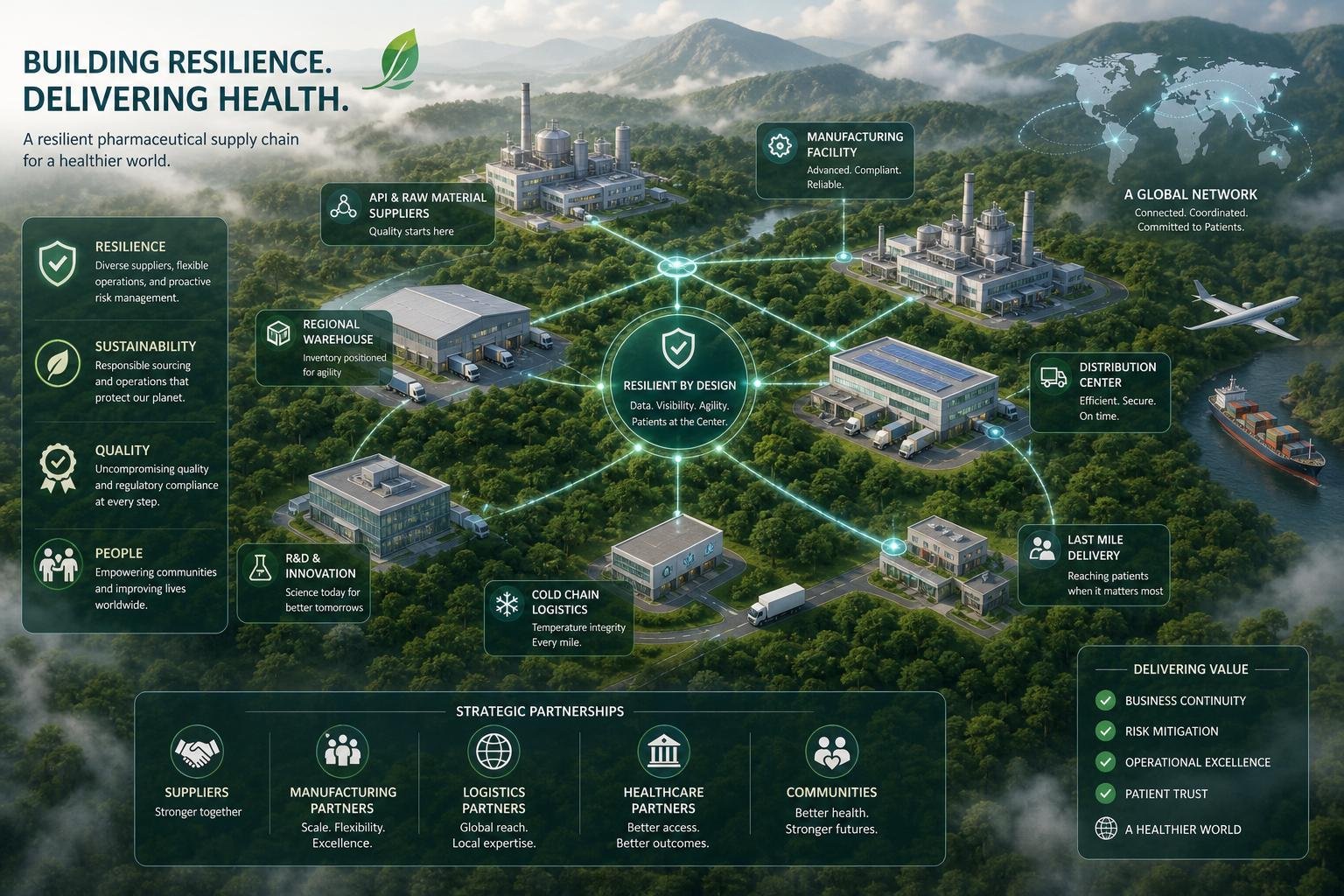
In a sector where disruption has become a routine operating condition, pharmaceutical companies are being urged to treat supplier relationships as strategic assets rather than transactional arrangements. Paula Pulsoni, vice-president of service development and innovation at World Courier, said the difference between a functioning partnership and a fragile one often comes down to whether organisations have built the right structures before a crisis hits, according to Pharmaceutical Com...
Continue Reading This Article
Enjoy this article as well as all of our content, including reports, news, tips and more.
By registering or signing into your SRM Today account, you agree to SRM Today's Terms of Use and consent to the processing of your personal information as described in our Privacy Policy.
merce.
That means being honest about scale, capabilities and limits, and then creating governance models that define how decisions will be made when pressure rises. The message echoed across related industry commentary is that resilience is not built in the middle of a shock; it is built in advance through visibility, planning and repeated communication.
McKinsey has argued that pharmaceutical companies need greater insight into supplier risk, stronger risk management, adoption of enabling technology and a better understanding of the different kinds of disruption that can hit a supply network. Deloitte has made a similar case in its analysis of clinical trial supply chains, pointing to geographic concentration, cold-chain sensitivity, regulatory complexity and tariff pressure as reasons companies need a more deliberate resilience strategy.
Procurement is emerging as a particularly important bridge between strategy and execution. In cross-functional efforts such as sustainability, Pharmaceutical Executive reported that procurement can help explain the purpose of a partnership, align departments around the resources required and keep internal teams moving in the same direction. Pharma Tech has also argued that purchasing should be brought in early, alongside development and quality, so that supplier decisions support both compliance and long-term supply stability.
A recurring theme across the sector is transparency. Xeneta has warned that procurement teams may still rely too heavily on relationship-based models that do not fully reflect market volatility. That can leave companies exposed when conditions change quickly, even if the immediate shock later eases. Recovery, the company noted, can take months.
The most resilient partnerships, Pulsoni said in the Pharmaceutical Commerce piece, are those in which communication is structured and regular, face-to-face engagement is prioritised where possible, and both sides understand that patient impact remains the central measure of success. That patient-first framing is increasingly being presented not as a slogan, but as a practical discipline for supply chain decision-making.
Deloitte has also cautioned that the pandemic did not simply expose weak links; it forced companies to keep reassessing them. That broader lesson now appears to be shaping how pharma thinks about suppliers, with the emphasis shifting from short-term efficiency to durable collaboration, clearer governance and a shared ability to absorb volatility without losing sight of product availability.
Source: Noah Wire Services