Manufacturers and other industrial operators are under mounting pressure to do more with less: raise throughput, cut waste, protect margins and avoid the kind of breakdowns that can throw an entire production line off course. In that environment, maintenance is no longer just a back-room operational task. It has become a strategic lever for competitiveness.
For many years, maintenance practice sat on two familiar models. One was reactive: fix the machine after it failed. The ot...
Continue Reading This Article
Enjoy this article as well as all of our content, including reports, news, tips and more.
By registering or signing into your SRM Today account, you agree to SRM Today's Terms of Use and consent to the processing of your personal information as described in our Privacy Policy.
her was preventive: service equipment on a calendar, whether it needed attention or not. Both approaches still have a role, but both can be blunt instruments. The first is expensive and disruptive; the second can lead to unnecessary servicing and avoidable cost.
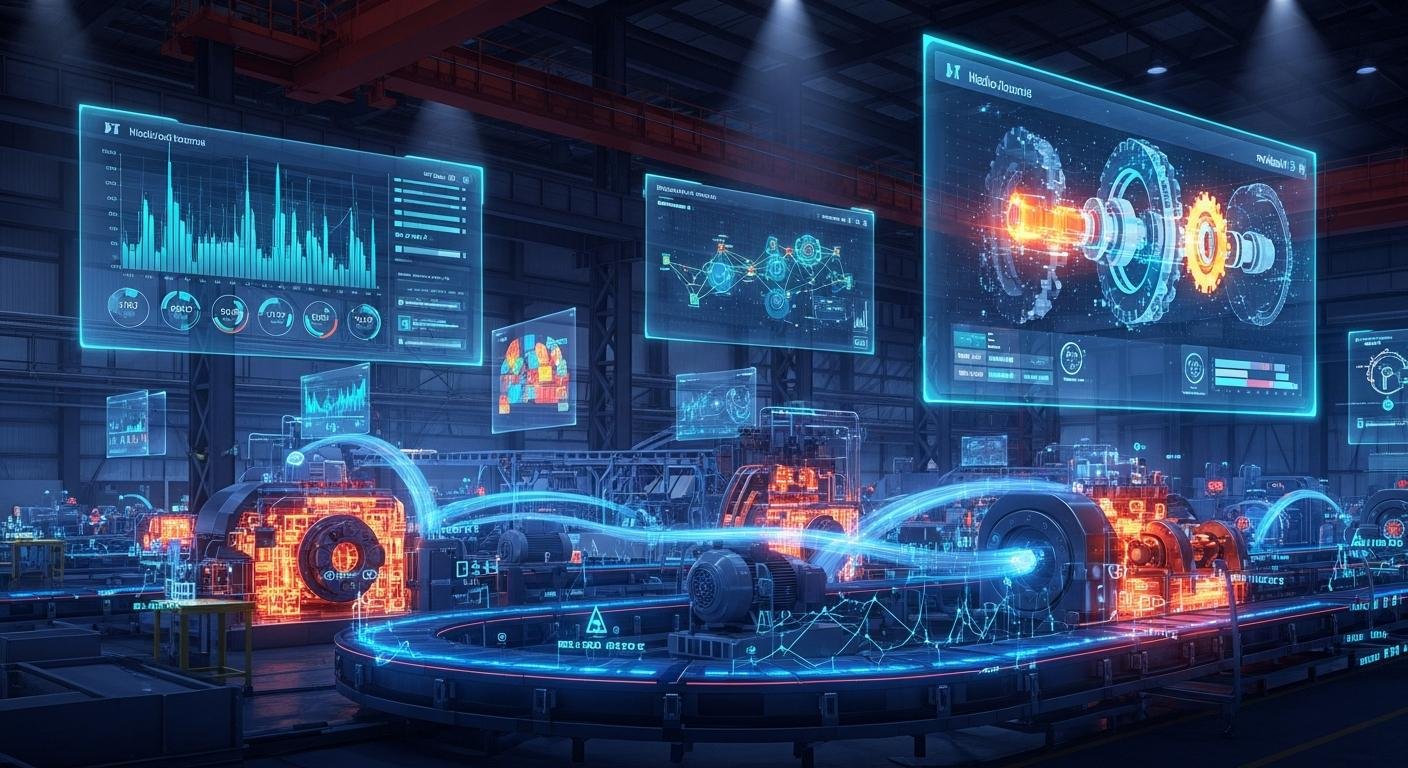
Predictive maintenance offers a more precise alternative. Drawing on connected sensors, operational data, cloud systems and artificial intelligence, it aims to spot the warning signs of deterioration before a fault becomes a shutdown. Rather than guessing when a component might fail, maintenance teams can act on evidence gathered from the asset itself.
At its core, predictive maintenance is a condition-based approach. Equipment is monitored continuously, with signals such as vibration, temperature, electrical current, pressure, lubrication quality and acoustic output feeding into analytics tools that look for abnormal patterns. IBM describes the method as one that uses real-time condition monitoring and AI to anticipate failure, allowing teams to intervene before breakdowns occur. Intel similarly frames it as a way to maximise uptime and improve overall equipment effectiveness.
The economic case is straightforward. When a critical asset fails unexpectedly, the damage is rarely confined to the repair bill. Production can stop, delivery schedules can slip, overtime costs can rise and quality problems can spread through the process. Safety risks may also increase. In industries built around tightly choreographed operations, a single failure can have knock-on effects across supply chains and customer commitments.
Industry estimates suggest the scale of the problem remains enormous. McKinsey has said manufacturers using predictive maintenance can cut unplanned downtime by 30% to 50% and reduce maintenance costs by 10% to 40%, while also extending equipment life by catching problems earlier. Other industry sources point to similarly strong returns, especially in high-volume environments where even brief interruptions are costly.
Artificial intelligence is what has pushed predictive maintenance from simple monitoring into a more powerful decision-making tool. Traditional systems often generate a flood of alarms, many of which do not require immediate action. AI changes that by comparing live data with historical patterns, identifying subtle deviations and helping distinguish normal variation from the early signs of mechanical wear.
That matters because not every alert is equally important. Instead of simply reporting that a threshold has been crossed, modern systems can help estimate the probability of failure and rank assets by urgency. Intel says this kind of approach can help organisations make better decisions before disruption occurs, particularly when AI workloads are deployed close to the factory floor.
The technologies behind these systems are becoming increasingly familiar: wireless vibration sensors, infrared imaging, oil analysis, ultrasound inspection, motor current analysis and cloud-based analytics platforms. Some systems also use edge computing and industrial connectivity standards to process data near the asset before sending it to the cloud. The result is a more continuous view of equipment health, rather than the occasional snapshot provided by manual inspections.
The manufacturing use case has become especially prominent. According to Caddis Systems, predictive maintenance is now one of the most widely deployed AI applications in industry and one of the highest in return on investment. The company says manufacturers can use real-time data such as vibration, temperature, current draw and pressure to detect anomalies before they become failures. It also cites potential downtime reductions of 30% to 50% and large financial savings on high-volume lines.
That said, technology alone does not guarantee success. Intel advises companies to assess the risk downtime poses to their operations before rolling out a programme, and to consider working with a technology partner to simplify deployment and accelerate value. In practice, effective predictive maintenance depends on more than sensors and software. It requires clear processes, good data, reliability expertise and a disciplined approach to deciding which assets matter most.
That prioritisation is crucial. Not every machine needs the same level of monitoring. Critical production assets, bottlenecks and expensive rotating equipment usually justify deeper investment than low-risk ancillary systems. A risk-based strategy helps organisations direct capital and attention where the business impact is greatest.
The broader appeal of predictive maintenance lies in its reach beyond the maintenance department. Higher reliability supports steadier production, fewer delays and more predictable output. Lower unnecessary servicing can free up labour and spare parts budgets. Better planning reduces firefighting. Longer asset life delays replacement costs. And safer operations reduce the chance of catastrophic failure.
As more factories, plants and logistics networks become connected, reliability engineering is increasingly being treated as a business function rather than a purely technical one. The organisations that benefit most are likely to be those that combine data, engineering judgement and operational discipline, rather than relying on software alone.
That is why predictive maintenance is emerging as more than a technical upgrade. In the AI era, it is becoming a practical competitive advantage: a way to keep assets running longer, control costs more intelligently and build industrial operations that are less vulnerable to disruption.
Source: Noah Wire Services