Interpack 2026 is shaping up as a showcase for the packaging technologies that food and drink manufacturers are increasingly relying on to keep production lines compliant, efficient and commercially viable. The trade fair, due to bring together suppliers from across processing, filling, inspection, coding, automation and packaging, is reflecting an industry under pressure from labour shortages, tighter regulation, product variety and sustainability demands.
The strongest messag...
Continue Reading This Article
Enjoy this article as well as all of our content, including reports, news, tips and more.
By registering or signing into your SRM Today account, you agree to SRM Today's Terms of Use and consent to the processing of your personal information as described in our Privacy Policy.
e from the exhibitor line-up is that packaging machinery is no longer being judged only on speed. It is also being measured on hygiene, data connectivity, material efficiency and its ability to handle more complex products with less waste. That is especially visible in the aseptic and high-care segment, where Ampack is introducing a low-foam dosing system for sensitive liquid foods such as clinical nutrition, baby food and drinkable meals. The company says its piston-based approach helps product flow along the bottle wall, cutting foam and improving fill accuracy, with output reaching as many as 36,000 bottles an hour.
Inspection and quality assurance are another focal point. Minebea Intec is taking a heavily customised approach, highlighting weighing, metal detection, X-ray and checkweighing systems built for unusual product geometries, strict hygiene areas and cramped production layouts. Bizerba, meanwhile, is presenting what it describes as a more integrated end-of-line ecosystem, combining weight control, labelling, case handling and palletising with AI-assisted X-ray inspection, leak detection for modified-atmosphere packs and software tools for traceability and OEE monitoring.
Coding and traceability are also moving up the agenda as packaging becomes more complex and regulatory scrutiny intensifies. Linx Printing Technologies is launching a new continuous inkjet printer range and previewing a large-character system for corrugated packs, alongside laser and thermal transfer options aimed at improving code quality on recyclable materials. Esko and its partners are also placing emphasis on connected workflows, with a guided production-line experience designed to show how data can flow from artwork through to palletisation, helping brands reduce errors and speed up launches.
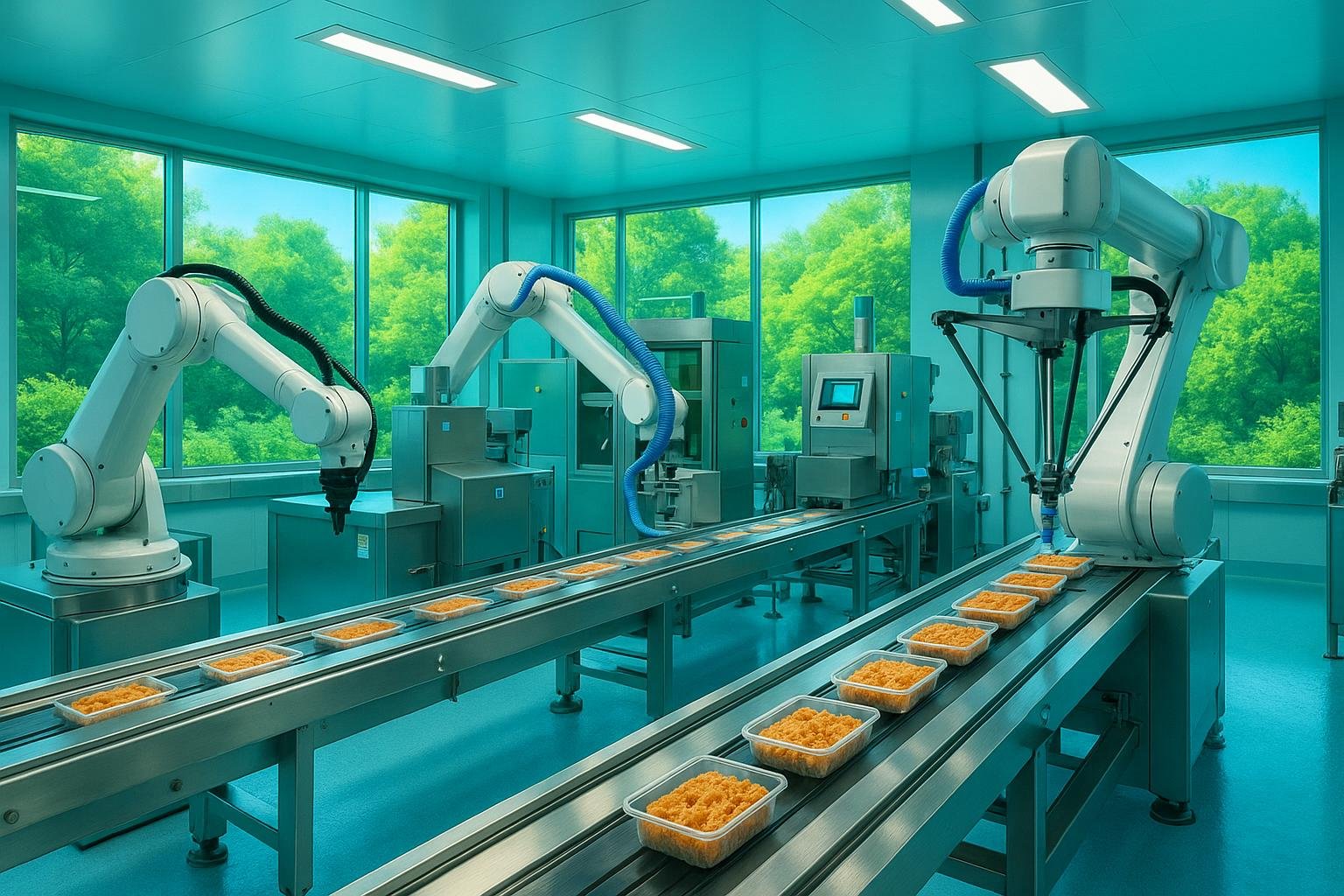
Automation remains one of the clearest responses to ongoing labour pressure. Tekpak Automation is demonstrating a compact pick-and-place robot cell for trays, cartons, thermoformers and flow-wrappers, while Lantech is focusing on stretch wrapping and case handling systems intended to reduce film use, cut stoppages and stabilise pallet loads. Sidel is also putting robotics and complete-line integration at the centre of its message, with new equipment for collating and palletising, as well as aseptic filling developments for fast-changing, SKU-heavy production environments.
Sustainability is no longer being presented as a long-term ambition; at interpack, it is appearing more as a compliance requirement. Innovia Films is unveiling mono-material BOPP structures intended to replace PET, foil and mixed laminates, while Greiner Packaging is showing packaging concepts that separate more easily for recycling and reduce component count. PakTech is pushing recycled HDPE handle solutions for multipacks, offering an alternative to cardboard carriers that it says is both durable and fully recyclable.
There is also strong attention on pouching and confectionery processing. Bartelt is debuting a duplex version of its MAG-R horizontal form-fill-seal machine, which it says can double pouch output, and TNA Solutions is presenting developments for gummy, jelly and marshmallow lines, including changes aimed at reducing dust, improving weight control and speeding changeovers. In confectionery, Theegarten-Pactec has already signalled an industry-first double-lane continuous motion system for stock cubes, underlining the way interpack is becoming a launchpad not just for packaging innovation, but for upstream processing as well.
Interpack itself says its start-up zone has expanded significantly, with 22 young companies from eight countries set to present ideas spanning recyclable materials, reusable systems, ESG software, serialisation and AI-supported operations management. The fair is also devoting large areas to confectionery, bakery and pharmaceuticals, reinforcing its role as a broad industrial platform rather than a single-sector event.
Taken together, the developments on display point to a packaging sector in transition. Aseptic accuracy, modular automation, circular materials, smarter inspection and connected data systems are emerging as the technologies most likely to define the next phase of food and drink manufacturing. For producers, the challenge is no longer simply choosing equipment that runs faster. It is selecting systems that can handle more product variation, satisfy regulators, reduce waste and support a more traceable, recyclable supply chain.
Source: Noah Wire Services