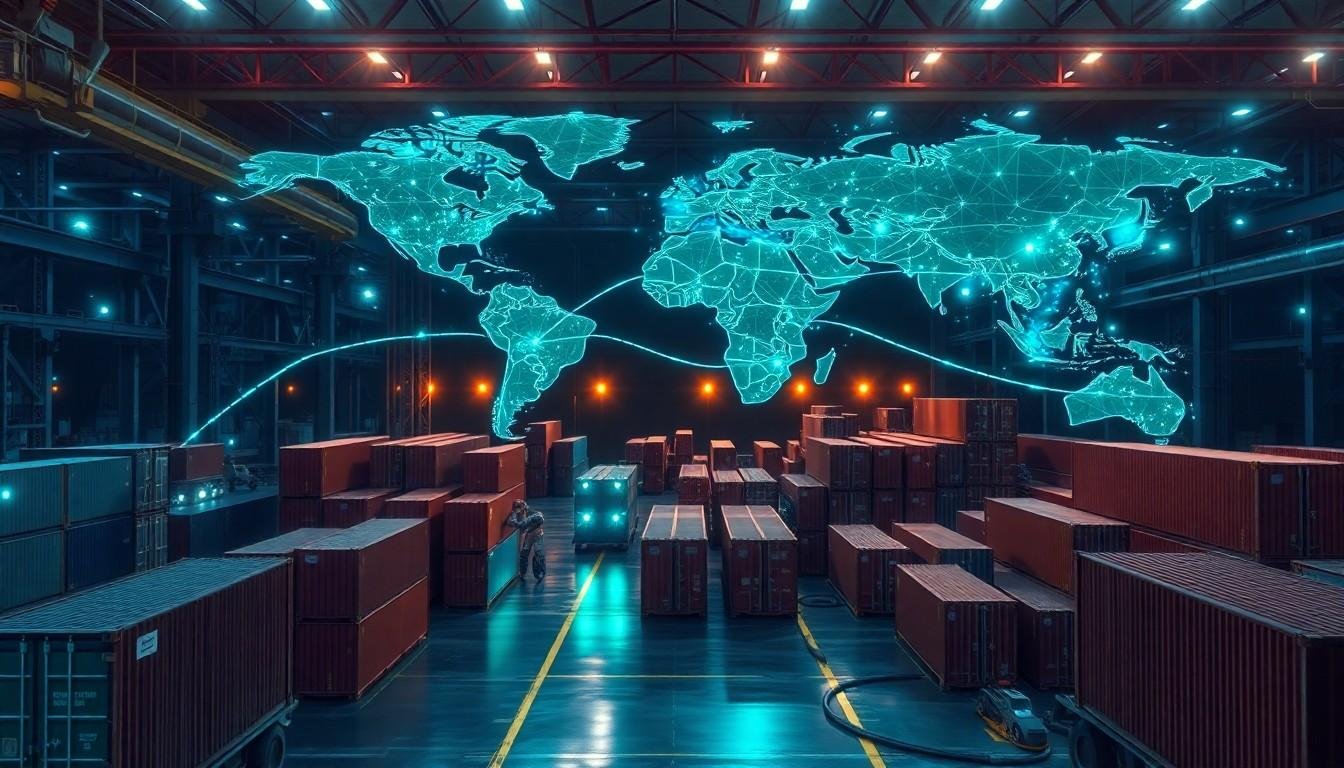
Supply chain transformation has been a boardroom priority for years, with companies pouring money into planning software, automation and analytics in the hope of improving speed and resilience. Yet many organisations still struggle to join up what happens across procurement, inventory, logistics and fulfilment. McKinsey says the core problem remains the same: most businesses still do not have a reliable, real-time picture of their supply chains, and visibility gets weaker the further ...
Continue Reading This Article
Enjoy this article as well as all of our content, including reports, news, tips and more.
By registering or signing into your SRM Today account, you agree to SRM Today's Terms of Use and consent to the processing of your personal information as described in our Privacy Policy.
companies look beyond their immediate suppliers.
That gap matters because modern supply chains are far more complex than the systems many firms use to manage them. Information is often trapped in separate platforms, leaving leaders to make decisions with only a partial view of demand, stock levels, transport delays and supplier performance. The result is slower responses, poorer forecasting and a greater risk of being caught out when disruption strikes.
A McKinsey survey of global supply chain leaders in 2024 suggests the scale of the challenge. While around two-thirds of companies are investing in advanced planning and scheduling systems, only 10% have fully rolled them out. One-third of respondents said they do not have a quantified business case for those investments, and 15% said the systems had failed to meet expectations. McKinsey also found that understanding of deeper supplier tiers has weakened, with visibility into lower levels of the network declining further.
The issue extends beyond efficiency. In another McKinsey study on traceability, only 9% of organisations were said to be complying with new environmental and human-rights rules, underlining how poor data integration can also create regulatory and reputational risk. Schneider’s guide to supply chain visibility makes a similar point, noting that 77% of companies plan to increase investment in this area, even as they continue to confront data silos, organisational barriers and technical constraints.
The case for a connected intelligence layer is therefore becoming stronger. Rather than treating demand, inventory and execution as separate functions, the goal is to bring them together in a single operational view, supported by AI-driven analysis. That approach can improve forecast accuracy, reduce excess stock, speed up disruption response and give managers a better chance of acting before problems spread across the network.
In practical terms, the shift is not just about better dashboards. It is about enabling supply chains to function as coordinated systems rather than collections of disconnected parts. For firms under pressure from volatile demand, regulatory scrutiny and persistent logistics shocks, that distinction is becoming increasingly important.
Source: Noah Wire Services