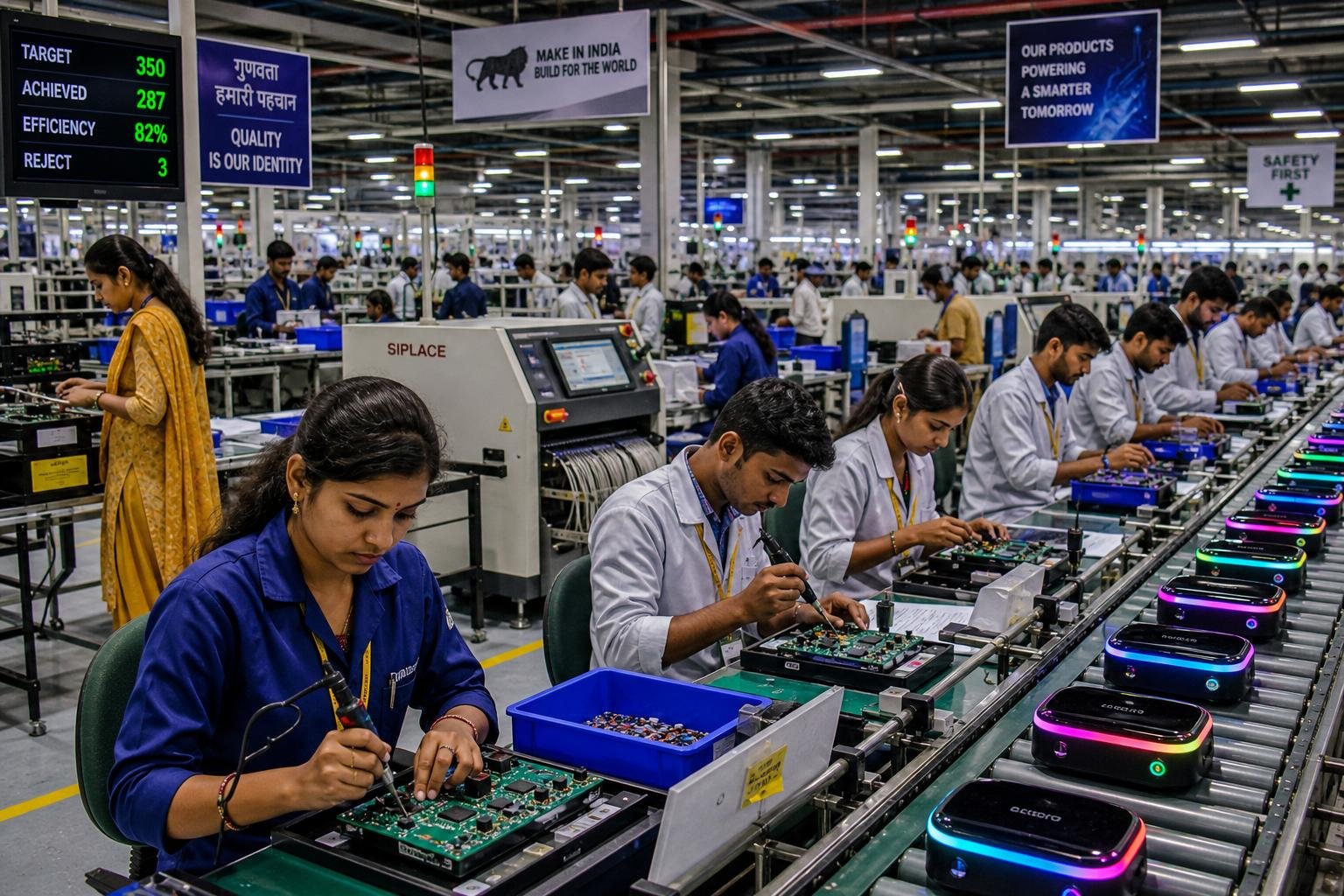
India’s electronics trade gap has become so large that it now sits alongside oil as one of the country’s biggest import burdens, and industry figures suggest the problem is getting worse even as policymakers push harder for domestic manufacturing. The central issue, according to an interview by Vinod Sharma in the January-March 2026 edition of the ELCINA Electronics Outlook, is not simply the cost of buying parts abroad but the way Indian industry still approaches sourcing: too of...
Continue Reading This Article
Enjoy this article as well as all of our content, including reports, news, tips and more.
By registering or signing into your SRM Today account, you agree to SRM Today's Terms of Use and consent to the processing of your personal information as described in our Privacy Policy.
ten as a price exercise, rather than as a long-term programme to build suppliers.
That distinction matters because electronics imports are no longer limited to finished devices. Statista data for fiscal 2023 showed electronic components alone accounting for more than $25.1 billion in imports, the largest category within the segment, ahead of telecom equipment. Another Statista forecast put the value of electronics imports in India at more than 7 trillion rupees by fiscal 2026, underscoring how quickly dependence on overseas supply is expanding. Business Standard reported last year that electronics imports stayed above $20 billion for a fifth straight quarter despite the government’s Production-Linked Incentive scheme, suggesting that incentives alone have not been enough to shift the structure of the market.
Sharma, who is managing director of Deki Electronics and a former president of ELCINA, argues that India needs a deeper industrial reset. In the interview highlighted by ELCINA, he says the country must move from low-cost procurement to active vendor development, building suppliers rather than merely selecting them. He frames the challenge through a four-step value chain, beginning with assembly and moving through components and modules, design and intellectual property, and finally brands. His point is that India still remains heavily concentrated in the first stage, where value creation is thinnest and import dependence is highest.
The wider concern is strategic as well as economic. The interview touches on China’s leverage over rare earths and on the fact that even basic inputs such as copper-clad steel wire are still not manufactured domestically at scale. That kind of dependence leaves Indian electronics exposed to external shocks, whether from geopolitics, logistics or commodity cycles, while limiting the gains from the country’s own demand boom.
ELCINA has been pressing for a more ambitious policy response. In its Budget 2026 wishlist, the industry body sought component clusters, export incentives and stronger support for research and development. That aligns with Sharma’s argument that the next phase of growth will not come from assembly lines alone, but from a wider ecosystem of suppliers, engineering capability and product development.
The association’s quarterly Electronics Outlook has become a platform for that debate, offering a window into policy, quality and business trends across the sector. In the same interview, Sharma points to a proposed “Made in India” value-addition rating modelled on energy labels, an attempt to make domestic content more visible and measurable. He also casts artificial intelligence as a possible spur to manufacturing at a time when services hiring is slowing, and sets out Deki’s own three-pillar strategy, including a proposed MLCC joint venture that would be a first of its kind in India.
Taken together, the message from industry is clear: if India wants to reduce the electronics trade deficit, it cannot rely on import substitution slogans or fiscal incentives alone. It will need supplier development, deeper component ecosystems, stronger design capacity and a much more deliberate push up the value chain.
Source: Noah Wire Services