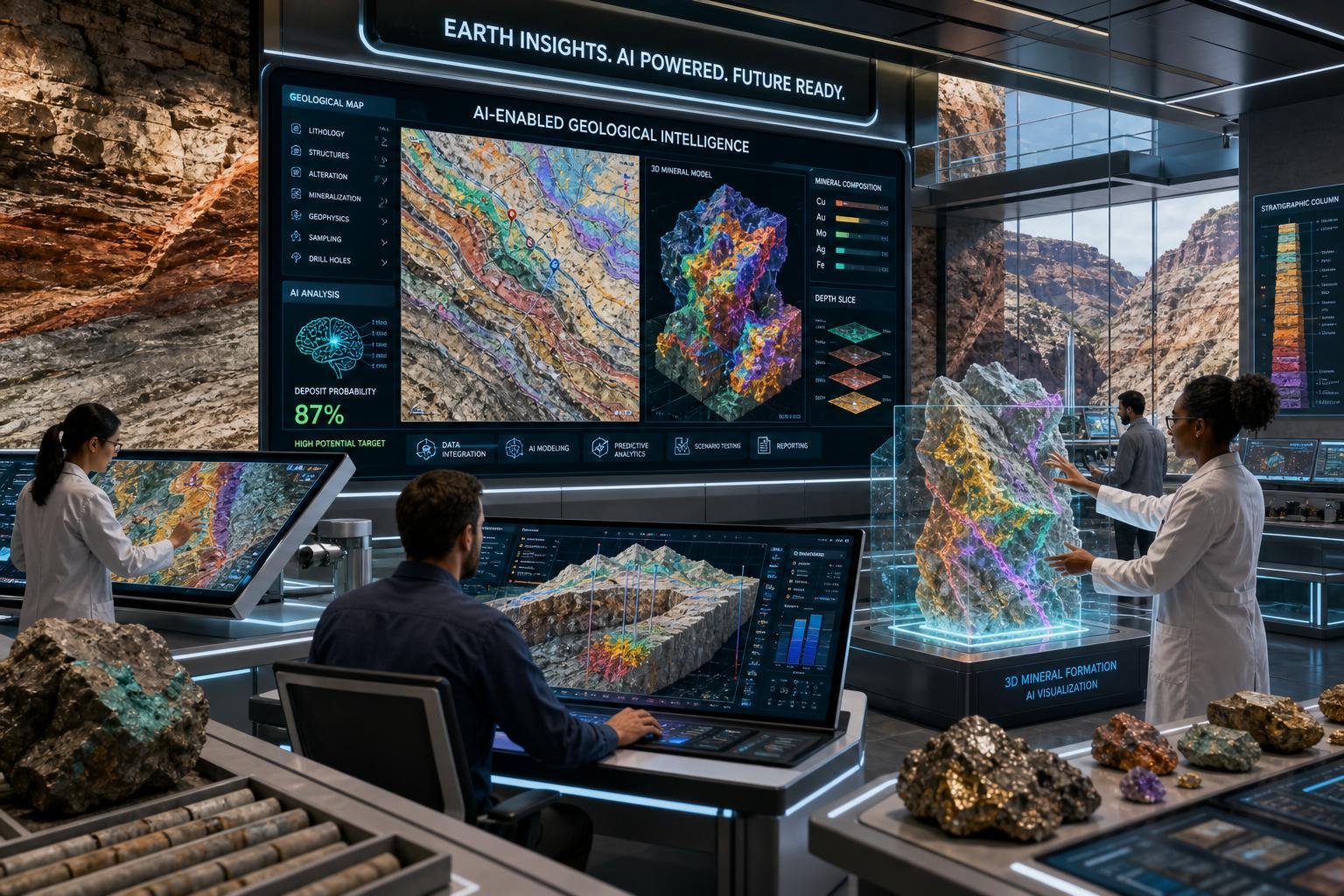
Accenture Federal Services is moving to give the US Department of Energy’s Genesis Mission an initial working capability through a rapid engineering push centred on the Critical Mineral and Materials to Unlock Supply, or CM2US, programme.
The effort is aimed at creating an operational, AI-ready environment by early summer, according to Accenture, with the goal of getting capability into use months faster than conventional federal acquisition and delivery cycles would normally...
Continue Reading This Article
Enjoy this article as well as all of our content, including reports, news, tips and more.
By registering or signing into your SRM Today account, you agree to SRM Today's Terms of Use and consent to the processing of your personal information as described in our Privacy Policy.
allow. At the core of the work is a push to connect mission data with commercial technology so researchers across the department’s national laboratories can work from a common platform rather than isolated systems.
Accenture says the project is being built with Databricks Federal, whose unified data and AI platform will be used to manage large scientific datasets. The company argues that this should make it easier to identify supply chain vulnerabilities, simulate scarcity conditions and surface risks affecting the minerals and materials that underpin energy and defence systems.
The Genesis Mission itself was announced last year as part of the Department of Energy’s broader effort to accelerate US leadership in artificial intelligence and scientific discovery. Accenture said then that the programme would help build an integrated American science and security platform linking supercomputers, scientific datasets and AI tools, with an ambition to raise research productivity over the long term.
The latest phase reflects a broader shift in federal technology strategy: away from long development cycles and towards faster deployment of production-grade tools. Accenture has been positioning itself around that approach in other government work as well, including AI pilot factories and platform partnerships designed to move from experimentation to scale.
At Argonne National Laboratory, senior AI scientist Frank Alexander described the speed of the programme as striking, saying work completed in weeks had seemed previously like a years-long task. Accenture Federal Services chief executive Ron Ash called the initiative a generational opportunity, framing it as a way to turn scientific capability into practical national advantage.
For the Energy Department, the focus on critical minerals is especially significant. These materials sit at the centre of clean energy manufacturing, advanced electronics and defence supply chains, making them a persistent strategic concern for Washington as it seeks greater resilience and less dependence on vulnerable imports.
Source: Noah Wire Services