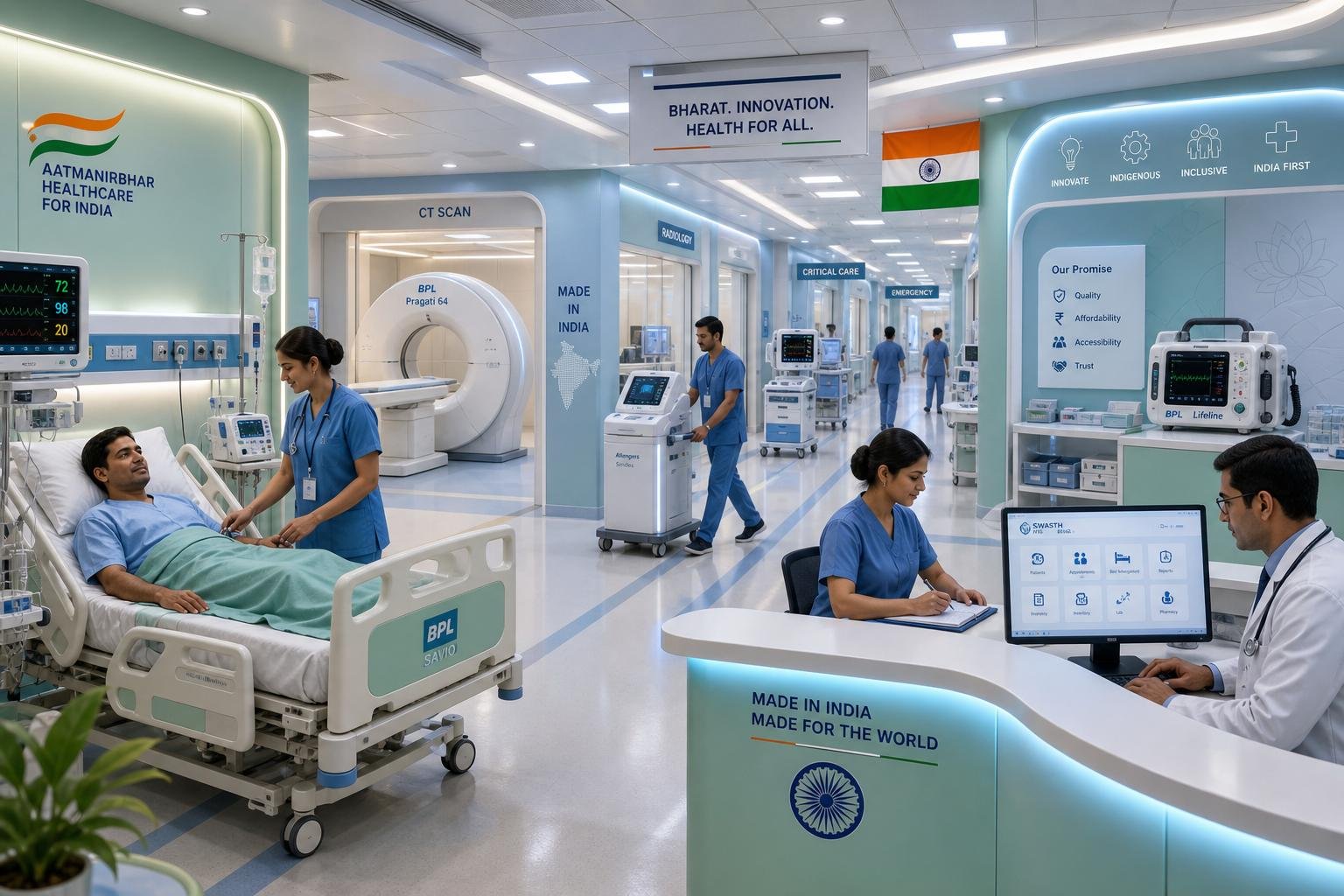
India’s hospitals sit at the centre of a costly contradiction: the country has built formidable strengths in pharmaceuticals, information technology and space, yet it still relies heavily on imports for the equipment that powers everyday care. Medical devices are brought in at scale, and that dependence feeds directly into hospital bills, from scans and implants to anaesthesia and critical care systems.
Recent government data underline the size of the imbalance. The Press Inf...
Continue Reading This Article
Enjoy this article as well as all of our content, including reports, news, tips and more.
By registering or signing into your SRM Today account, you agree to SRM Today's Terms of Use and consent to the processing of your personal information as described in our Privacy Policy.
ormation Bureau said medical device imports reached ₹94,664 crore in 2025-26, while exports were ₹28,106 crore, leaving India with a wide trade gap. Earlier industry reporting pointed in the same direction: India Brand Equity Foundation said imports climbed 41% in 2021-22 to ₹63,200 crore, up from ₹44,708 crore a year earlier, with China, the US, Germany, Singapore and the Netherlands supplying the bulk of shipments.
That dependence matters because procurement costs do not stay confined to hospital purchase departments. They are passed through to patients in diagnostic charges, procedure fees and room tariffs. In a country where many families still pay a large share of healthcare costs out of pocket, the decision to buy imported equipment has consequences far beyond the balance sheet.
The policy response is already taking shape. The government’s Production Linked Incentive scheme for medical devices, with an outlay of ₹3,420 crore, is intended to support domestic manufacturing across segments including imaging, radiotherapy, anaesthesia and cardio-respiratory equipment, as well as implants. A separate network of medical device parks has been approved in Himachal Pradesh, Madhya Pradesh, Tamil Nadu and Uttar Pradesh to help build common infrastructure for local producers.
There is also a stronger push towards innovation. In August 2023, the Department of Pharmaceuticals notified a National Policy on Research and Development and Innovation in the pharma-MedTech sector, backed by the ₹5,000 crore PRIP scheme. A human resource development programme for the medical device industry, with an outlay of ₹480 crore, is meant to address the shortage of specialised talent. The Indian Council of Medical Research’s Medical Device and Diagnostic Mission Secretariat, along with the MedTech Mitra initiative backed by NITI Aayog and CDSCO, is designed to help indigenous firms with clinical evaluation, regulatory pathways and market access.
The argument for hospitals is therefore no longer simply patriotic or political. It is operational. Indian-made equipment can offer shorter service chains, quicker maintenance and closer supplier relationships, all of which matter when machines are mission-critical. The challenge is cultural as much as commercial: hospitals still too often default to imports without systematically comparing domestic alternatives.
If India wants to reduce its vulnerability in healthcare hardware, procurement decisions will be decisive. The manufacturing push is under way. What must follow is a change in buying habits inside the country’s hospitals, where support for home-grown equipment could help convert policy ambition into lower costs, stronger supply resilience and a more self-reliant health system.
Source: Noah Wire Services