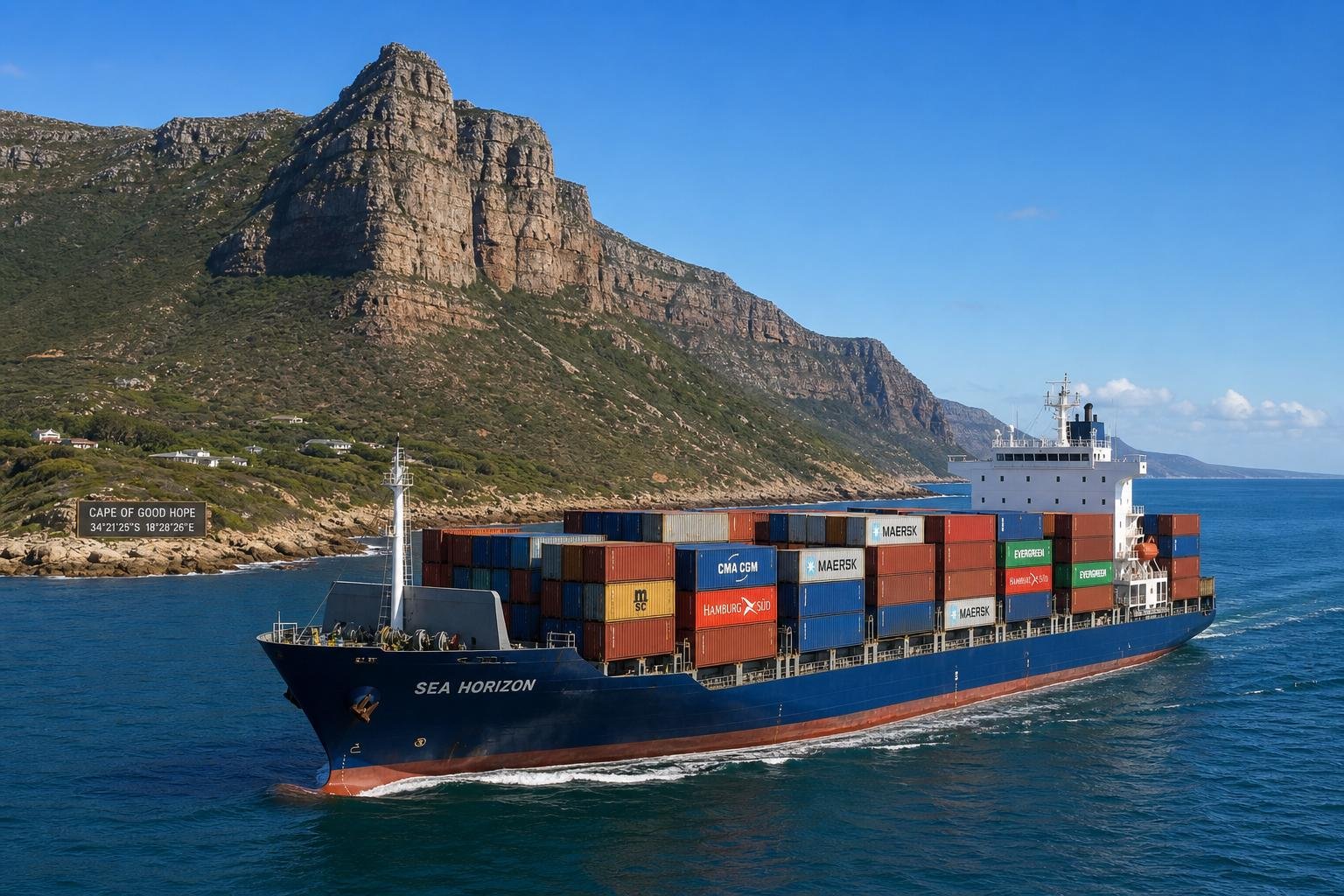
Hyundai’s decision to send vessels around the Cape of Good Hope to avoid the Strait of Hormuz is more than a tactical adjustment by one carmaker. It is a reminder that the global supply chain model built around speed, lean inventories and tightly choreographed routes is being tested by a far more volatile world.
In April, Hyundai chief executive José Muñoz said, bluntly, that “globalization is over”. His remark, reported by Biz Chosun and echoed by Supply Chain ...
Continue Reading This Article
Enjoy this article as well as all of our content, including reports, news, tips and more.
By registering or signing into your SRM Today account, you agree to SRM Today's Terms of Use and consent to the processing of your personal information as described in our Privacy Policy.
Brain, captured a mood that has been building across manufacturing and logistics for several years. The company has been forced to lengthen delivery times by rerouting ships away from a key Middle Eastern chokepoint, while also considering greater reliance on local parts in North America and Europe.
The pressure is not confined to Hyundai. Maersk said in March that it had suspended trans-Suez sailings on its ME11 and MECL services and was diverting them around southern Africa, citing security concerns in the Middle East. Hapag-Lloyd took a similar step in February, pausing future trans-Suez voyages on its IMX service and sending those ships via the Cape of Good Hope. Those decisions reflect a wider reordering of maritime trade as carriers seek to protect crews, cargo and schedules in a region where risk has become difficult to price.
The operational consequences are already visible. ENCA reported that the Port of Cape Town has seen a sharp rise in diverted vessels as shipping lines choose the longer route around Africa, adding congestion, cost and delay for exporters. Bernama, citing maritime security assessments, said traffic through the Strait of Hormuz has fallen steeply as insurers and carriers reassess the danger of operating in the corridor.
For manufacturers, the problem is not simply higher freight bills. The deeper issue is visibility. Many firms still cannot say with confidence where critical components are in the supply chain, or how exposed their tier-two and tier-three suppliers are to disruption on a particular route. That gap matters because the old just-in-time model was designed for a world of predictable lead times and stable trade conditions. Those assumptions now look fragile.
The real challenge, as industry observers increasingly argue, is uncertainty. A permanent cost increase can be modelled and absorbed; sudden policy shifts, shipping disruptions or corridor closures are harder to plan for and can freeze investment decisions. Companies delay capital spending, renegotiate supplier contracts and hesitate over factory locations because the input conditions keep changing.
Hyundai’s response suggests where the industry may be heading. Localising more parts production in Europe and expanding its footprint in the United States points to a broader shift towards regional supply networks. That is no longer just a hedge against disruption; for many multinationals, it is becoming a basic requirement. Suppliers that can offer regional manufacturing or at least regional stock positioning are likely to be better placed as customers redesign their sourcing strategies.
The lesson from the latest detours is not that global trade is disappearing, but that it is becoming less forgiving. Companies that want resilience will need more than contingency plans. They will need better data, broader logistics options and supply chains built for flexibility rather than perfection. In a world of chokepoints, disruption and geopolitical fragmentation, that may be the only practical definition of competitiveness.
Source: Noah Wire Services