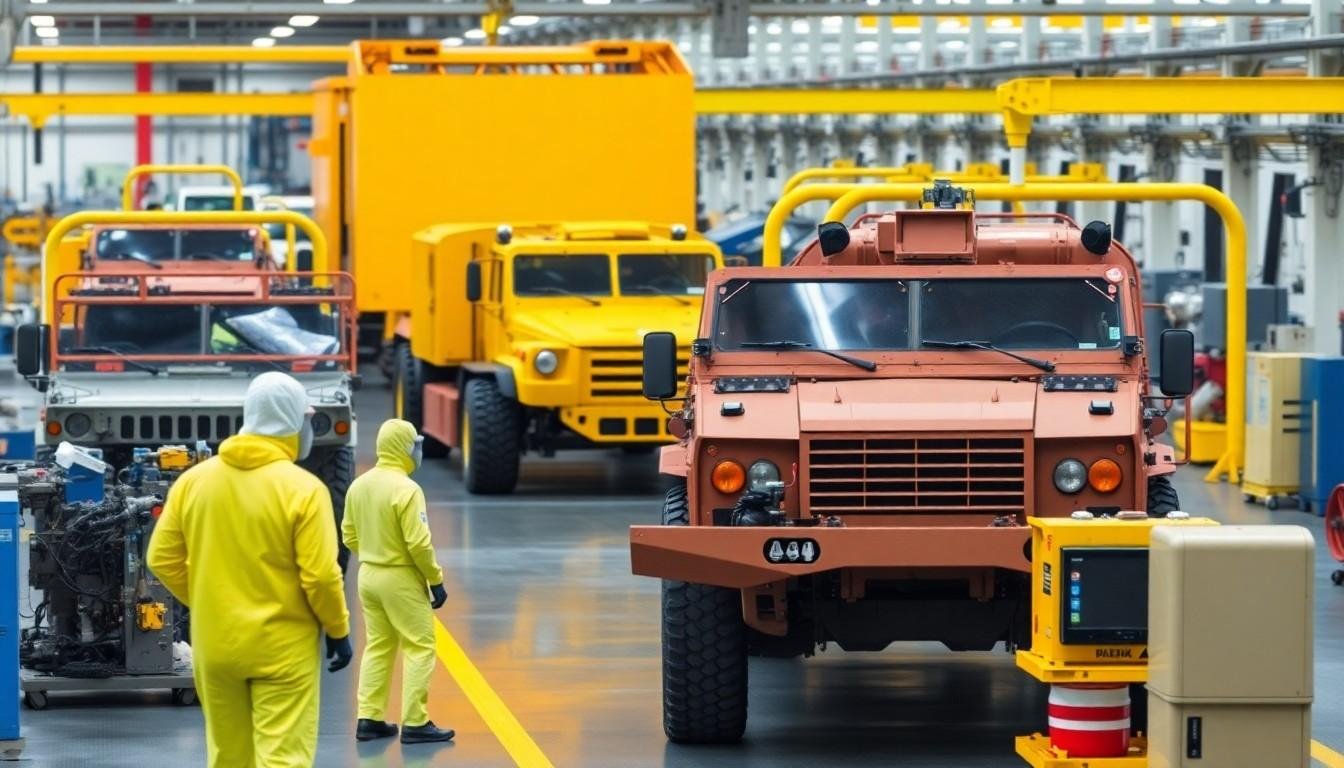
The memorandum of understanding between GM Defense and Lockheed Martin marks more than a corporate alliance; it is a signal that industrial capacity is now central to defence strategy. According to the companies’ announcements, the partnership will focus on strengthening supply chains, improving manufacturing and design capabilities, and identifying ways to expand production by drawing on GM’s high-rate commercial expertise and infrastructure.
That emphasis reflects a broad...
Continue Reading This Article
Enjoy this article as well as all of our content, including reports, news, tips and more.
By registering or signing into your SRM Today account, you agree to SRM Today's Terms of Use and consent to the processing of your personal information as described in our Privacy Policy.
er shift in Western manufacturing. As governments replenish stockpiles and respond to a more unsettled security environment, the key question is no longer simply what advanced systems can be designed. It is whether those systems can be produced quickly, reliably and at scale.
The pressure is especially acute in the US defence sector. The Financial Times has reported that the administration is seeking to raise missile and air-defence production by as much as three to four times over the next three to seven years. Meeting that kind of target requires more than additional funding. It demands production networks capable of sustaining far higher output across multiple layers of manufacturing, from specialist materials to final assembly.
That is where the challenge becomes more complex. In defence, the main constraint is often not the assembly line itself but the supplier base beneath it. Precision castings, electronics, propulsion systems and other specialist components are produced by tightly qualified vendors, many of which have little spare capacity. A bottleneck at any point in that chain can slow an entire programme.
Automotive manufacturing brings a different discipline to that problem. General Motors has spent decades refining large-scale production, supplier management and process control, all of which are vital when the task is to make complex products consistently and in volume. Lockheed Martin, meanwhile, brings deep experience in defence programmes and highly regulated production environments. Together, they are betting that commercial manufacturing methods can help ease military production constraints.
The arrangement also underlines a wider reality: industrial strength is becoming a strategic asset in its own right. Across defence, aerospace, semiconductors and energy, the ability to increase output without sacrificing quality or traceability is increasingly a measure of national resilience. The GM-Lockheed collaboration is one example of how firms from different sectors are beginning to pool capabilities in response to that pressure.
For decades, defence superiority was measured chiefly in technological terms. Increasingly, it may be judged by something less visible but just as decisive: the capacity to turn engineering ambition into sustained industrial output.
Source: Noah Wire Services