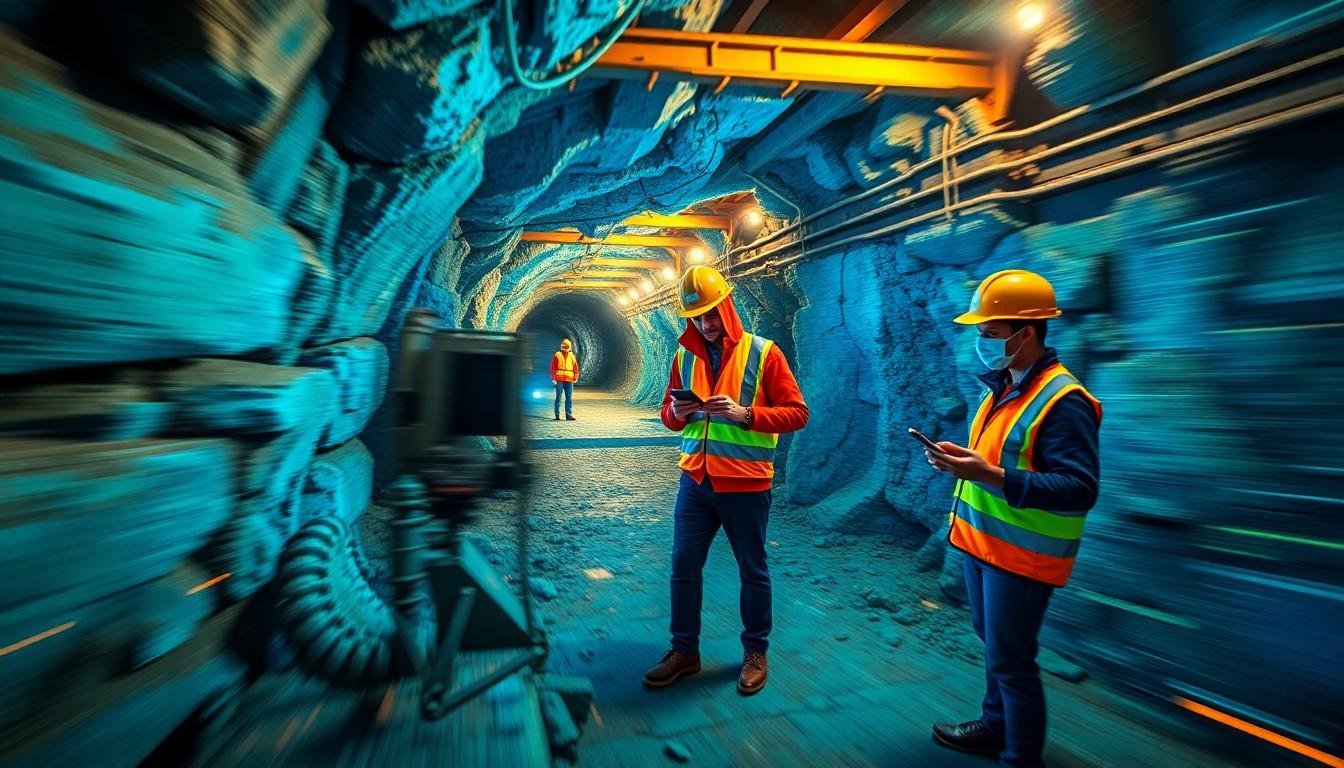
Orica Digital Solutions is pushing underground mining further into digital territory, arguing that the long-standing dependence on paper, handwritten notes and disconnected systems is still undermining productivity and decision-making at the drill-and-blast face.
Two recent case studies, one from DPM Metals’ Chelopech mine in Bulgaria and the other from MMG’s Rosebery mine in Tasmania, show how BlastIQ Underground is being used to replace manual QA/QC processes with live, t...
Continue Reading This Article
Enjoy this article as well as all of our content, including reports, news, tips and more.
By registering or signing into your SRM Today account, you agree to SRM Today's Terms of Use and consent to the processing of your personal information as described in our Privacy Policy.
raceable data. The examples also underline how even highly automated mines can still be held back by old workflows once operations move below ground.
At Chelopech, the mine already had a surface-based digital operations hub, full underground Wi-Fi coverage and remote monitoring across mining and processing. Yet stope blasting still relied heavily on printed drill designs, handwritten records and separate reporting systems. Orica said that paper sheets were often damaged or lost, while information recorded by drill operators did not flow cleanly into later stages of the process. Charge-up crews faced similar problems, with wet, dirty conditions making handwritten patterns hard to read or recover. That created gaps in planning, remediation and sequence adjustments, while supervisors above ground still had to re-enter information manually for planning and reporting.
Rosebery faced a different but related challenge: the mine was managing drill-and-blast plans across multiple shifts, deeper stopes and several mining fronts, but its systems were fragmented and heavily paper-based. Ground crews used handwritten progressive logs of drilling, preparation plans and charge instructions, which slowed the transfer of critical details to engineers. Mid-shift drill unit changes added further complexity, with varying drilling parameters and configuration differences creating friction between design, distribution and execution.
Sophie Clayton, product manager for BlastIQ Underground at Orica Digital Solutions, said the industry has been moving steadily away from paper-based QA/QC in favour of digital platforms that improve accuracy, traceability and real-time decision-making. She argued that digital systems can streamline and standardise workflows, while giving engineers greater visibility over blast quality and compliance to design. Cloud-based storage, she added, improves auditability and supports continuous optimisation.
BlastIQ Underground is built around three main elements: a desktop application for importing and exporting drill-and-blast designs and receiving field data; BlastIQ Mobile, which lets underground crews view designs and enter measurements and comments; and a web portal for data management, dashboards and downstream reporting, with access through APIs.
At Chelopech, the rollout moved quickly. After an on-site demonstration and a 11-day customer success programme, the first users were trained and the system was live in less than 24 hours. Using the mine’s existing network, BlastIQ sent and received designs and QA/QC data wirelessly. Orica said the mine was able to cut its dependence on paper by using document storage within the platform, which allows version-controlled designs to be pushed to tablets in seconds. The result was live, hole-by-hole visibility across drilling, hole preparation and loading, along with access for engineers to pinpoint issues more quickly.
The mine’s SMART Centre was then able to connect BlastIQ data into its own planning and reporting environment, including Deswik.Ops. Orica said that capability means the platform can be embedded within existing operational systems without forcing mines to rebuild their technology stack.
Rosebery’s results were presented in similarly operational terms. Orica said the mine centralised design files, drilling and loading records, initiation documents, environmental data and supporting media across the full drill-and-blast cycle. The company said this cut QA/QC cycle time by reducing the need for surface visits, while giving engineers live data from underground. By April 2026, Rosebery had digitised 165 blasts, capturing data for 9,908 holes and 84,949 drilled metres, with 11,277 hole actual inputs recorded digitally. The mine also logged 140,760 kg of Subtek bulk explosives through the system.
Craig Buchanan, lead for technology commercialisation at Orica Digital Solutions, said the platform helps connect drill crews, blasting teams and engineers in one workflow, reducing handover friction and giving everyone the same record of events. According to him, time-stamped data supports accountability, while longer-term analysis helps improve engineering decisions and discipline in blast execution.
Orica says the Chelopech project is still evolving, with further integration into existing reporting systems planned as the mine continues to build on the data already captured. The broader message from both case studies is clear: in underground mining, the value of digitalisation is not only faster reporting, but a more transparent chain of information from design to loading to blast outcome.
Source: Noah Wire Services