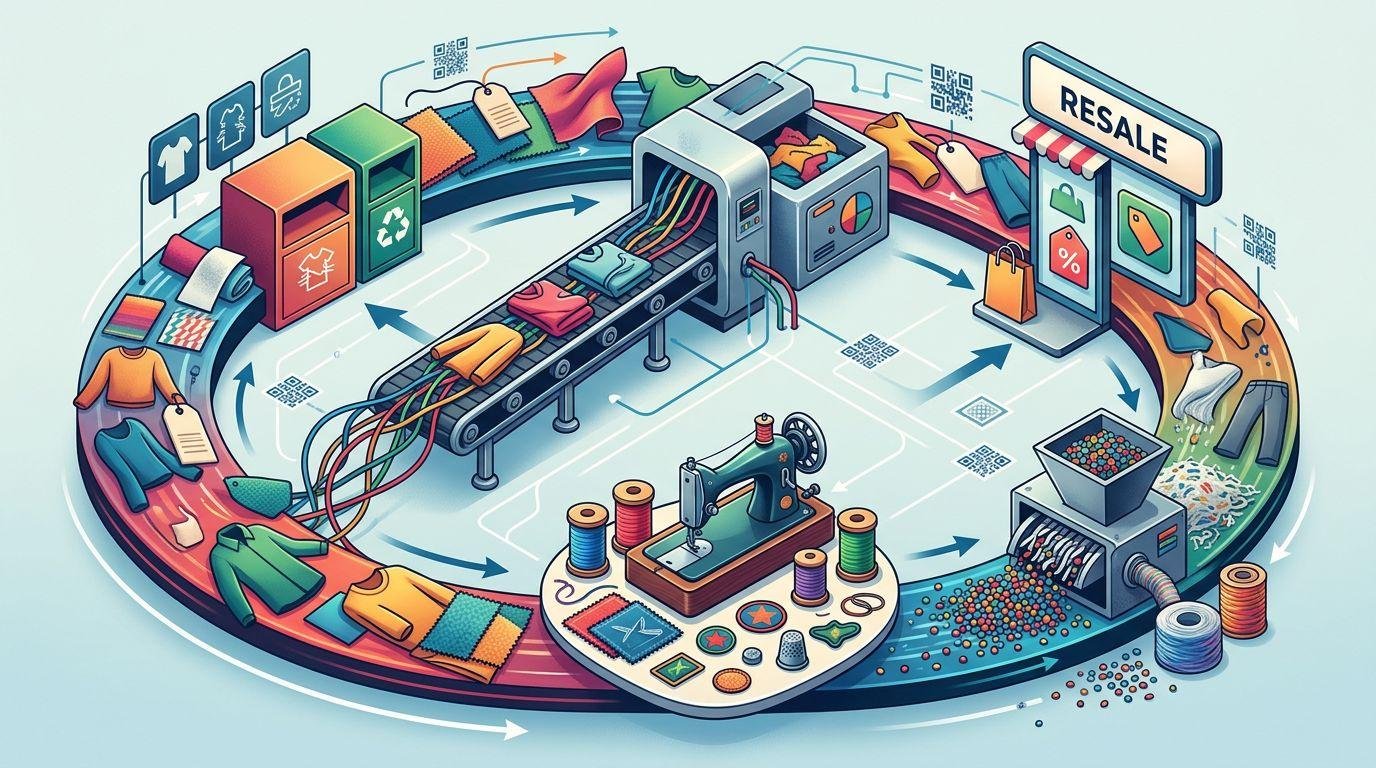
Brands are being pushed to assemble a far more complicated afterlife for garments than the business model that brought those items into stores in the first place. At Sourcing Journal’s annual fall summit in New York, industry executives described circularity not as a single programme or a neat sustainability pledge, but as a web of collection, sorting, repair, resale and recycling decisions that must work together if apparel is to avoid becoming waste.
Chloe Songer, co-founde...
Continue Reading This Article
Enjoy this article as well as all of our content, including reports, news, tips and more.
By registering or signing into your SRM Today account, you agree to SRM Today's Terms of Use and consent to the processing of your personal information as described in our Privacy Policy.
r and chief executive of SuperCircle, argued that many companies still make the mistake of treating one downstream route as a complete answer. In her view, the challenge is structural: once a product leaves the primary supply chain, brands often lose sight of its material composition, its remaining value and where it ought to go next. That lack of visibility makes it harder to direct used clothing to the most useful second life, whether that means reuse, donation, repair or fibre recovery.
SuperCircle, which provides technology and reverse-logistics infrastructure, is built around that problem. The company helps brands identify, collect and route returned goods, giving them a clearer picture of what comes back and what condition it is in. Songer said circularity depends on stitching together many separate functions, rather than betting on resale or recycling alone.
One example is Guess’ take-back initiative in the United States, which accepts both Guess and non-Guess garments in exchange for a $5 credit per item. The clothing collected through the programme is sent to Guess for sorting, with textile-to-textile recycling handled by Homeboy Threads, a California-based social enterprise focused on apparel reuse, sorting and recycling.
For Guess, the value of the programme is not limited to diverting material from disposal. Courtney Culbreath, associate director for corporate social responsibility and ESG at Guess? Inc., said the company is also gathering data on what consumers are returning, from durable pieces such as denim to trend-led items more typical of fast-fashion wardrobes, as well as how often shoppers take part. That information can feed back into design and sourcing decisions, giving the brand a better sense of which products are being kept in circulation and which are not.
The event also highlighted how the make-up of garments can determine whether recycling is commercially viable at all. Enes Adak, chief product officer at Recover, said fibre blends remain a major obstacle because different material combinations carry different costs and levels of usefulness once recovered. Cotton-polyester mixes and some cellulose-based blends can still be workable, he said, but their practicality depends on the intended end use. A fibre that is unattractive for one application may still be valuable in another.
Recover’s own recycled cotton is becoming more competitive, according to Adak. He said the material is currently cost-neutral, or in some cases 20 to 30 cents cheaper than virgin input, while also offering more predictable pricing than the volatile cotton market. For brands weighing sustainability against margin pressure, that stability matters as much as the environmental case.
Another overlooked part of the circular economy is repair. Jeff Glassman, chief executive of Darn It!, said defects such as stains, mould and mislabelling can keep products from reaching shelves, and those issues often need to be corrected before items can be sold. His firm works with retailers and manufacturers on rework, refurbishment and repair across apparel, footwear and accessories, assessing whether damaged goods can be economically restored.
Glassman said that in the vast majority of cases, repairing the item through an outside specialist makes commercial sense because it gets merchandise back into the market quickly. There are exceptions, he added, when the cost of fixing a product exceeds its value, forcing a retailer or brand to decide whether the item is worth salvaging at all.
All of these steps carry costs, but the speakers differed on who ultimately absorbs them. Culbreath said the burden is often shared, with brands and partners relying on one another to pursue a common objective. Songer took a broader view, arguing that the current system already spreads the cost across consumers, municipalities and charities, particularly when exported clothing ends up in landfill or is incinerated. In her telling, the more efficient model would be one in which brands keep more of that value inside a coordinated aftermarket rather than allowing it to leak away.
SuperCircle estimates that apparel represents a $170 billion opportunity if brands can consolidate the fragmented processes that now handle returned and discarded goods. Songer said the aim is not simply to move clothing out of the waste stream, but to create a system in which garments are tracked more intelligently, routed more effectively and treated as assets rather than liabilities.
That vision has also shaped the company’s engagement with California’s Senate Bill 707, a textile extended producer responsibility proposal that has been under discussion for several years. Songer said the central concern is that such legislation should not become a straightforward levy on brands. If it is handled only as a compliance cost and channelled through public systems, she warned, the expense could eventually be passed on to shoppers. She argued instead for a framework that strengthens the private circular infrastructure already emerging, allowing firms such as SuperCircle, Darn It! and Recover to remain part of the solution.
Adak echoed the economic reality facing the sector. Sustainability, he said, is a demanding ask for both suppliers and retailers, and with financial pressure still high, even small savings matter. In an industry built on volume and constant replenishment, the path to circularity appears less like a single innovation than a series of expensive, practical compromises that brands must learn to manage.
Source: Noah Wire Services