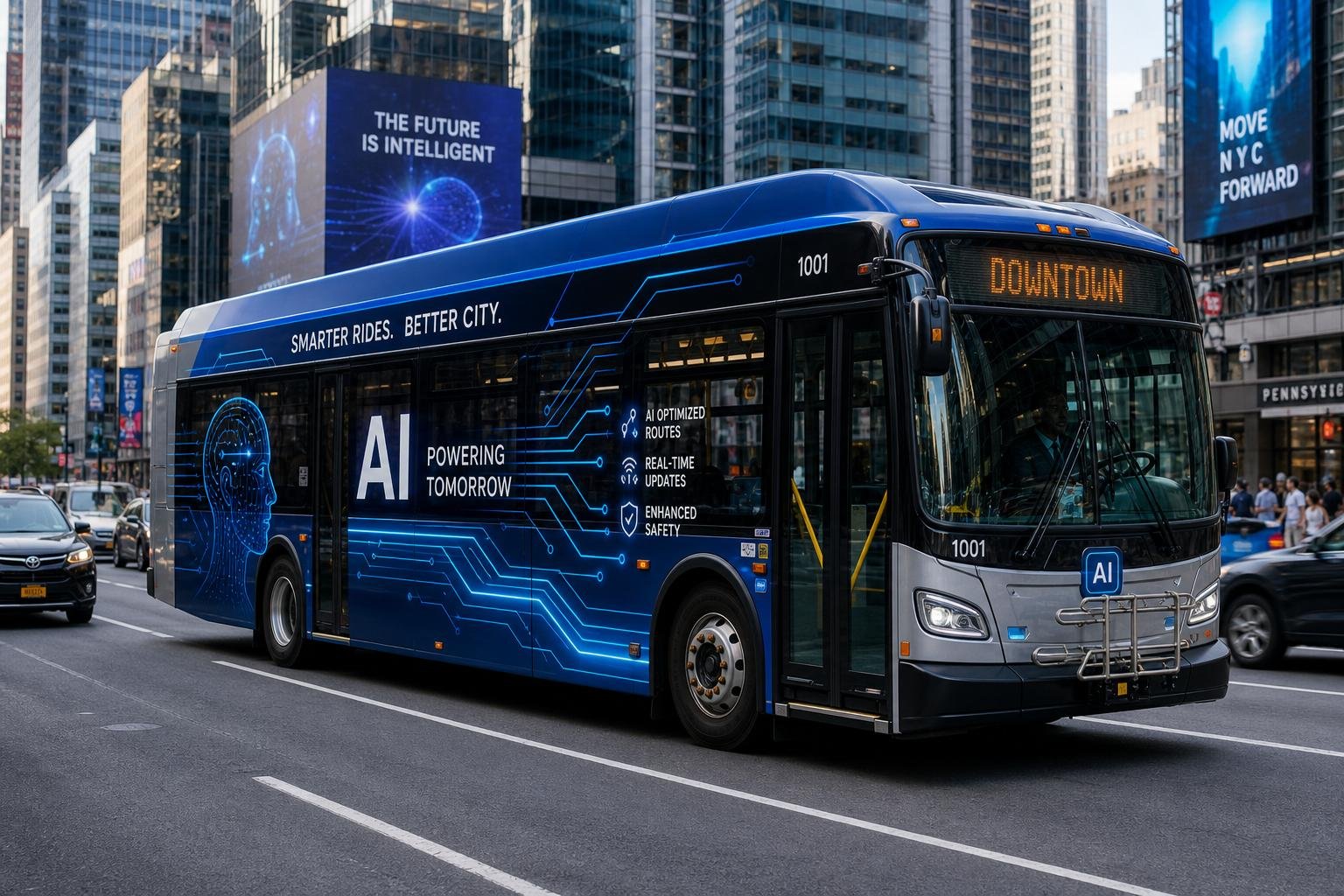
Artificial intelligence is rapidly moving out of pilot projects and into everyday fleet operations, but the fleets seeing the strongest results are not necessarily the ones with the flashiest tools. The real divide, according to CCJ Digital, is between organisations that merely install AI and those that weave it into the routines where work actually gets done.
That distinction matters because a predictive maintenance model sitting in a dashboard does not, by itself, prevent a b...
Continue Reading This Article
Enjoy this article as well as all of our content, including reports, news, tips and more.
By registering or signing into your SRM Today account, you agree to SRM Today's Terms of Use and consent to the processing of your personal information as described in our Privacy Policy.
reakdown. Its value only emerges when its output flows directly into a work-order system, a parts request, or a maintenance queue that technicians and managers use every day. In that sense, the most effective fleets are treating AI less as a standalone technology and more as an operational layer.
The article argues that this shift from implementation to incorporation is now the central challenge. Early AI experiments in fleet management often focused on isolated tasks such as route optimisation, basic analytics or chat-based support. Those uses helped teams learn the technology, but they rarely changed behaviour across an operation. More mature deployments, by contrast, are designed to trigger action automatically or near-automatically inside existing workflows.
That approach is increasingly reflected in broader industry thinking. Microsoft’s connected-fleet reference architecture for Fabric Real-Time Intelligence, for example, shows how vehicle telemetry, engine data and sensor streams can be brought together for real-time analysis and predictive maintenance. Other fleet-management platforms are also moving in the same direction, pairing machine-learning signals with procurement, repair and approval workflows so that a prediction can become a task, a purchase request or a service intervention.
Even so, technology is not the main differentiator. CCJ Digital says fleet performance depends more on disciplined execution than on the choice of software. Two fleets can buy the same system and produce very different outcomes if one has trained users, clear processes and strong managerial follow-through, while the other leaves the tool underused. In practice, AI adds value only when the workforce knows how to interpret it, question it and act on it consistently.
Data quality remains the biggest obstacle. AI cannot repair poor records, duplicated entries or inconsistent naming across telematics, maintenance and finance systems. Instead, it tends to expose those weaknesses more quickly. That means fleets hoping to rely on AI must first clean, standardise and govern the data feeding the models, or they risk generating confident but unreliable recommendations.
Governance is becoming just as important as analytics. Once AI influences operational decisions, someone must own the output, decide how exceptions are handled and establish a clear route for technicians to validate or override machine suggestions. Without that accountability, trust can erode quickly, particularly if a model flags a vehicle for service and the field team believes the recommendation is wrong.
The workforce dimension is easy to underestimate. This is not simply an IT project, the article suggests, but a change in how operations, finance and field teams work together. People do not need to become data scientists; they need practical fluency so they can treat AI as one input among several, rather than a final answer handed down by software.
For fleets still at the beginning of the journey, the advice is to start small. A single use case, such as maintenance scheduling or parts inventory, is often more effective than a broad rollout. The key is to choose an area where better decisions can be measured, ensure the data is dependable, and then embed the output into an existing process so the result can be tracked over time.
That phased approach aligns with maturity models now appearing across the sector. Industry guides increasingly describe a path that begins with reactive, manual processes, moves through dashboards and predictive analytics, and eventually reaches more autonomous operations. But the common lesson is that progress is built on foundations: data discipline, process design and human adoption, not just algorithmic capability.
The broader message is that AI is no longer the differentiator it once was. Access to tools is becoming commonplace. What separates successful fleets from the rest is how well those tools are integrated, governed and managed after launch.
Source: Noah Wire Services